

Can Foreigners Buy Land in Thailand? Legal Answer
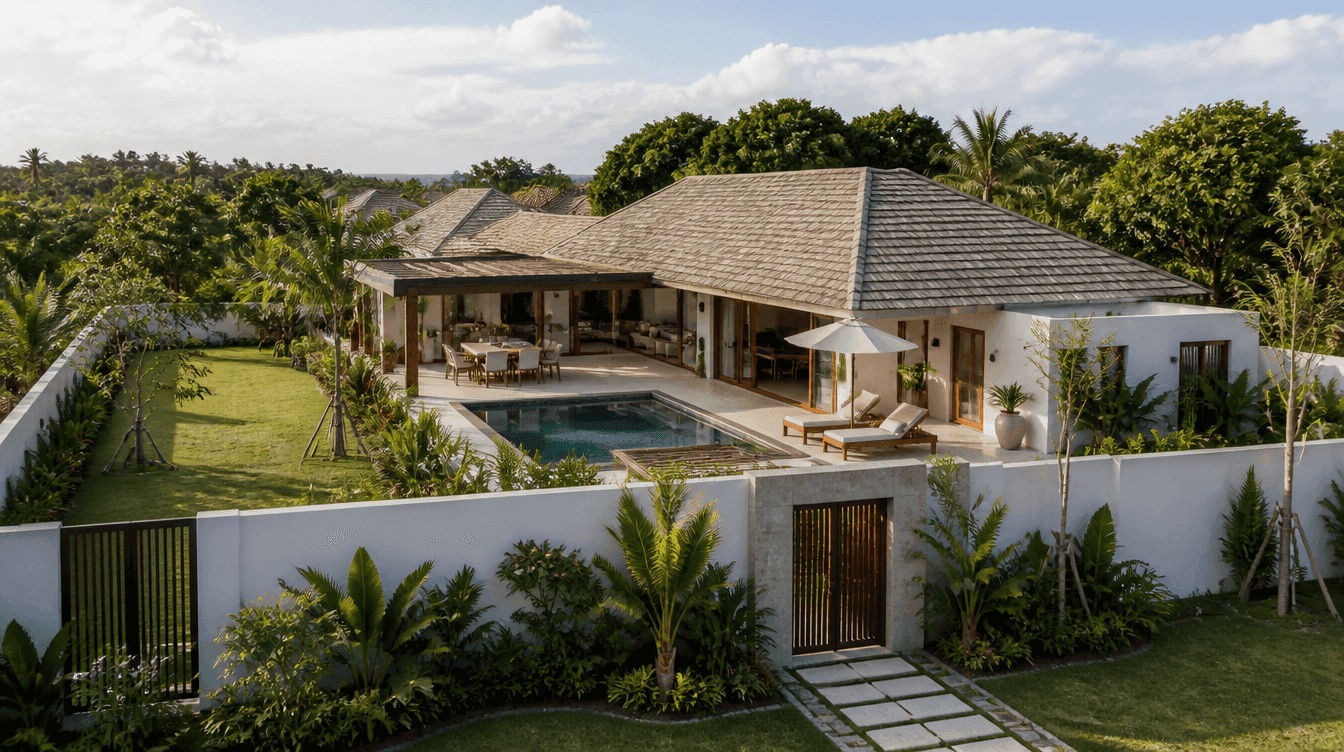
Can Foreigners Buy Land in Thailand? The Legal Answer
This is one of the most searched questions about Thai property, and also one of the most poorly answered online — most results either give a flat "no" that ignores legitimate pathways entirely, or vaguely gesture at workarounds without explaining the real legal risk involved. The honest answer to can foreigners buy land in Thailand is no, not outright — but there are several well-established, legitimate ways to legally use and control land as a foreigner, and one popular workaround that carries genuine legal risk and deserves a direct warning rather than a footnote.
This guide covers the legal baseline, every legitimate pathway available to foreign buyers, and an honest look at the structure that gets recommended informally far more often than it should be.
Can Foreigners Buy Land in Thailand?
The short answer is no — foreign individuals cannot hold direct freehold ownership of land in Thailand. This is the legal baseline everything else in this guide builds from.
Can a Foreigner Legally Own Land in Thailand?
Under Thai law, land ownership is restricted to Thai nationals and Thai-registered companies with majority Thai shareholding. This restriction exists under the Land Code, the legislation governing land ownership in Thailand, and it applies uniformly regardless of a foreigner's visa status, length of residence, or investment level in the country. This is also the reason condominiums became the standard entry point for foreign property ownership — condo units are a specific legal exception carved out under a separate law, while land itself remains off-limits to direct foreign ownership.
That said, "can't own" doesn't mean "can't use." Several legitimate legal structures allow a foreigner to control and use land for decades, which is what the rest of this guide covers in detail.
Leasehold — The Standard Pathway for Foreigners
Leasehold is the most common and most straightforward legitimate structure for foreigners who want long-term use of land in Thailand, whether for a villa or any other land-based property.
How Does Leasehold Work in Thailand for Foreigners?
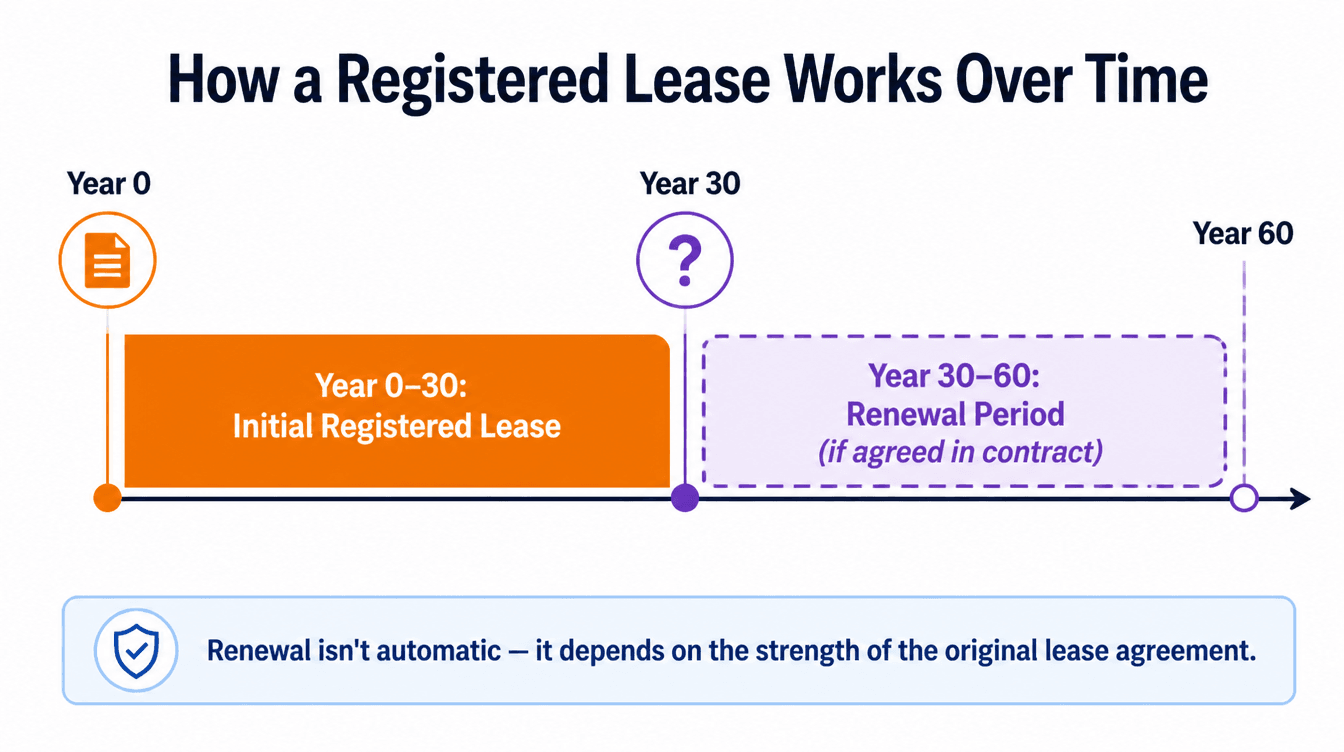
A registered lease grants a foreigner the right to use land for a fixed term, registered at the Land Department and enforceable as a legal contract. This isn't ownership in the title sense — the land remains registered to the Thai landowner — but it gives the leaseholder legally protected rights to use the property for the lease term, which can be structured with renewal provisions built into the original agreement.
What Is a 30-Year Lease and Can It Be Renewed?
The standard maximum term for a registered lease in Thailand is 30 years. Renewal beyond that term is commonly built into lease agreements as an option — often structured as additional 30-year periods — but renewal isn't automatically guaranteed by law in the same way the initial term is. Whether a renewal actually happens depends on the landowner honoring the agreement at each renewal point, which is why the strength of the renewal clause in the original lease contract matters considerably more than buyers often realize going in.
Superficies and Usufruct — Additional Rights Worth Knowing
Beyond the lease itself, Thai law provides supplementary rights that can strengthen a foreigner's legal position on leased land, particularly relevant for anyone building or buying a structure on that land.
What Is Superficies and How Does It Apply to Villas?
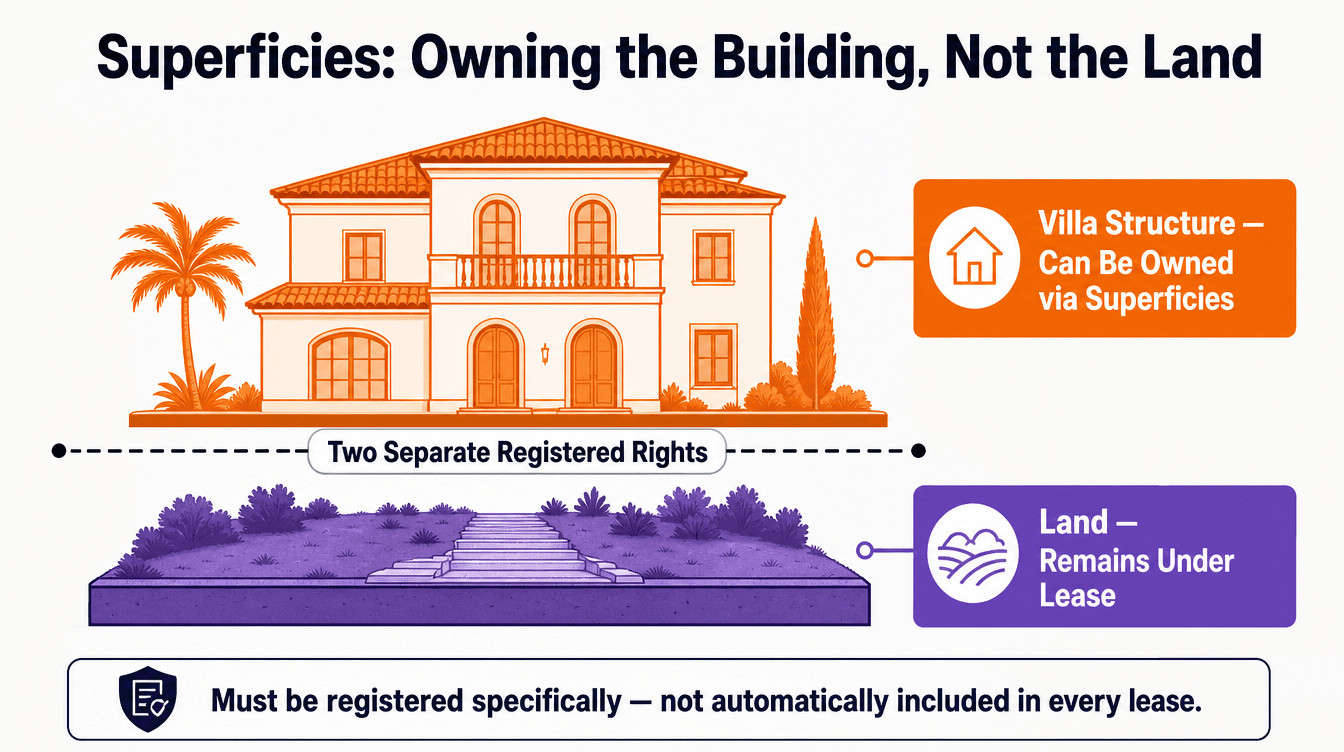
Superficies is a separate registered right that allows the holder to own a structure built on land independently of who owns the land itself. For villa buyers, this matters directly: a properly registered superficies right means the foreigner can hold ownership of the villa building even though the underlying land remains under a lease. This isn't automatically included in every leasehold arrangement — it needs to be specifically registered as part of the transaction, so it should be confirmed and structured correctly at the outset rather than assumed to come standard with a villa purchase. Usufruct, a related right allowing use and enjoyment of a property (sometimes for the holder's lifetime), serves a similar reinforcing function in specific situations, though it's applied less commonly than superficies in typical villa purchases.
Thai Company Structures — And the Nominee Risk
This is the pathway that gets discussed the most informally among buyers, and it's also the one that most requires a direct, honest explanation rather than a vague gesture toward "it's possible."
Can Foreigners Own Land Through a Thai Company?
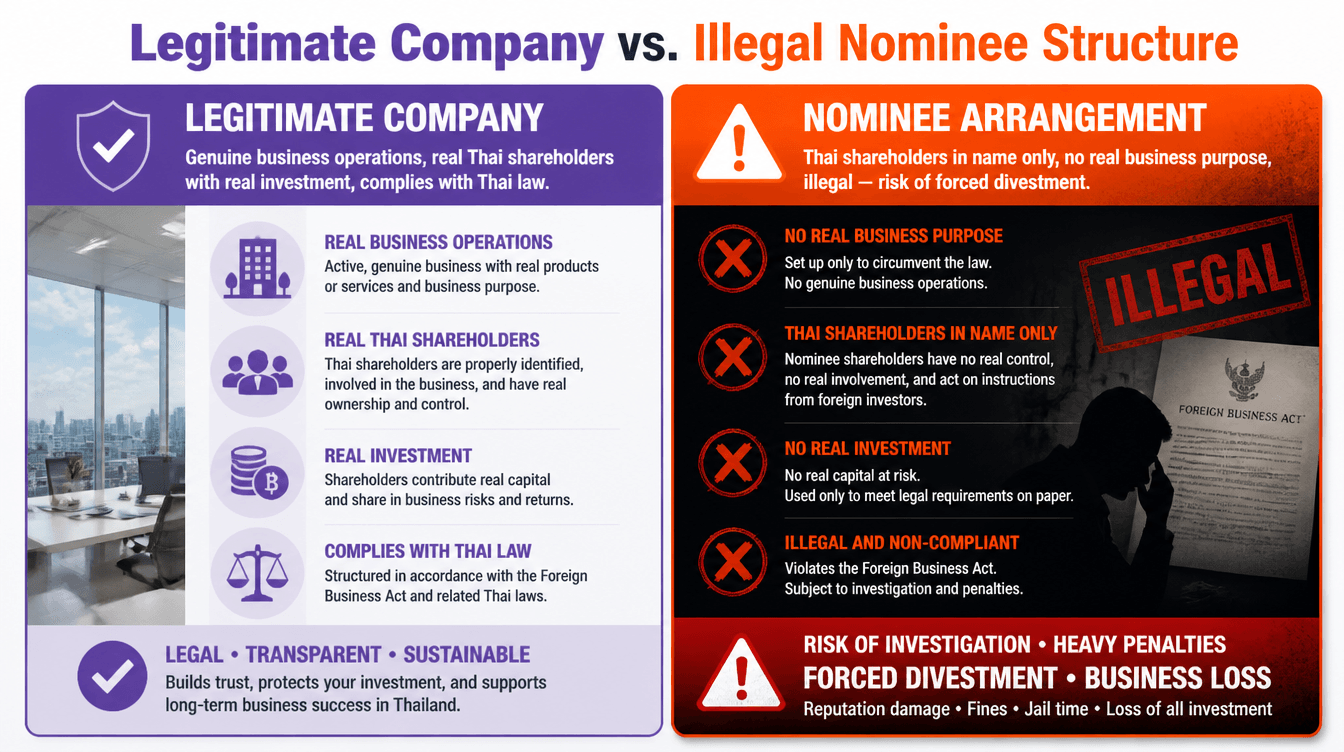
Yes, in principle. A Thai-registered company with majority Thai shareholding can legally own land, and a foreigner can hold a minority stake in that company along with a role in its management. This structure is legitimate when the company has a genuine business purpose and operates as an actual business entity, not simply as a vehicle constructed solely to hold a single piece of land on a foreigner's behalf.
Is It Legal to Use a Thai Nominee to Buy Land?
This is where the honesty matters most. Using Thai nominee shareholders — Thai individuals who hold shares in name only, with no real investment, involvement, or business purpose, solely to give a foreigner effective control over land ownership — is illegal under Thai law. This arrangement is specifically what Thai authorities scrutinize when reviewing company-held land, and being found to have used a nominee structure can result in forced divestment of the land, among other serious legal consequences.
The distinction matters enormously: a company that genuinely operates a business and happens to hold land as part of that business is legitimate. A company that exists purely to disguise foreign land ownership through nominee shareholders is not, regardless of how common this arrangement might be discussed informally. Anyone considering a company structure for land ownership should get independent legal advice specific to their situation before proceeding, rather than relying on an arrangement because "everyone does it."
Other Legal Pathways to Land Use
Beyond leasehold and company structures, two other pathways come up frequently in buyer questions, though both apply only in specific circumstances.
Can Foreigners Married to a Thai National Own Land?
A foreigner married to a Thai national doesn't gain direct land ownership rights through the marriage itself — land purchased during the marriage is typically registered solely in the Thai spouse's name, with the foreign spouse required to sign a declaration confirming the funds used were the Thai spouse's separate property, not marital assets. This protects the Thai spouse's sole ownership but doesn't create ownership rights for the foreign spouse under Thai law.
Can You Inherit Land in Thailand as a Foreigner?
A foreigner can inherit land in Thailand as a legal heir, but inheriting land doesn't create an exception to the foreign ownership restriction — the foreign heir is generally required to dispose of the inherited land within a specified period, similar to the treatment of foreign quota overages in condominiums. This is a narrow, situation-specific pathway rather than a general route to land ownership, and it applies only in the context of inheritance rather than purchase.
How to Legally Own Land in Thailand as a Foreigner
Pulling every legitimate pathway together, the practical options for a foreigner who wants long-term use of land in Thailand come down to a small, well-defined set of structures.
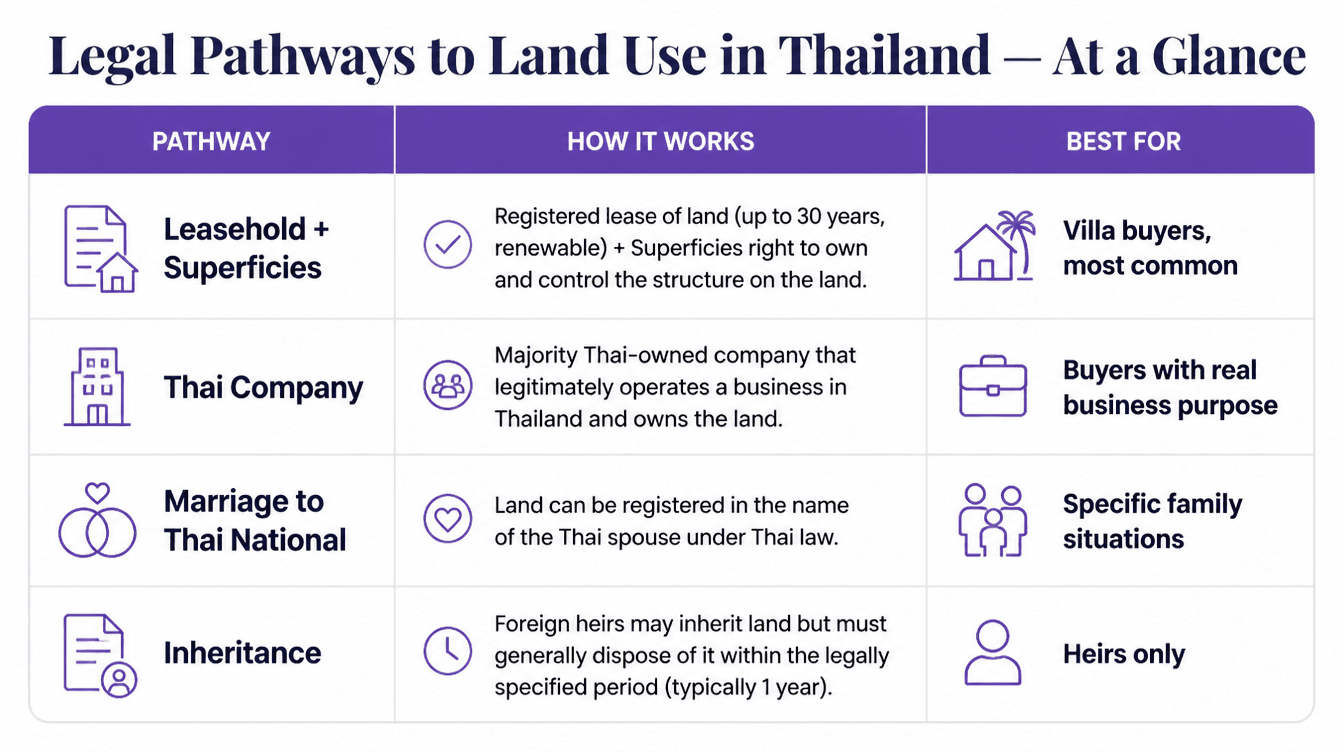
Registered leasehold, often combined with superficies for a villa structure, is the most straightforward and widely used legitimate pathway. A properly structured Thai company with genuine business operations is a legitimate but more complex route, requiring real compliance rather than a nominee shortcut. Marriage and inheritance create narrow, situation-specific rights rather than general ownership pathways. Across all of these, freehold condo ownership remains the simplest form of direct property ownership available to foreigners in Thailand — which is exactly why so many buyers choose condos specifically to avoid the added complexity that land-based structures require.
Buying a Villa on Land in Thailand
For buyers specifically interested in villas rather than condos, everything in this guide converges into one practical structure.
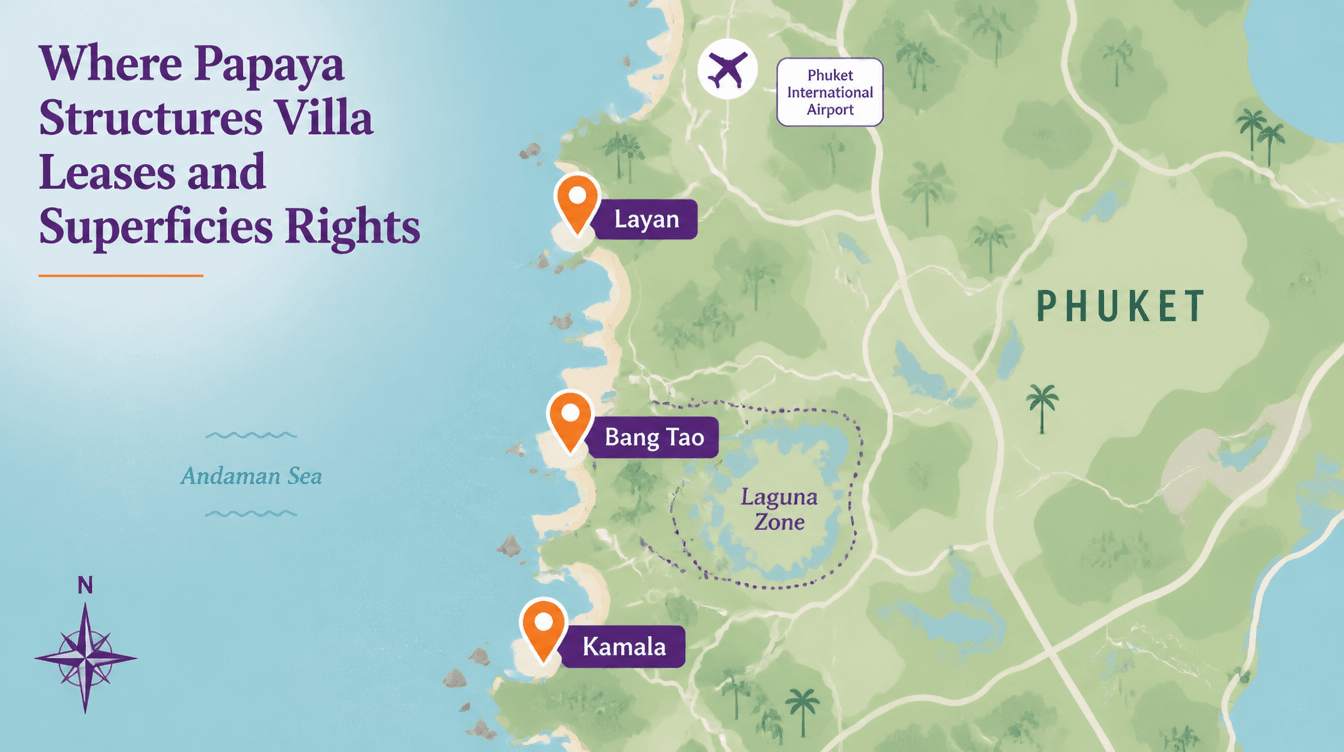
A villa sits on land, so villa ownership for foreigners works through registered leasehold on the land, combined with superficies registered separately to secure ownership of the villa structure itself. Getting this structure right at the outset — correctly registered lease terms, a properly drafted renewal clause, and superficies registered alongside it — is what actually protects a foreign villa buyer long-term, and it's not something to leave to a generic template contract. For villa purchases in Bang Tao, Kamala, Laguna, or Layan, having legal support structure the lease and superficies registration correctly from the start avoids the far more difficult process of trying to correct gaps in the paperwork years later.
What Happens When the Lease Ends?
This is the long-term question that understandably concerns buyers considering a leasehold structure.
What Happens to a Leasehold Villa When the Lease Ends?
At the end of the lease term, the outcome depends entirely on what was written into the original agreement. A well-structured lease includes clear renewal terms, giving the leaseholder a defined path to extend their rights for additional periods. Without strong renewal language, the leaseholder is dependent on the landowner's willingness to renew at that point, which is precisely why the quality of the original lease drafting matters far more than its length — a 30-year lease with weak renewal terms is a materially different asset than a 30-year lease with strong, specific renewal provisions built in from the start.
The Bottom Line
Foreigners cannot buy land outright in Thailand, but that single fact doesn't mean land is off-limits — registered leasehold, reinforced with superficies for villa structures, is a well-established, legitimate pathway used by foreign buyers throughout the country. A properly structured Thai company is a legitimate but more complex alternative, while nominee arrangements are not legitimate regardless of how casually they're sometimes recommended. Choosing a properly structured arrangement over a risky shortcut is the single most important decision a foreign buyer makes when land is involved.
If you're considering a villa purchase in Bang Tao, Kamala, Laguna, or Layan and want the lease and superficies structure set up correctly from the start, the Papaya Property team can walk you through exactly what's involved. Reach out via Telegram, WhatsApp, or email for a free consultation — no forms, just a direct conversation with someone who can answer the questions specific to your purchase.