

Guaranteed Rental Returns in Thailand Explained

Guaranteed Rental Returns in Thailand Explained
"Guaranteed 8% rental return" is one of the most common phrases in off-plan marketing across Phuket, and also one of the most misunderstood. Guaranteed rental returns Thailand explained honestly: the guarantee itself is usually real and contractually binding, but it isn't quite what most buyers assume it is — and understanding the mechanics is what separates a legitimate value-add from an expensive marketing device.
This guide covers how these schemes actually work, how they differ from a rental pool arrangement, the genuine risks involved, and how to evaluate whether a specific guarantee offer is realistic before you factor it into your investment decision.
What Is a Guaranteed Rental Return Scheme?
Before evaluating whether a guarantee is a good deal, it's worth understanding precisely what's being promised — since the term gets used loosely and doesn't always mean the same thing across different developers.
What Is a Guaranteed Rental Return Scheme?
A guaranteed rental return scheme is a contractual commitment from the developer (or an appointed management company) to pay the buyer a fixed annual return — commonly expressed as a percentage of the purchase price — for a defined period after purchase, regardless of whether the unit is actually rented or how much genuine rental income it generates. The guarantee is a payment obligation written into the sale contract, not a projection or an estimate.
How Do Guaranteed Rental Returns Actually Work?
Structurally, the buyer purchases the unit and typically hands rental management over to the developer or their appointed operator for the guarantee period, which commonly runs [DATA NEEDED: typical guarantee period length for current Phuket off-plan projects, e.g. 2–5 years]. During that period, the buyer receives the fixed guaranteed payment on a set schedule, funded by the developer or management company rather than tied directly to actual occupancy or rental income generated by that specific unit. What happens once the guarantee period ends is a separate and equally important question, covered later in this guide.
Guaranteed Rental Yield Marketing in Phuket
These offers show up constantly in off-plan sales materials specifically, which is worth understanding as a category before evaluating any individual offer.
Is the Purchase Price Higher With a Rental Guarantee?
Often, yes. A guaranteed return is a real financial commitment on the developer's part, and that cost is typically built into the purchase price rather than offered as a separate, free benefit. [DATA NEEDED: typical price premium for units marketed with a rental guarantee versus comparable units without one, for current Phuket projects]. This is precisely why comparing the headline guaranteed percentage against an identical unguaranteed unit's price is a more useful exercise than looking at the guarantee in isolation — a "guaranteed 8%" on an inflated price can work out to a lower effective return than an unguaranteed unit's realistic market yield on a lower purchase price.
Rental Guarantee vs. Rental Pool — What's the Difference?
These two structures get confused constantly, and the difference matters considerably for how predictable your income actually is.
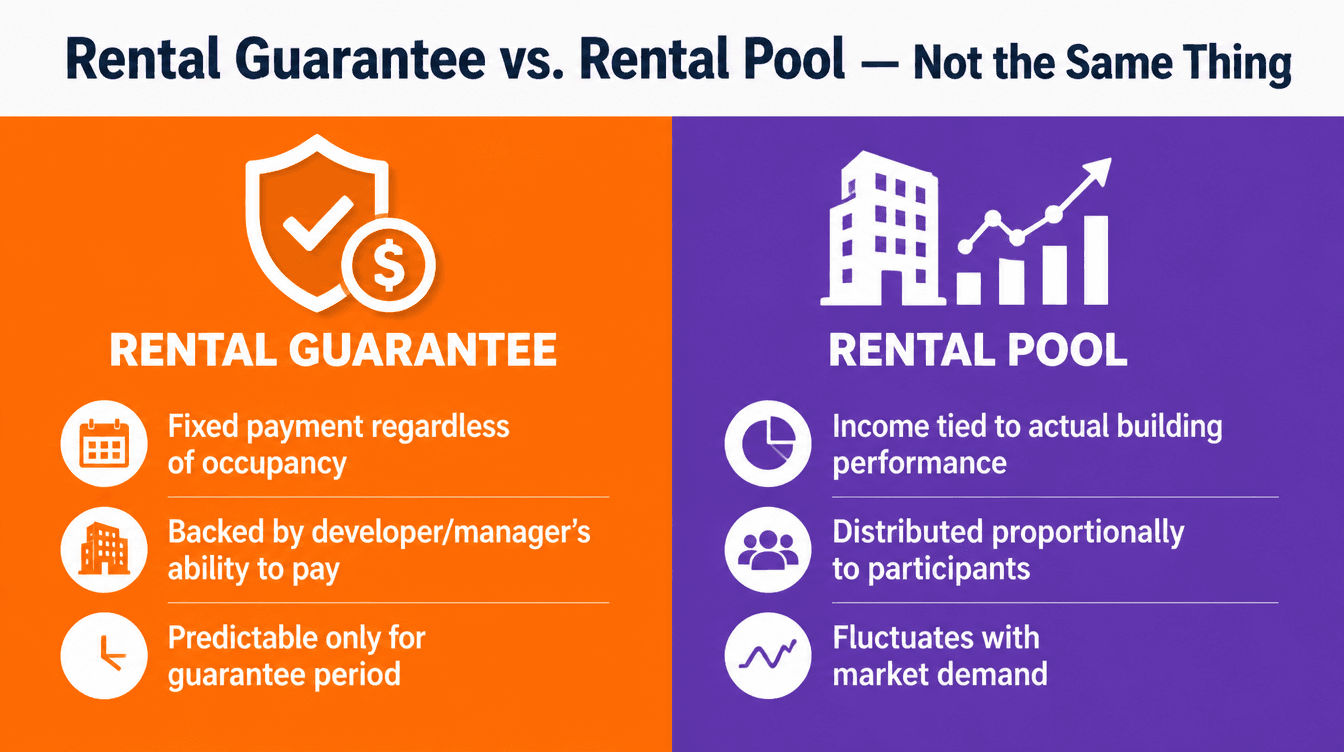
What's the Difference Between a Rental Guarantee and a Rental Pool?
A rental guarantee is a fixed payment obligation, independent of actual rental performance — the buyer receives the agreed amount whether the unit is fully booked or sits empty. A rental pool, by contrast, aggregates rental income across multiple units in a building or complex and distributes it proportionally to owners based on their share, which means the buyer's income genuinely fluctuates with the building's actual occupancy and rental performance. A rental pool offers more transparency into real market performance over time, while a guarantee offers more short-term predictability — but only for as long as the guarantee period lasts and the guarantor remains able to pay.
The Real Risks of Guaranteed Rental Schemes
This is the section that matters most, and it deserves a direct, unhedged treatment rather than buried caveats.
What Happens if a Developer Can't Pay the Guaranteed Return?
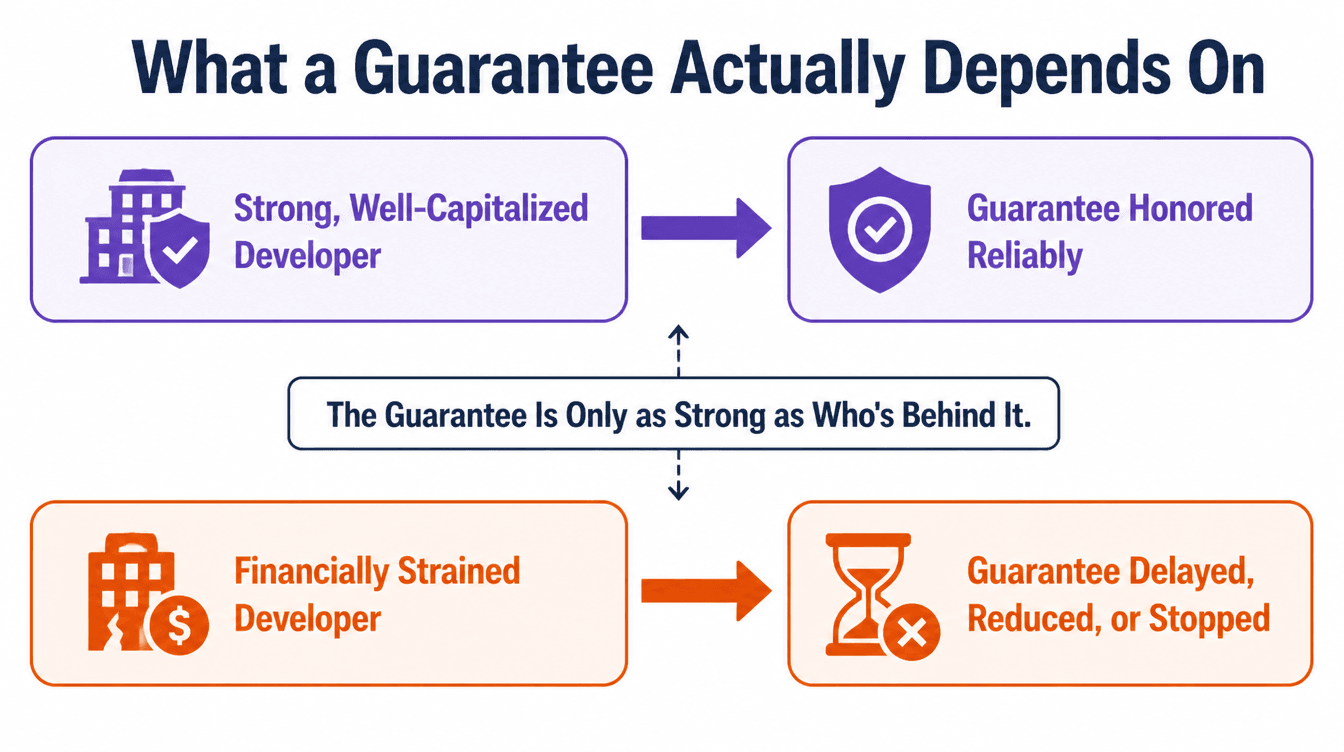
A rental guarantee is only as reliable as the entity backing it. If a developer or management company runs into financial difficulty, guaranteed payments can be delayed, reduced, or stopped entirely, and pursuing a contractual claim against a financially distressed developer is a considerably harder and slower process than simply receiving the payment as agreed. This is exactly why the guarantee's real value depends heavily on the financial strength and track record of whoever is actually backing it — a guarantee from a developer with a strong, well-capitalized track record carries fundamentally different risk than an identical-sounding guarantee from a smaller or newer developer without that history.
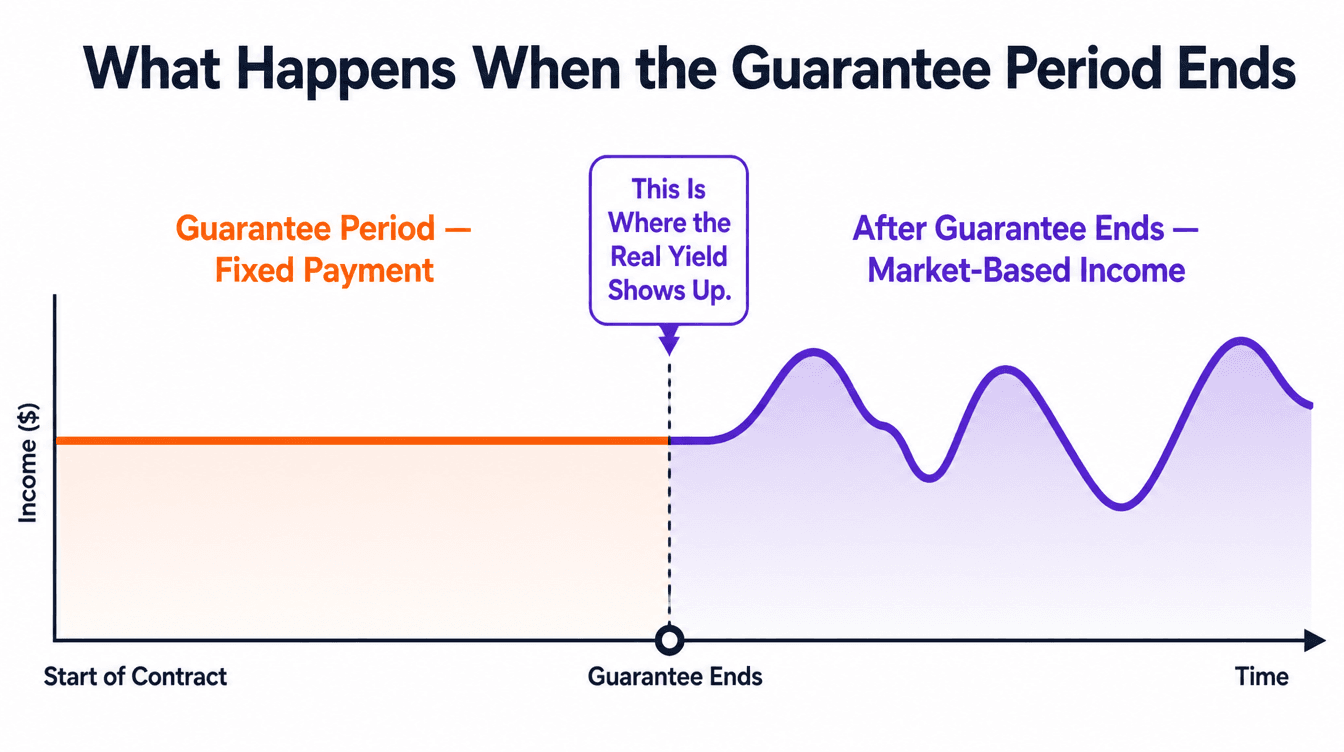
What Happens When a Rental Guarantee Period Ends?
Once the guarantee period ends, the unit typically transitions to standard rental management, with income based on actual market performance rather than a fixed contractual amount. This transition point is where buyers sometimes discover a meaningful gap between the guaranteed figure they'd budgeted around and the real achievable rental yield the unit generates on the open market — particularly if the guaranteed rate was set higher than realistic market rents to make the offer more attractive at the point of sale. Understanding what happens at this transition, and having a realistic expectation for post-guarantee yield, is arguably more important than the guaranteed figure itself.
How to Evaluate a Rental Guarantee Offer
Turning the risk factors above into practical action is what actually protects a buyer considering a guaranteed-return unit.
How Do You Check if a Rental Guarantee Is Realistic?
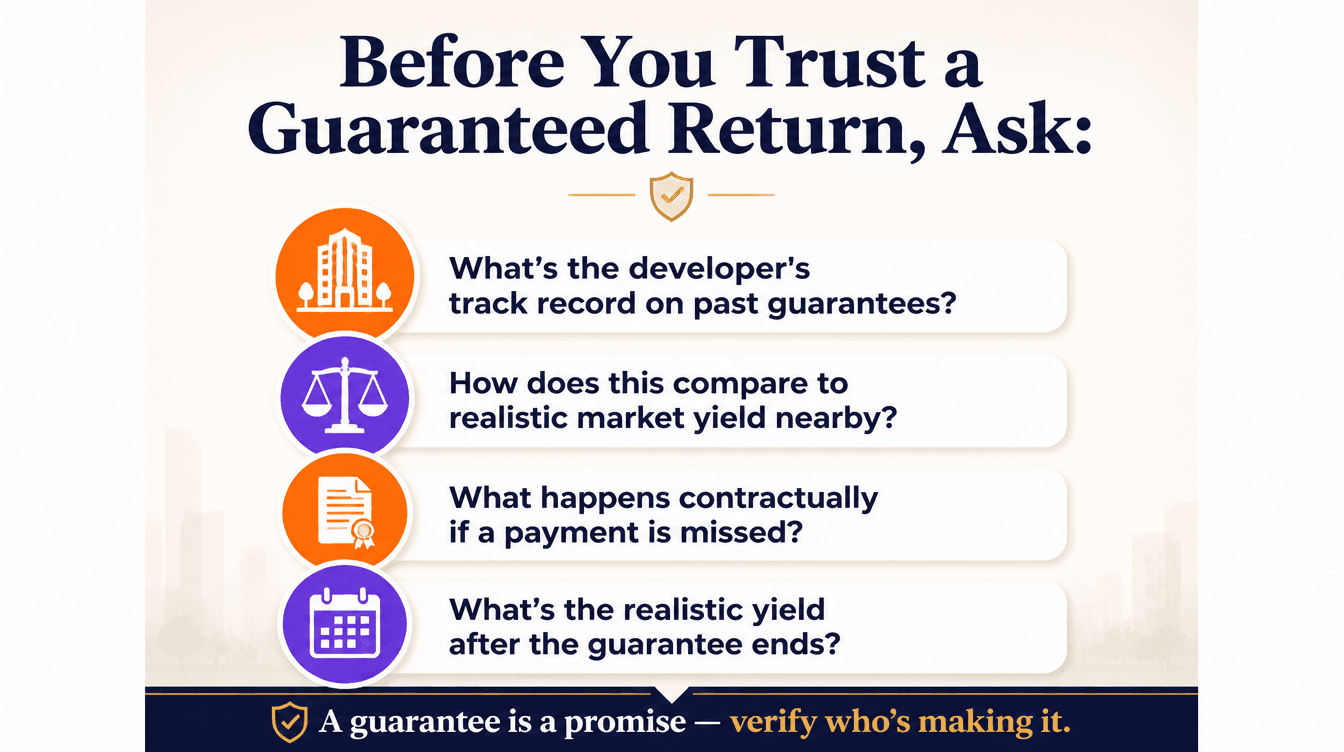
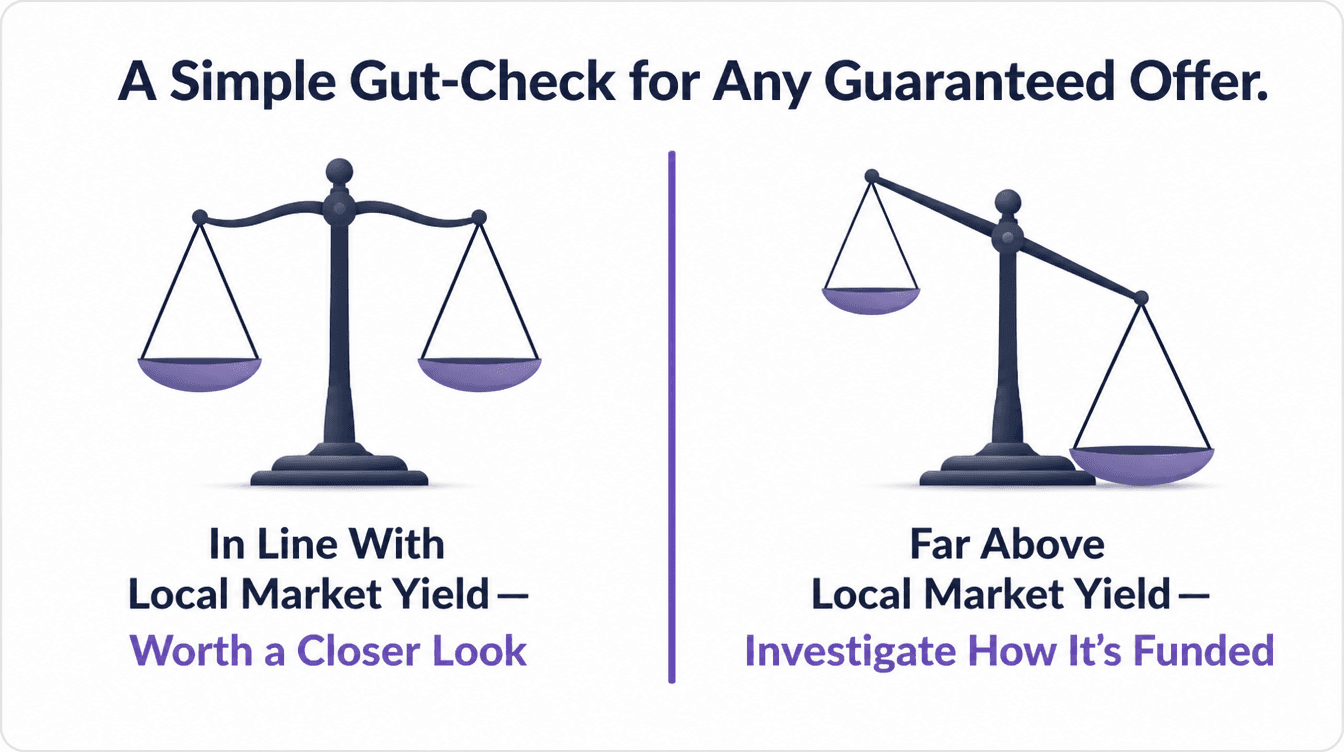
Evaluating a specific offer means looking at the developer's financial standing and track record of honoring guarantees on previous projects, comparing the guaranteed rate against realistic market rental yields for comparable unguaranteed units in the same area, and understanding exactly what happens — contractually — at the end of the guarantee period. A guaranteed rate that sits meaningfully above what comparable unguaranteed units in Bang Tao, Kamala, Laguna, or Layan actually achieve on the open market is worth treating as a signal to look more closely at how the guarantee is funded, not as straightforward good news.
What Should You Read Carefully in a Rental Guarantee Contract?
Specific contract terms worth reviewing in detail include: the exact guarantee period and what triggers its end, whether payments are contingent on any conditions (occupancy minimums, management agreements the buyer must maintain), what recourse exists if a payment is missed, and whether the guarantee is tied to a buyback or exit option at the end of the term. This is precisely the kind of contract review that belongs in legal due diligence rather than being taken at face value from marketing materials — Papaya Property's legal support includes reviewing rental guarantee terms specifically as part of evaluating any off-plan purchase that includes one, checking exactly what's actually being promised against what the marketing implies.
Are Guaranteed Rental Returns Worth It?
This deserves an honest, non-binary answer rather than a blanket endorsement or dismissal.
Do Guaranteed Rental Returns Affect Resale Value?
They can, in both directions. A strong, well-documented guarantee from a reputable developer can support resale value by giving the next buyer income predictability during their own hold period. Conversely, if the guaranteed rate turns out to be unsustainable relative to real market yields, the property's resale value can be affected once buyers start pricing the unit based on realistic post-guarantee income rather than the marketed guaranteed figure.
Are Guaranteed Rental Returns Too Good to Be True?
Not inherently — many guarantees are legitimate, properly funded commitments from developers with the financial capacity and track record to honor them. But a guaranteed rate that's significantly higher than anything achievable in the actual local rental market is a genuine red flag worth investigating rather than accepting at face value, since a developer offering a return well above what the unit could realistically generate is often recovering that cost through a higher purchase price, a shorter-than-expected guarantee period, or financial strain that puts the guarantee itself at risk.
The Bottom Line
Guaranteed rental returns aren't inherently a scam, but they aren't automatically a good deal either. The honest answer depends entirely on the developer's financial track record, the specific terms written into the contract, and a realistic understanding of what happens once the guarantee period ends — all of which are worth verifying independently rather than taking a marketing number at face value. A guarantee is a promise backed by a specific company's ability to pay, and evaluating that ability is exactly as important as the percentage itself.
If you're evaluating a project in Bang Tao, Kamala, Laguna, or Layan that includes a guaranteed rental return offer, the Papaya Property team can review the contract terms and the developer's track record with you before you commit. Reach out via Telegram, WhatsApp, or email for a free consultation — no forms, just a direct conversation with someone who can answer the questions specific to your investment.