

Selling Leasehold Property in Thailand: A Guide

Selling Leasehold Property in Thailand: What You Need to Know
Leasehold owners planning an exit often assume selling leasehold property in Thailand works exactly like selling freehold property — list it, find a buyer, transfer the title, done. It doesn't. Leasehold sales involve an extra legal layer that freehold sales don't require at all: assigning the existing lease to the new buyer, which is a distinct process from a standard title transfer.
This guide covers whether leasehold property can legally be sold, how the lease assignment process actually works, how remaining lease term affects what a buyer is willing to pay, and what happens to any superficies rights registered on the property.
Can You Sell a Leasehold Property in Thailand?
Leasehold rights are legally transferable in Thailand, which means yes, a leaseholder can sell their interest in a property to a new buyer. What differs from a freehold sale is the mechanism — instead of transferring a title deed outright, the seller assigns their remaining lease rights to the buyer.
Can You Sell a Leasehold Villa Before the Lease Ends?
Yes, and in practice this is how the vast majority of leasehold villa sales happen — very few leaseholders hold a property for the entire original lease term before selling. What transfers to the buyer is the remaining portion of the lease, not a fresh full-term lease, which is exactly why remaining term becomes such a central factor in how the sale is priced and negotiated.
How to Sell a Leasehold Villa in Thailand
The overall sale process follows a familiar shape — marketing, negotiation, contract, transfer — but each stage carries leasehold-specific considerations that a straightforward freehold sale doesn't.
How Do You Sell a Leasehold Property in Thailand?
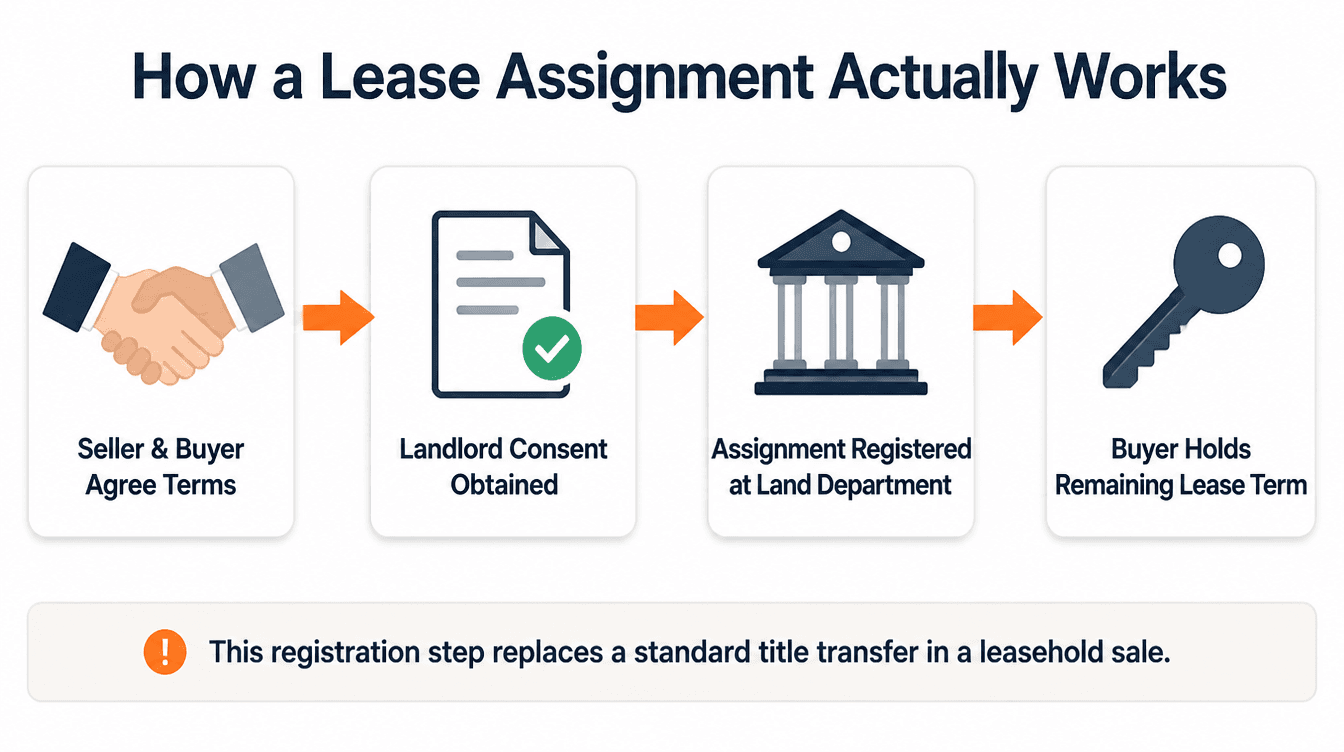
Once a buyer is found and terms are agreed, a leasehold sale moves through: drafting a sale agreement that specifically addresses the lease assignment (rather than a standard freehold SPA), obtaining the landlord's consent where required, registering the assignment at the Land Department, and — where applicable — transferring any associated superficies rights alongside it. Buyers on the other side of a leasehold purchase generally conduct more thorough due diligence than a freehold buyer would, specifically checking the remaining lease term, the original lease's renewal provisions, and whether superficies was properly registered in the first place.
What Documents Are Needed to Sell a Leasehold Villa?
At minimum, a leasehold sale requires the original registered lease agreement, any superficies registration documents, the landlord's written consent to the assignment (where the lease requires it), and a sale agreement specifically drafted to address the assignment mechanics rather than a standard freehold transfer contract. Missing or incomplete documentation on any of these fronts is one of the more common reasons a leasehold sale stalls partway through, since a buyer's own lawyer will typically flag gaps before advising their client to proceed.
Assigning a Lease to a New Buyer
This is the core legal mechanism that makes a leasehold sale fundamentally different from a freehold one, and it's worth understanding in detail before listing a property for sale.
Do You Need the Landlord's Permission to Sell a Leasehold Property?
This depends entirely on what the original lease agreement specifies. Many leases include a clause either requiring landlord consent for assignment or, in some cases, restricting assignment altogether without it. Checking the original lease terms early — ideally before actively marketing the property — avoids the situation where a seller finds a buyer only to discover the landlord's consent is required and not straightforward to obtain.
Can You Assign a Lease to a New Buyer in Thailand?
Yes, provided the assignment complies with the terms of the original lease and, where required, has the landlord's consent. The assignment itself is registered at the Land Department, similar in process to how the original lease was registered, and typically involves an assignment fee at the point of registration. [DATA NEEDED: typical lease assignment registration fee in Thailand]. Getting this registration handled correctly and promptly is exactly the kind of process where legal support makes a practical difference — Papaya Property manages lease assignment and registration as part of coordinating a leasehold sale, rather than leaving the seller to navigate landlord consent and Land Department registration independently.
How Remaining Lease Term Affects Resale Value
This is the question every leasehold seller eventually has to confront directly, since it shapes both pricing expectations and the pool of interested buyers.
How Is a Leasehold Property Valued When Reselling?
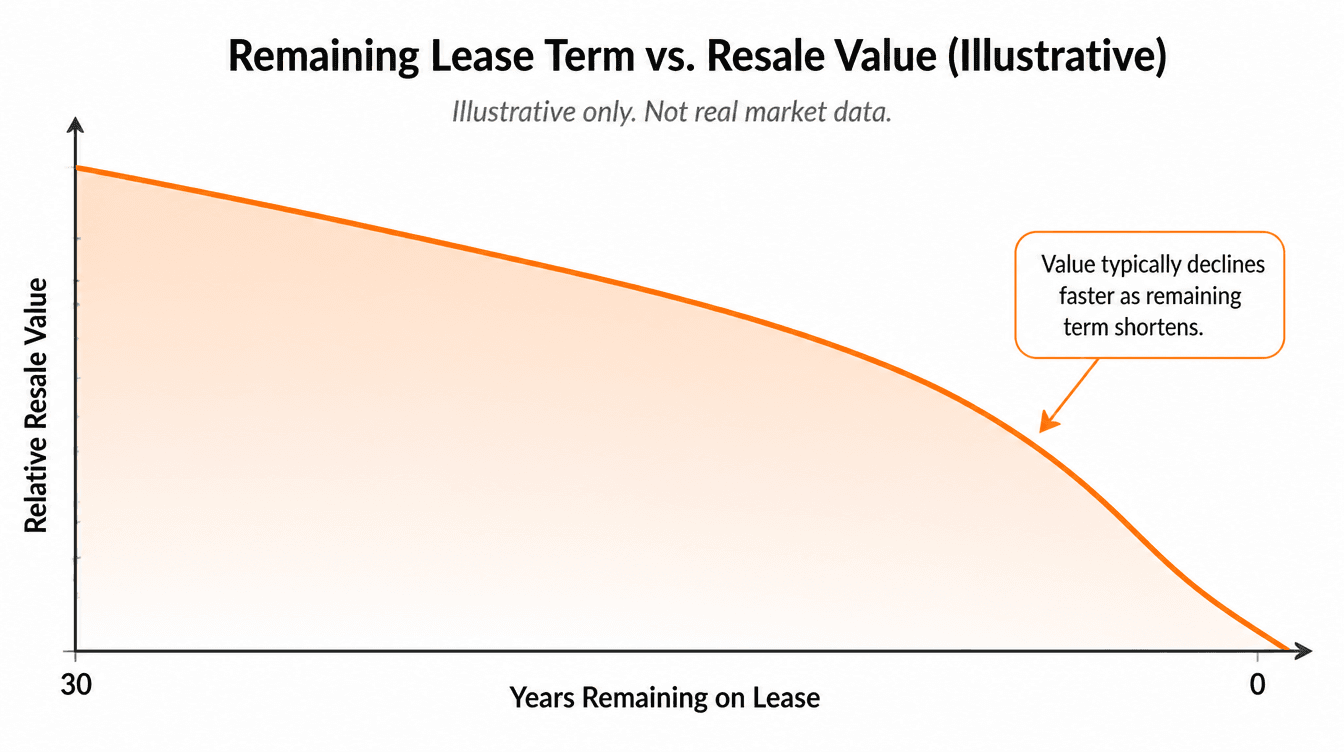
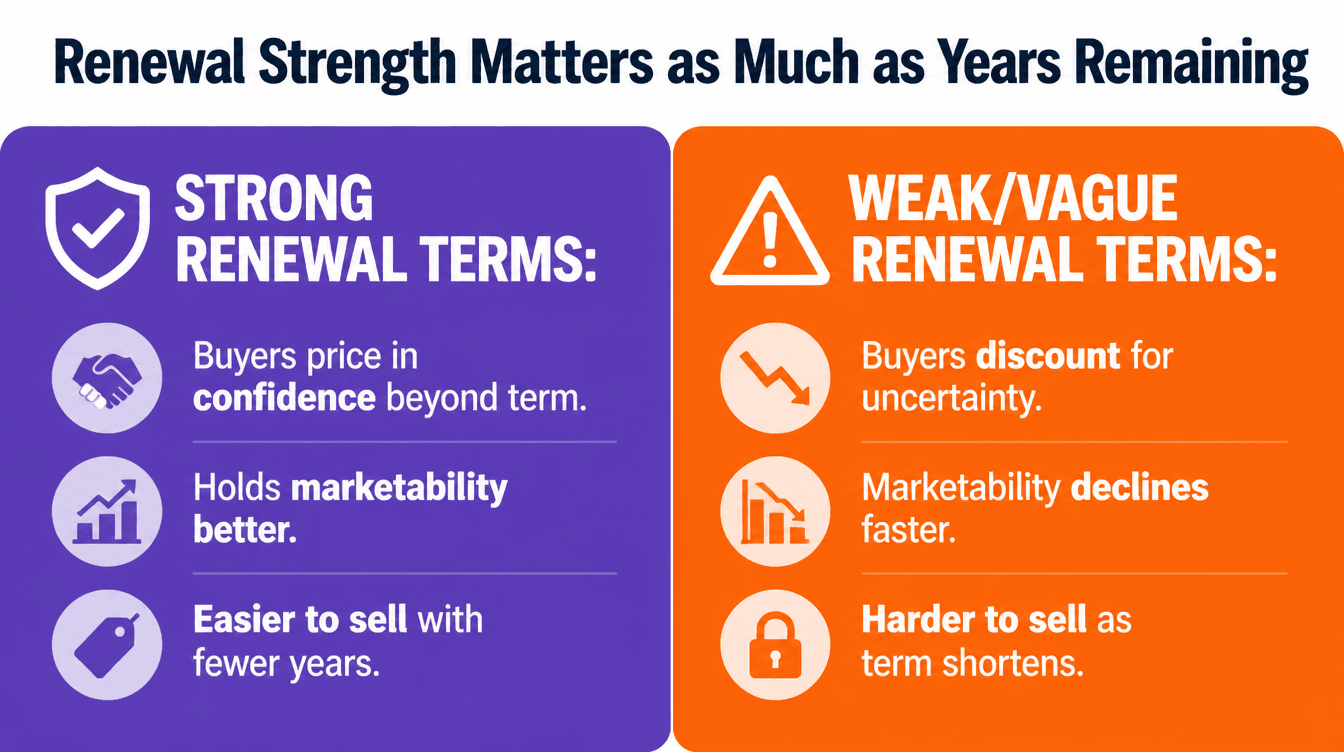
Leasehold resale value reflects the remaining term being transferred, the strength of any renewal provisions in the original lease, and how the property compares to similar freehold or leasehold properties currently on the market. [DATA NEEDED: current relative pricing data for leasehold vs. freehold comparable properties in Phuket, and typical valuation approach by remaining term]. A leasehold property with strong, clearly drafted renewal terms holds value more effectively than one with vague or weak renewal language, even at the same number of years remaining, since buyers are effectively pricing in their confidence that the property will remain usable well beyond the current lease term.
Does a Shorter Remaining Lease Term Reduce Resale Value?
Generally, yes — all else being equal, a shorter remaining term reduces what buyers are willing to pay, since they're purchasing fewer years of guaranteed use before needing to rely on a renewal that isn't automatically guaranteed. This is precisely why timing matters for leasehold sellers: a property sold with a substantial remaining term, or one with strong renewal provisions that buyers can rely on with confidence, holds its marketability considerably better than one approaching the end of its term with weak or ambiguous renewal language.
Transferring Superficies Rights When Selling
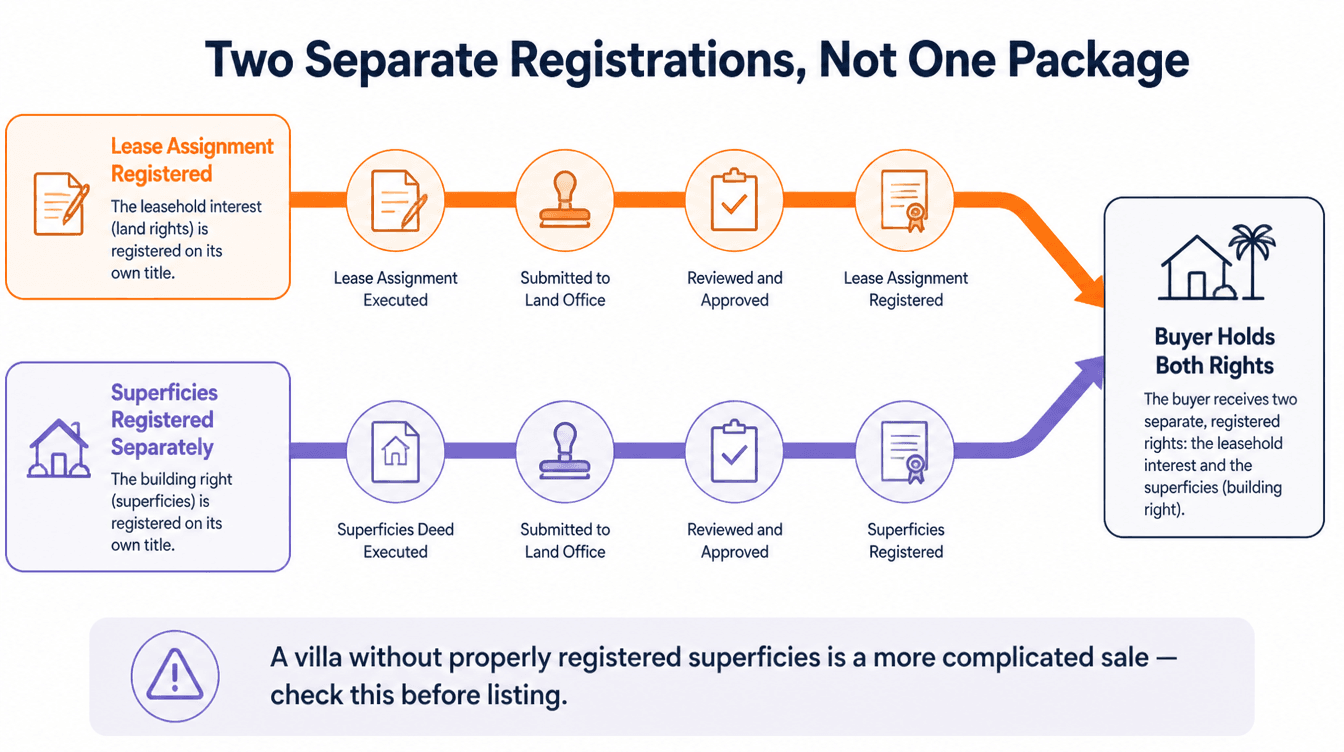
For villa sellers specifically, superficies adds another registered right that needs to move to the buyer alongside the lease assignment.
How Do You Transfer Superficies Rights When Selling?
Where superficies was properly registered as part of the original purchase, the right to the structure itself needs to be formally transferred to the new buyer, registered at the Land Department alongside or shortly after the lease assignment. This isn't automatic — it's a distinct registration step, consistent with how superficies works as a separate registered right rather than a clause automatically bundled into the lease. A seller whose villa never had superficies properly registered in the first place faces a more complicated sale, since the buyer would effectively be purchasing a lease on land without the stronger ownership claim on the structure that a properly registered superficies right provides — which is exactly the kind of gap worth identifying and addressing before listing the property, not after a buyer's lawyer flags it during their own due diligence.
Is Leasehold Harder to Sell Than Freehold in Thailand?
This deserves a direct, honest answer rather than a vague reassurance, since it genuinely affects how a seller should plan their exit.
Is It Harder to Sell Leasehold Than Freehold Property in Thailand?
Generally, yes — leasehold properties typically take longer to sell and attract a somewhat smaller pool of buyers than comparable freehold property, since the additional complexity of lease assignment, remaining-term considerations, and renewal reliability all add friction that a straightforward freehold title transfer doesn't have. This doesn't mean leasehold property is difficult to sell in absolute terms — it's a well-established, regularly used structure for villa transactions throughout Phuket — but sellers should plan for a somewhat longer timeline and more buyer questions than they might expect from a comparable freehold condo sale.
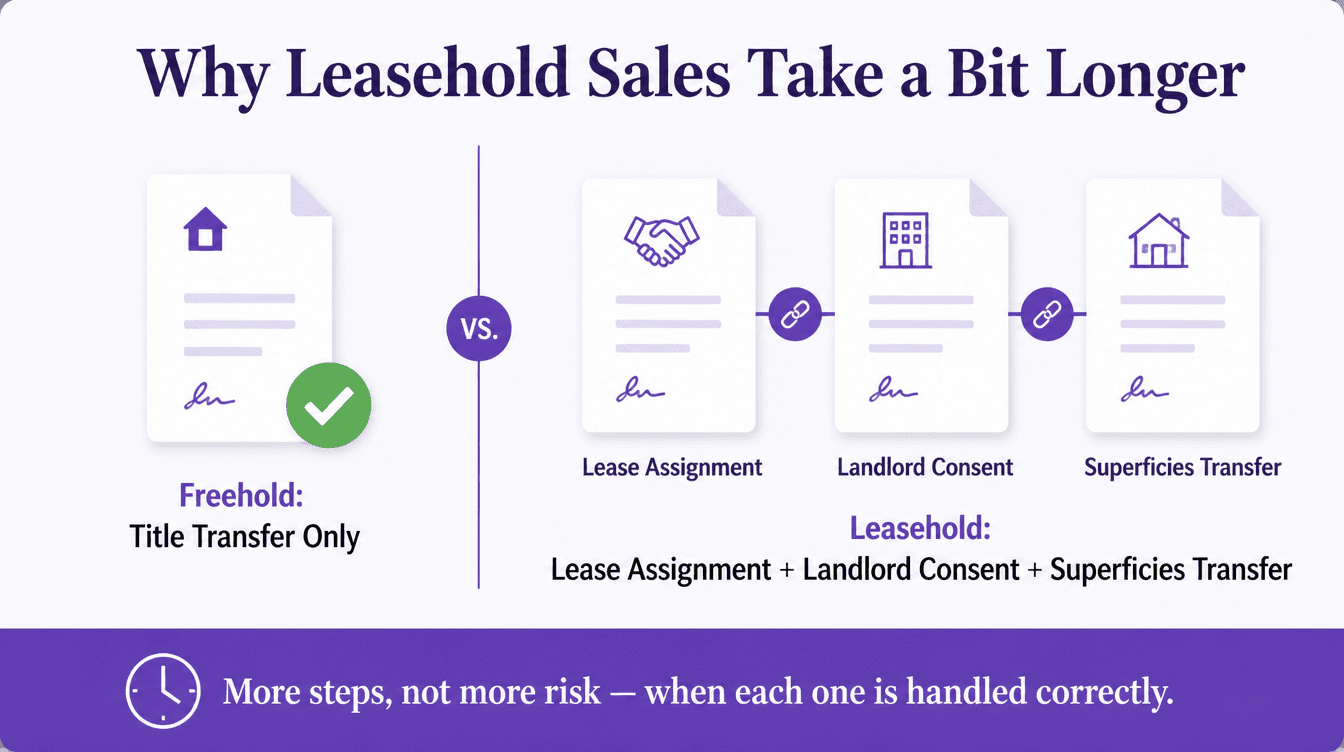
Working with legal support that manages lease assignment, superficies transfer, and documentation correctly from the start of the sale process is what keeps this added complexity from turning into added delay — buyers move faster when their own due diligence questions get clear, prompt answers rather than uncertainty about the property's legal structure.
The Bottom Line
Leasehold property in Thailand is genuinely sellable, and the core process — lease assignment, landlord coordination where required, and (for villas) superficies transfer — is well-established and regularly used. What catches sellers off guard is assuming it works identically to a freehold sale, when in practice it requires additional documentation, additional registration steps, and honest pricing that accounts for remaining lease term. Sellers who understand this upfront, and who have the original lease and superficies documentation in order before listing, navigate the process considerably more smoothly than those who discover these requirements partway through a sale.
If you're planning to sell a leasehold villa in Bang Tao, Kamala, Laguna, or Layan, the Papaya Property team can walk you through the assignment process and help you understand what your remaining lease term means for pricing and timeline. Reach out via Telegram, WhatsApp, or email for a free consultation — no forms, just a direct conversation with someone who can answer the questions specific to your sale.