

Healthcare System in Phuket for Expats: Full Guide

The Healthcare System in Phuket for Expats: A Complete Guide
Intro
Healthcare quality is one of the first questions serious relocators ask before committing to Phuket — and it deserves a real answer, not a brochure line. The healthcare system in Phuket for expats is built around a strong private hospital network, several JCI-accredited facilities, and specialists trained internationally. That said, "good hospitals" is not the same as understanding how the system actually works.
This guide breaks down the private-versus-public split, the hospitals foreigners actually use, realistic costs, insurance requirements tied to visas and property ownership, and what healthcare access looks like near Bang Tao, Kamala, Laguna, and Layan — the areas where most of our clients buy.
What Is the Healthcare System Like in Phuket?
Thailand runs a dual system: a public network serving Thai nationals through government hospitals, and a private network built largely around medical tourism and the expat community. In Phuket, these two systems operate on very different levels of speed, language access, and comfort.
Public hospitals in Phuket — led by Vachira Phuket Hospital — provide legitimate emergency and general care at low cost, but English-speaking staff are limited and wait times can be long, especially outside Phuket Town. Most foreigners, whether relocating short-term or buying property long-term, default to private care for anything beyond a minor walk-in issue.
The private network is where Phuket's reputation for medical tourism comes from: modern facilities, shorter wait times, and doctors who trained or worked abroad. It costs more than the public system, but for most residents the difference in speed and communication justifies it.
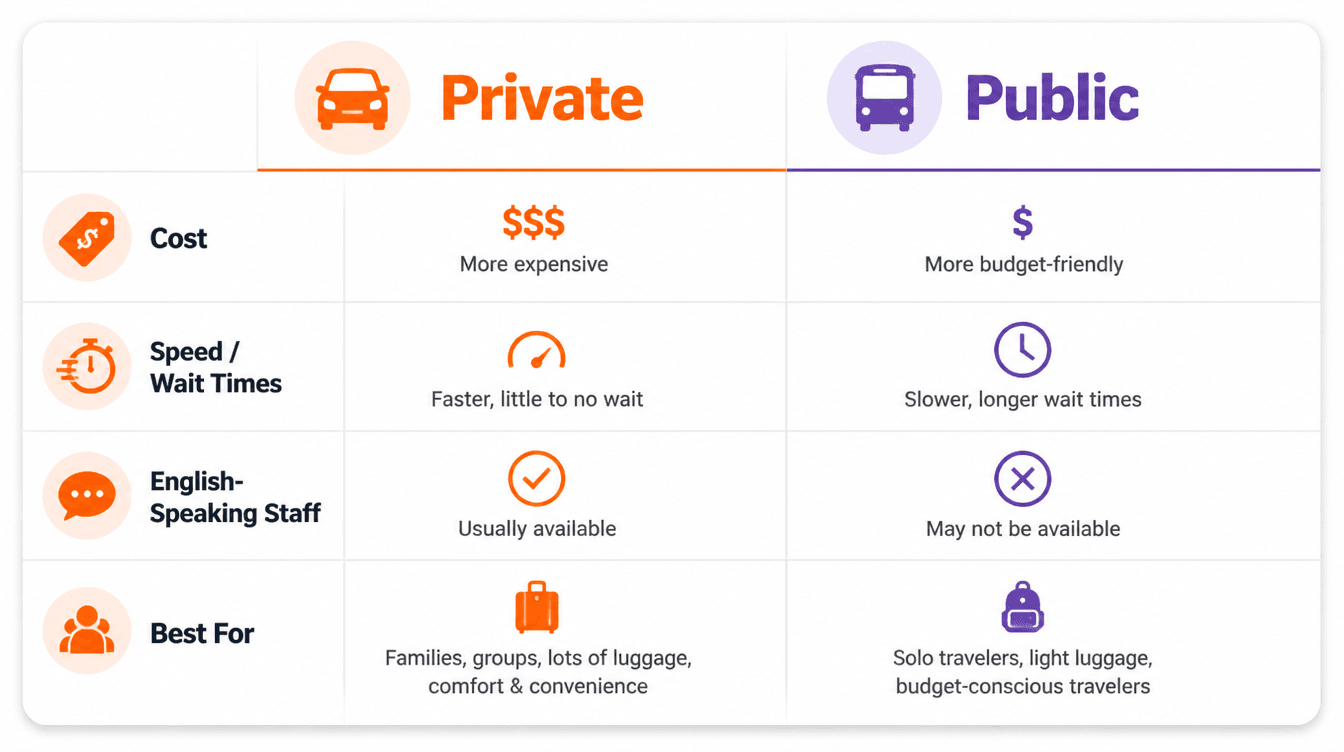
Private vs. Public Healthcare in Thailand — What's the Difference?
The core distinction comes down to three things: cost, speed, and language.
Cost — public hospitals are heavily subsidized for Thai citizens; foreigners pay a foreigner rate that is still far below private pricing, but private hospitals cost more across the board.
Speed — private hospitals prioritize appointment-based care with minimal queues; public hospitals can mean hours of waiting for non-emergency visits.
Language — private hospitals in tourist and expat areas staff English-speaking doctors and international coordinators; public hospitals often do not, outside of emergency triage.
For a relocator planning to live in Phuket year-round, the private system is the realistic default — public care remains a backup for cost-sensitive or emergency situations.
The Best Hospitals in Phuket for Foreigners
Phuket's private hospital network is genuinely strong by regional standards, and this is one of the reasons the island keeps attracting long-term expats and retirees, not just tourists.
Bangkok Hospital Phuket is the most recognized name among foreign residents — JCI-accredited, with a 24-hour emergency department, an international patient center, and specialists across most major fields. Phuket International Hospital and Siriroj International Hospital are the two other major private facilities foreigners rely on, both offering English-language services and coordination with insurance providers.
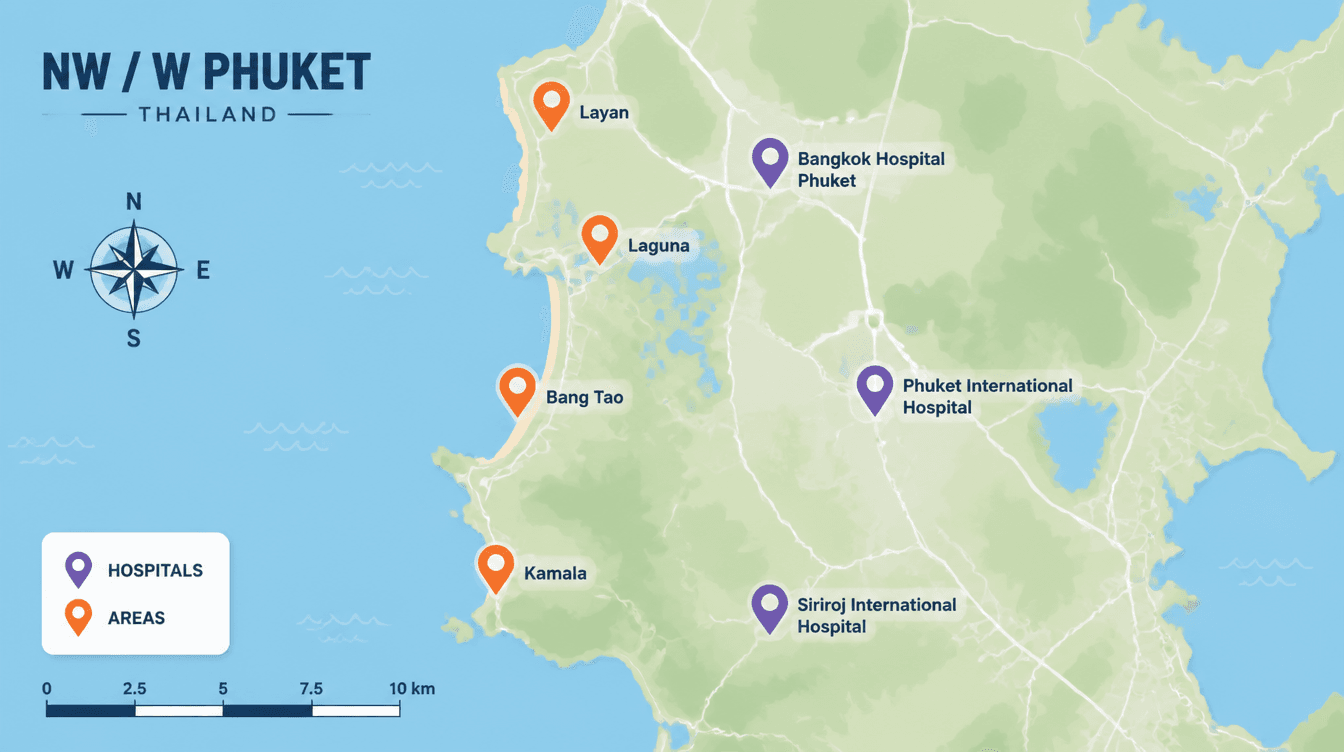
For anyone evaluating best hospitals in Phuket for foreigners, the honest answer is that the difference between the top three private hospitals is usually proximity and specialty availability rather than a meaningful quality gap — all three are equipped for serious care, not just tourist walk-ins.
Are There English-Speaking Doctors in Phuket?
Yes, at every major private hospital. International patient departments typically assign an English-speaking coordinator to foreign patients from check-in through discharge, and many specialists — particularly in cardiology, orthopedics, and dermatology — trained or practiced abroad. Public hospitals are far less consistent on this point, which is the main reason most expats route non-emergency care through private facilities.
What Happens in a Medical Emergency in Phuket?
Private hospitals run 24-hour emergency departments with ambulance services, and Bangkok Hospital Phuket in particular has a strong reputation for emergency response times in the north and west of the island. Dial 1719 for ambulance dispatch, or contact the hospital directly if you already have a preferred facility — most keep a direct emergency line for registered patients. For anything involving evacuation off the island, medical evacuation insurance becomes relevant.
Health Insurance for Expats in Phuket
Health insurance Phuket expats need to understand splits into three separate questions: is it legally required, is it required for your visa, and what actually makes sense for someone who owns property here.
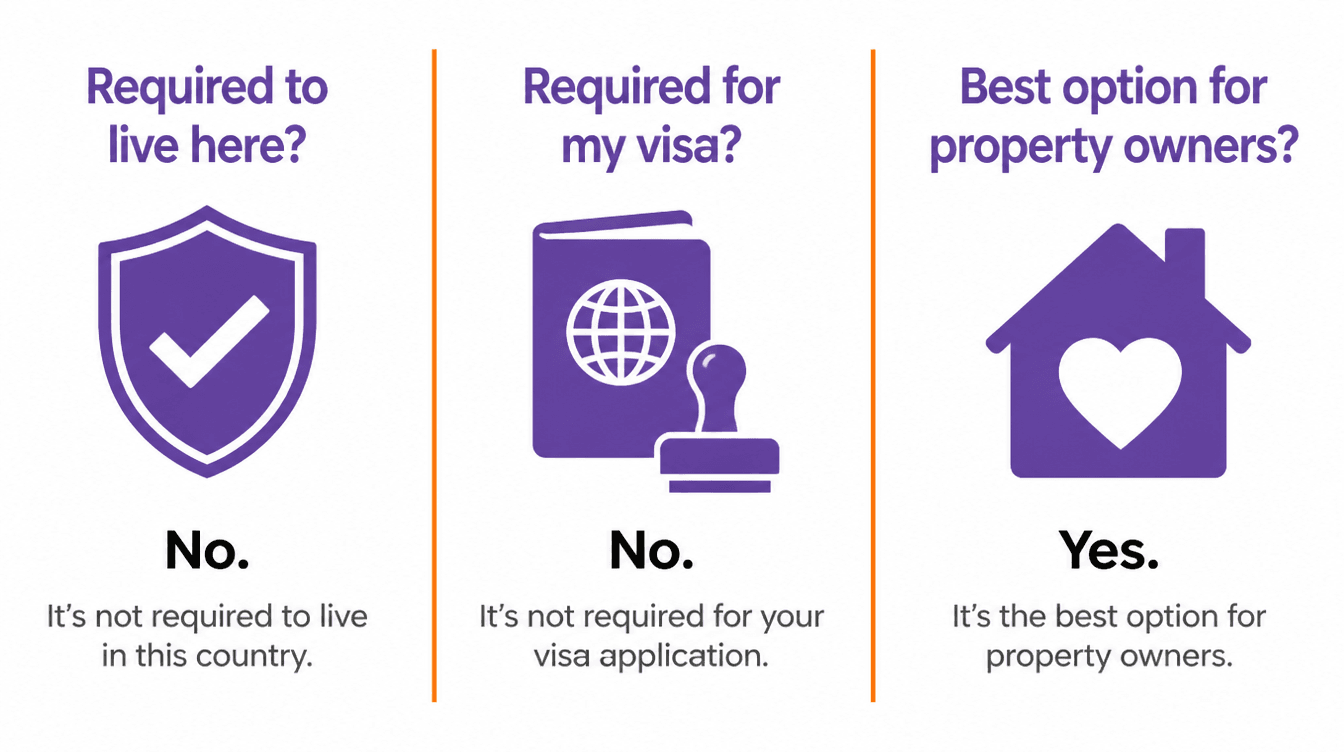
Do Foreigners Need Health Insurance to Live in Thailand?
There is no blanket legal requirement for all foreign residents to hold health insurance simply to live in Thailand. However, requirements tighten considerably depending on visa category — retirement and long-stay visas in particular often carry mandatory minimum coverage.
Do You Need Health Insurance for a Thai Visa?
For several visa types — notably the Long-Term Resident (LTR) visa and certain retirement visa categories — health insurance requirements Thailand visa rules apply directly, with minimum coverage thresholds set by Thai immigration.
These policies typically must cover inpatient treatment at minimum, and some categories require the policy to be from an approved list of insurers. Buyers planning to spend extended periods in their Phuket property, rather than visiting occasionally, should confirm their specific visa category's insurance requirement before finalizing plans — the threshold varies by visa type and changes periodically.
What Health Insurance Options Exist for Property Owners in Phuket?
For clients purchasing through Papaya, insurance needs typically fall into two categories: those relocating full-time, who need comprehensive local or international coverage, and those keeping the property as a second home, who may rely on travel insurance for shorter stays.
International insurers with Thailand coverage, and several Thai insurers offering expat-specific plans, are both viable routes. Pre-existing condition health insurance Thailand policies are available but usually carry waiting periods or exclusions — this is worth reviewing carefully with a broker rather than assuming standard coverage applies. Medical evacuation insurance Thailand is also worth adding for anyone with a serious pre-existing condition, given that Phuket's most advanced specialist care for complex cases sometimes still means transfer to Bangkok.
As part of the broader relocation support we provide alongside a purchase, we connect clients with insurance brokers familiar with expat and property-owner policies — this isn't something most agencies offer, but it's a natural extension of helping someone actually settle into the property they bought, not just close the transaction.
How Much Does Healthcare Cost in Phuket?
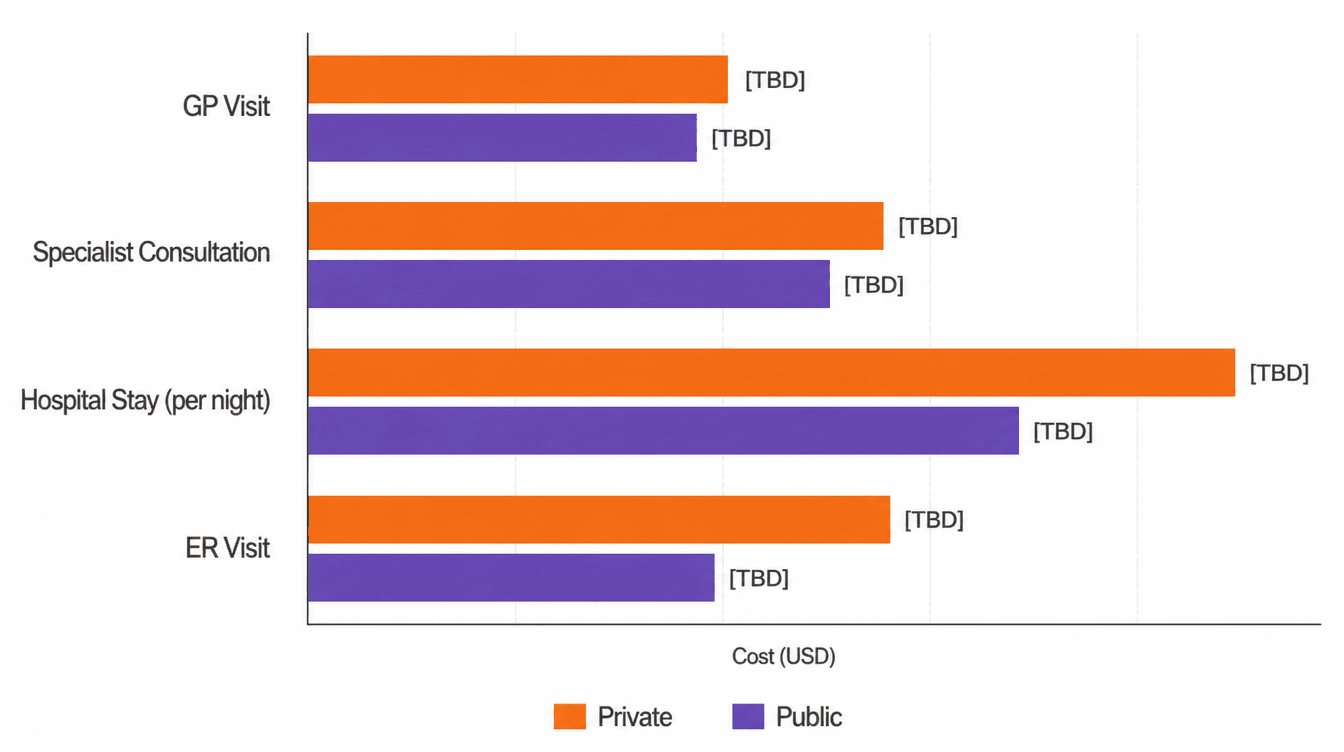
Medical costs in Phuket vary sharply between the public and private systems, and pinning down realistic numbers matters for anyone budgeting a long-term move.
Is Private Healthcare in Thailand Expensive?
Compared to public care in Thailand, yes — private care costs meaningfully more. Compared to private healthcare in the US, UK, or much of Western Europe, private care in Phuket is typically far cheaper for equivalent quality, which is a large part of why medical tourism to Thailand exists in the first place. For residents without insurance, the annual health check-up Phuket clinics offer is usually the most cost-effective way to catch issues early rather than waiting for a problem to require urgent, unplanned treatment.
Dental care Phuket and pharmacy access Phuket are both strong points of the system — private dental clinics are widespread and priced well below Western equivalents, and pharmacies are easy to find in every area popular with expats, with many medications available over the counter that would require a prescription elsewhere.
Healthcare for Retirees in Thailand
Retirees weighing a move to Phuket ask a more specific question than younger relocators: is the system equipped for ongoing, not just emergency, care.
Is Thai Healthcare Good Enough for Retirees?
For most common retirement-age concerns — cardiology, orthopedics, general internal medicine — Phuket's private hospitals are well-equipped, and several offer dedicated wellness or geriatric check-up packages aimed specifically at long-term foreign residents. Chronic condition management Thailand is realistic for the most common conditions (diabetes, hypertension, cholesterol management), with regular monitoring available through private clinics without the wait times of larger public facilities.
Where retirees should plan ahead is complex or specialized long-term care — for the most advanced cases, Bangkok's hospital network offers a deeper bench of subspecialists than Phuket does, and some clients choose insurance plans that explicitly cover transfer to Bangkok for this reason. For the large majority of retirement-age healthcare needs, though, Phuket's private system handles it locally and well.
Healthcare Access Near Bang Tao, Kamala, Laguna, and Layan
Healthcare access near Bang Tao, Kamala, Laguna, and Layan is one of the practical factors we walk clients through before they finalize a purchase — not because it should decide where you buy, but because it shapes day-to-day life once you're living there.
Bang Tao and Laguna sit closest to the island's strongest private hospital coverage, with Bangkok Hospital Phuket and Siriroj International Hospital both within a realistic drive. Kamala and Layan are slightly further from the main hospital cluster but still well within range for both routine and emergency care — this is not an area where healthcare access should be a concern for buyers, but travel time is worth knowing rather than assuming.
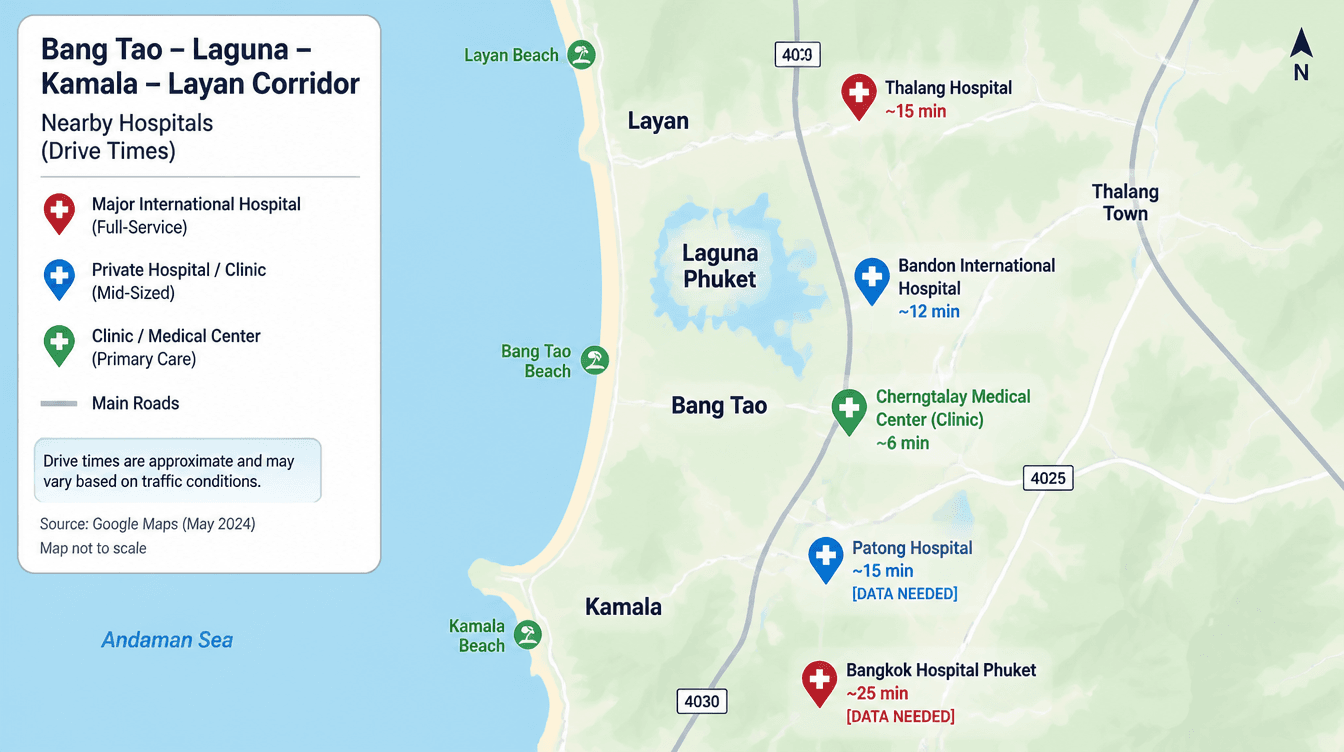
This kind of practical orientation — knowing which hospital to register with, how far the nearest pharmacy is, what the drive time looks like at different times of day — is part of what we help with beyond the purchase itself. Buying the right unit is only half the relocation; understanding how daily life actually functions around it is the other half, and it's where clients often find the most value in staying in touch with us after closing.
Conclusion
Phuket's private hospital network holds up well by regional standards — strong facilities, English-speaking doctors, and realistic emergency response, all at a fraction of Western private healthcare costs. The details that matter are understanding the private-versus-public split, budgeting realistically rather than assuming costs, and securing the right insurance before you need it rather than after.
If you're weighing a property purchase in Bang Tao, Kamala, Laguna, or Layan and want a clearer picture of healthcare access, insurance requirements, or anything else involved in relocating to Phuket, reach out to the Papaya team directly via Telegram, WhatsApp, or email — we're happy to walk through it with you.