

Mortgages for Foreigners in Thailand: Full Guide
Mortgages for Foreigners in Thailand: A Complete Financing Guide
Intro
"Can foreigners even get a mortgage in Thailand?" is one of the most common — and most misunderstood — questions in the buying process. The short answer is yes, but mortgages for foreigners in Thailand come with real constraints: a limited pool of lenders, higher deposits than Thai nationals face, and a process that looks nothing like a home-country mortgage application.
This guide covers how Thai bank mortgages actually work for foreigners, offshore and home-country financing alternatives, developer installment plans, and a clear comparison to help you decide which route fits your purchase.
Can Foreigners Get a Mortgage in Thailand?
Yes — a small number of banks in Thailand do lend to foreign buyers, but the terms differ meaningfully from what a Thai national or a buyer in their home market would expect. Loan-to-value ratio Thailand property lending for foreigners typically runs lower than for Thai nationals, meaning a larger deposit is required upfront, and approval criteria tend to be stricter overall.
Home loan Thailand foreigner eligibility generally depends on a combination of factors: income documentation, employment stability, existing relationship with the lending bank, and sometimes residency status in Thailand. Thai bank mortgage for foreigners products exist, but they are a narrower and more selective category of lending than the mainstream mortgage market most buyers are used to at home.
Do Thai Banks Lend to Foreigners for Condos or Only Villas?
Thai bank mortgages for foreigners are almost always limited to condominium units, not villas or land-based property. This connects directly to Thailand's foreign ownership structure: foreigners can hold condo units outright under the Condominium Act's 49% foreign ownership quota, which gives banks a clean legal title to lend against. Villas and land, by contrast, typically involve leasehold or company-structure ownership for foreign buyers, which most Thai banks are unwilling to lend against directly.
Which Banks Offer Mortgages to Foreigners in Thailand?
A handful of banks in Thailand actively work with foreign borrowers, generally larger institutions with international divisions built specifically to handle non-Thai applicants. Alongside these, a small number of international mortgage Thailand property lenders — banks with a Thailand or regional presence outside the mainstream Thai banking sector — also offer financing to foreign buyers, though availability and terms shift over time.
Mortgage broker Thailand foreigners work with can be a genuinely useful resource here, since loan products and eligibility criteria change frequently and a broker who tracks current offerings across multiple banks saves significant research time compared to approaching banks individually.
Which Banks Offer Mortgages to Foreigners in Thailand?
Working directly with a broker or requesting current options through Papaya is the most reliable way to get an accurate, up-to-date answer rather than relying on outdated online information.
What Documents Do Foreigners Need for a Thailand Mortgage Application?
The documentation process is one of the more procedural, less mysterious parts of the mortgage process, even though it looks unfamiliar at first.
What Documents Do Foreigners Need for a Thailand Mortgage Application?
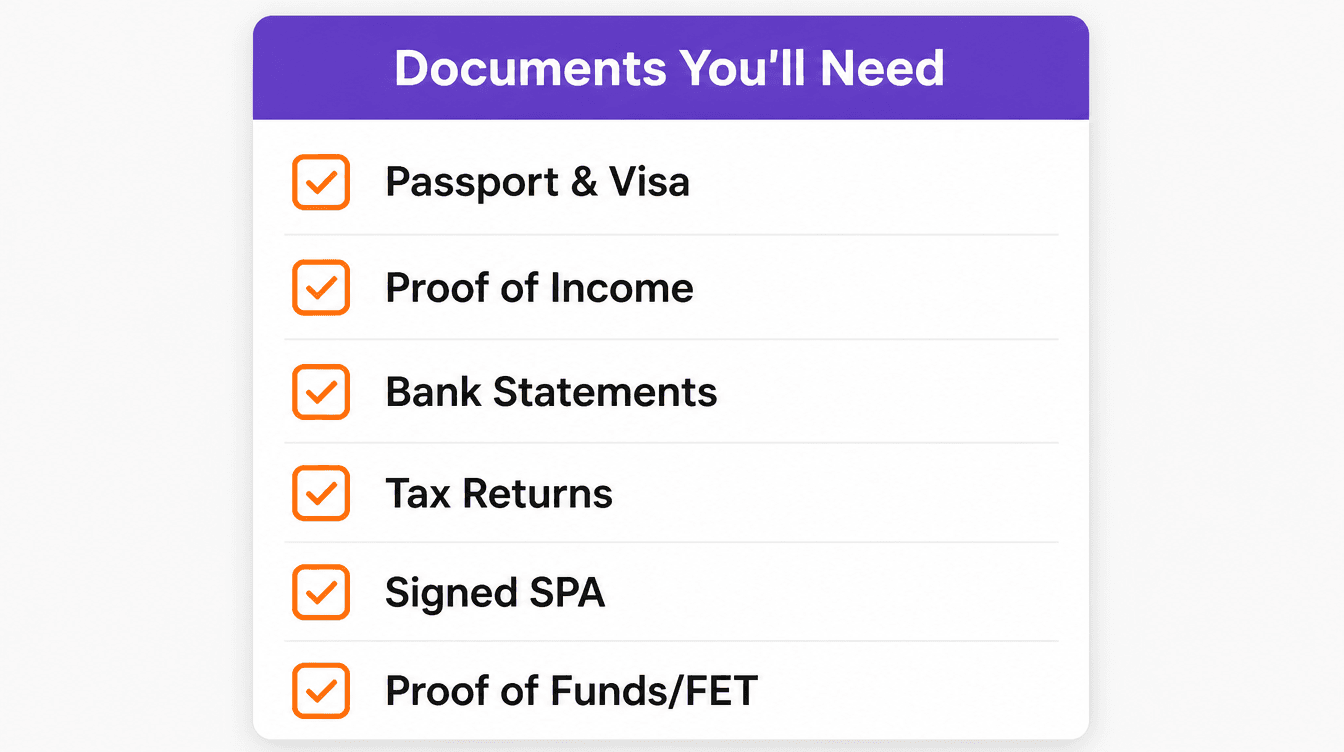
A typical foreign mortgage application in Thailand requires:
Passport and visa documentation confirming current status in Thailand
Proof of income — payslips, employment contracts, or business ownership documentation
Bank statements, typically covering the past six to twelve months
Tax returns or equivalent income verification from your home country
The signed reservation agreement or SPA for the property being financed
Proof of funds for the deposit and confirmation of how it will be transferred
Mortgage documentation requirements Thailand banks apply are broadly similar to documentation requirements anywhere, but the review process often takes longer for foreign applicants, since banks need to verify income and identity documents originating outside Thailand. FET form mortgage transfer Thailand rules apply once financing is approved and funds move: any transfer into Thailand over USD 50,000 must be properly registered via an FET form, which the receiving bank will require as part of finalizing the loan and the property transfer together.
Thailand Property Financing Options for Foreigners
A Thai bank mortgage is only one route among several, and it isn't always the most practical one.
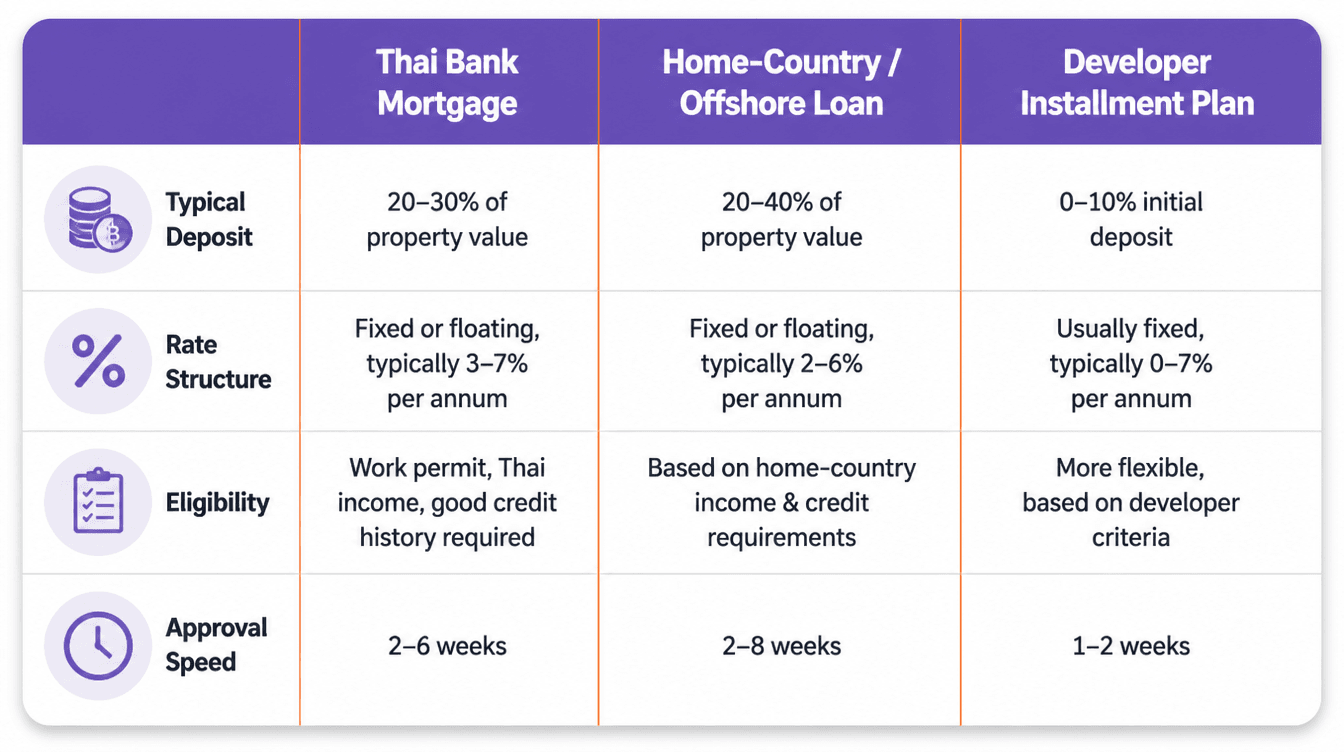
Thailand property financing options for foreigners generally fall into four categories: a Thai bank mortgage, a loan or refinance arranged through a bank in your home country, an offshore mortgage Thailand condo lender based outside Thailand, or a cash purchase. Each carries a different balance of speed, cost, and complexity, and the right choice depends heavily on your existing financial situation rather than a single "best" answer.
Can Foreigners Get a Mortgage From a Bank in Their Home Country for Thai Property?
In some cases, yes — buyers with significant equity in an existing home-country property can sometimes refinance or draw a loan against that property and use the funds for a Thailand purchase, effectively financing the purchase without a Thai bank at all. This route avoids Thai lending restrictions entirely and often comes with more familiar terms and lower rates than a foreign currency mortgage Thailand product, but it depends entirely on your existing assets and your home bank's willingness to lend against overseas property use.
Is It Easier to Buy Property in Thailand With Cash or a Loan?
Cash is unquestionably simpler — no application, no approval timeline, no ongoing loan servicing, and often stronger negotiating leverage with a seller or developer. Property financing for expats Thailand who don't have cash available isn't a dead end, though: it simply means the process takes a few extra steps, whichever financing route is chosen.
Developer Installment Plans vs. Mortgage in Thailand
For many buyers purchasing off-plan, this comparison matters more than the mortgage question itself.
Developer 0% installment plan Thailand options are common across new-build projects, including those from our partner developers Sansiri, Laguna Property, and The Title. These plans split the purchase price into staged payments tied to construction milestones, with no interest charged and no bank credit check required — a financing route that sidesteps the entire foreign-bank mortgage process while still spreading out the financial commitment.
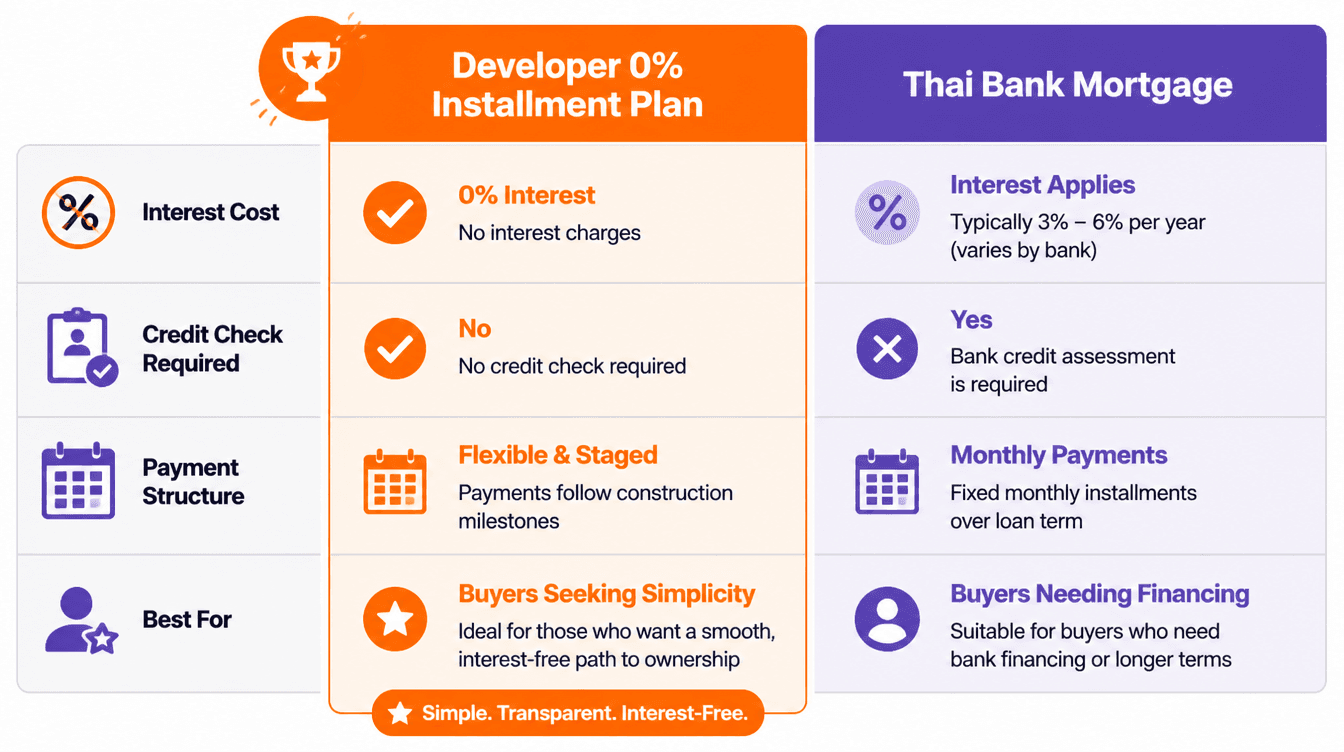
Mortgage vs cash purchase Thailand comparisons usually focus on interest cost, but for off-plan buyers the more relevant comparison is mortgage vs. developer plan: a 0% installment plan carries no interest cost at all during the construction period, while a mortgage begins accruing interest from disbursement regardless of whether the property is complete.
Is It Better to Use a Mortgage or a Developer Installment Plan in Thailand?
For an off-plan purchase, a developer installment plan is very often the stronger option — no interest, simpler qualification, and payments that track the construction timeline rather than starting immediately. A mortgage becomes more relevant for a completed resale property, where there's no developer payment plan available and full payment is expected at transfer. The two aren't mutually exclusive either: some buyers use an installment plan during construction and arrange financing only for a portion of the final payment at handover.
Mortgage Interest Rates and Currency Risk for Foreign Buyers
Two factors shape the real cost of any Thailand mortgage beyond the headline rate.
What Are Typical Mortgage Interest Rates for Foreigners in Thailand?
Down payment requirements Thailand property lenders set for foreign borrowers are generally higher than for Thai nationals, reflecting the higher perceived risk banks assign to foreign-income borrowers.
How Does Currency Risk Affect a Foreign Mortgage in Thailand?
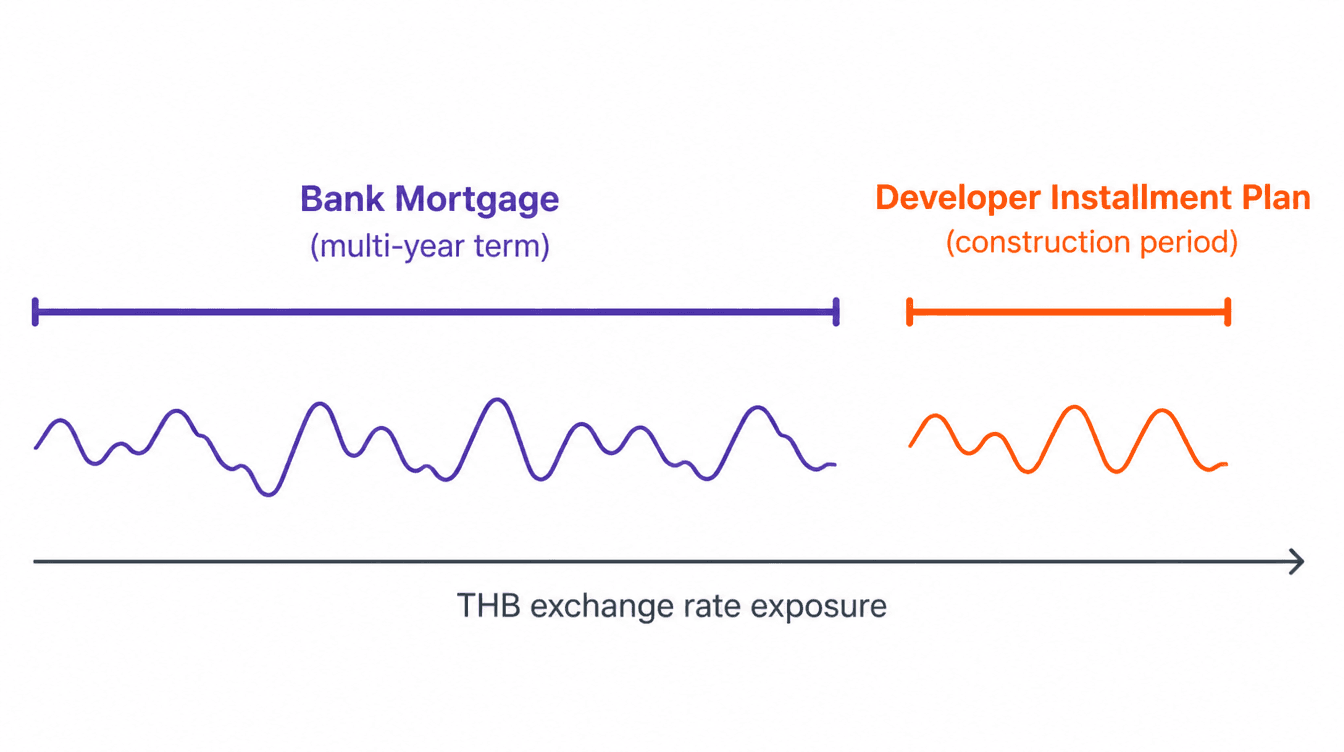
A Thai mortgage is denominated in baht, and loan repayments made from foreign-currency income carry ongoing exchange rate exposure for the life of the loan — a factor that doesn't exist with a cash purchase or a developer installment plan paid from savings. This is one more reason many buyers find a developer 0% installment plan, paid over a shorter construction period rather than a multi-year mortgage term, meaningfully reduces their total currency exposure compared to a long-term Thai bank loan.

Conclusion
A Thai bank mortgage for foreigners is possible, but it's a narrower and more selective route than most buyers expect — limited to condos, requiring a larger deposit, and involving a longer documentation process than financing at home. For many buyers, especially those purchasing off-plan, a developer 0% installment plan proves the more practical financing route: no interest, no credit check, and payments structured around construction progress.
If you'd like to discuss financing options for a specific project — including current developer installment plans — reach out to the Papaya team directly via Telegram, WhatsApp, or email. We're happy to walk you through what fits your situation.