

Hidden Costs of Buying Property in Thailand (2026)
The Hidden Costs of Buying Property in Thailand
Buyers who've done their homework on transfer fees and annual property tax still end up surprised by the final number — because the hidden costs of buying property in Thailand aren't taxes at all. They're legal fees, currency conversion losses, and process-related charges that rarely appear on a summary sheet handed over at reservation, even though every one of them is entirely predictable in advance.
This guide covers what those costs actually are: legal and documentation fees, currency and bank transfer costs, agent fees (or the lack of them), off-plan furniture costs, and the specific expenses that show up in the first year of ownership.
Costs Beyond the Official Tax List
Transfer fees, specific business tax, and annual land and building tax are the costs most buyers research before purchasing, because they're the ones that get written about most. This article deliberately covers different ground.
The costs below don't appear on a standard closing statement, aren't calculated as a percentage of the sale price, and often aren't mentioned until a buyer is already deep into the process — which is exactly why they end up feeling "hidden" even though none of them are secret. Every one of them is knowable in advance if you ask the right questions before signing anything.
Legal and Documentation Costs
Proper legal support isn't optional for a foreign buyer in Thailand, but it does come with a cost that's worth budgeting for explicitly rather than discovering partway through a transaction.
How Much Do Lawyer Fees Cost When Buying a Condo in Thailand?
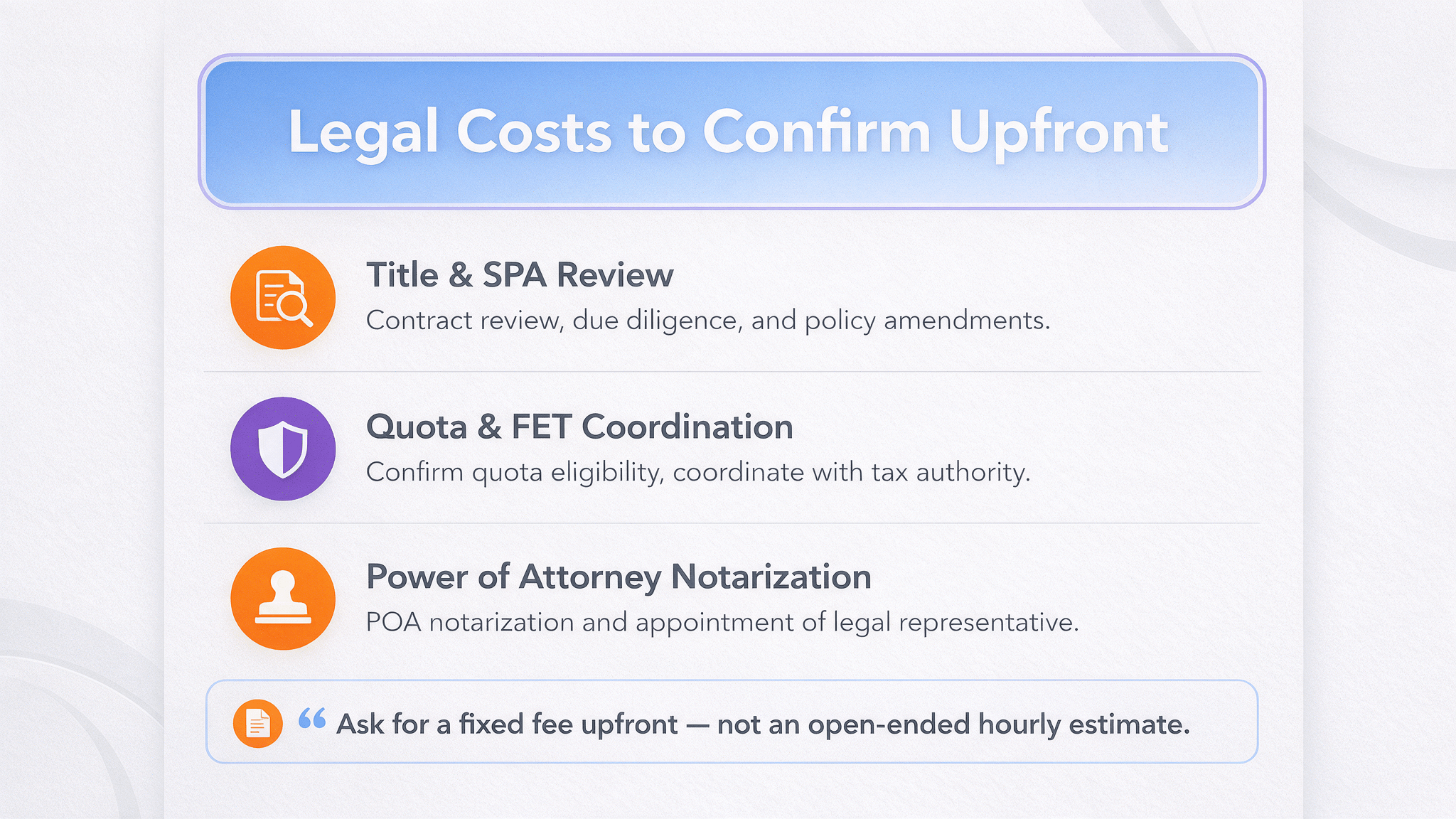
Legal fees typically cover title verification, SPA review, foreign quota confirmation, and coordination around the FET form and transfer documentation. This is a cost worth confirming upfront as a fixed figure rather than an open-ended hourly arrangement, so it doesn't become one more unpredictable line item on top of everything else.
What Does It Cost to Legalize a Power of Attorney for Thailand?
Buyers who can't be physically present for reservation, SPA signing, or title transfer typically rely on a power of attorney, and getting that document properly notarized and, where required, authenticated for use in Thailand carries its own cost — separate from the legal fees covering the transaction itself. [DATA NEEDED: typical notarization and authentication cost range depending on buyer's home country]. This cost is easy to overlook specifically because it happens outside Thailand, in the buyer's home country, which means it rarely shows up on a Thailand-based cost estimate at all.
Currency and Bank Transfer Costs
This is where buyers lose money without necessarily realizing it — not through a fee labeled as a fee, but through the exchange rate itself.
Do Banks Charge Fees for International Property Transfers?
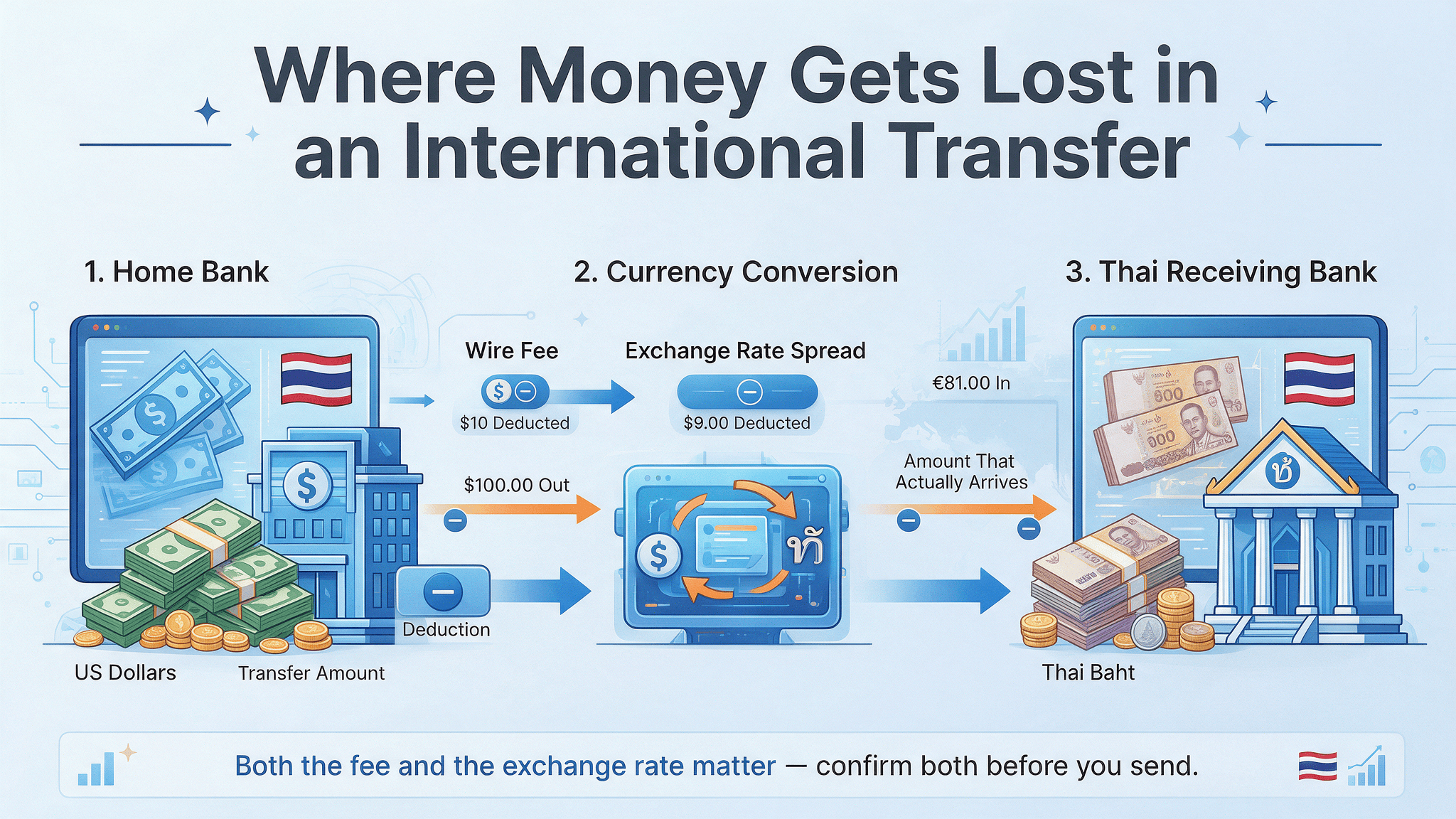
Yes. Both the sending bank and the receiving Thai bank can charge wire transfer fees, and intermediary banks involved in routing an international transfer sometimes deduct additional fees along the way that aren't itemized until the funds actually land. On a transfer of the size involved in a property purchase, these fees are worth confirming in advance rather than assuming the full amount sent will arrive intact.
How Much Does Currency Conversion Cost When Transferring Money to Thailand?
Beyond flat transfer fees, the exchange rate applied during conversion to Thai baht is itself a cost — banks typically apply a less favorable rate than the market mid-rate, and that spread can represent a meaningful amount on a transfer the size of a condo purchase. [DATA NEEDED: typical spread percentage between bank exchange rates and market mid-rate for THB conversions]. Buyers who structure their transfer correctly — timing it appropriately and confirming the applicable rate before sending — avoid losing more to conversion than necessary, which is exactly the kind of detail worth getting guidance on before the wire is sent rather than after.
Agent Fees — Do They Apply When Buying Direct?
This is a question worth answering directly, since agent commission structures vary significantly across the market and buyers are often unclear on how they work.
Are There Agent Fees When Buying Direct From a Developer?
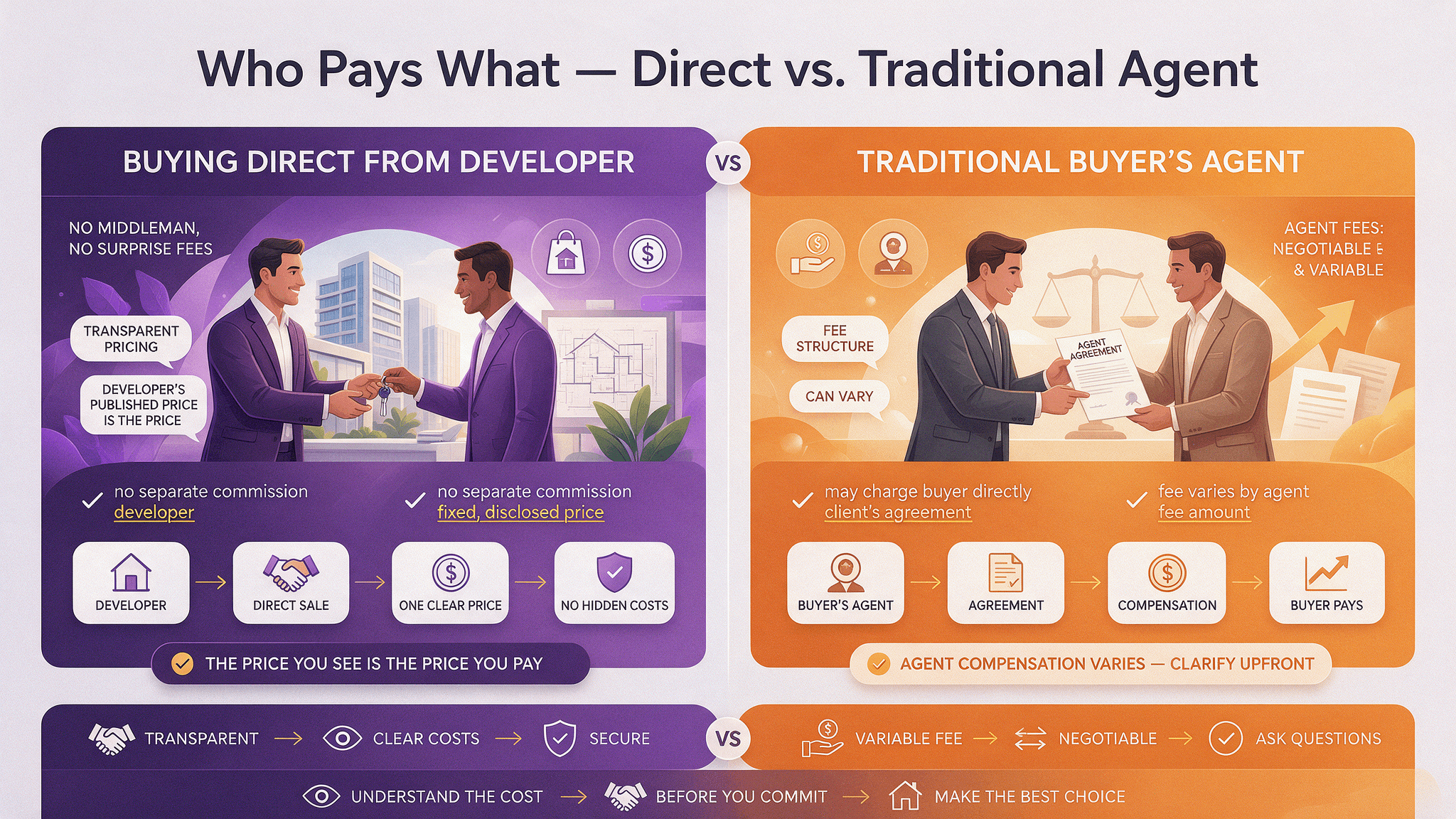
When buying directly from a developer through an agency working on the developer's behalf, the buyer typically doesn't pay a separate agent commission — the developer's published price is the price the buyer pays. This is distinct from working with a traditional buyer's agent, who may charge the buyer directly for representation. Papaya Property works directly with developers like Sansiri, Laguna Property, and The Title, which means buyers get the developer's own pricing with no agency markup layered on top of the sale price — the cost structure is transparent because there's no hidden commission built into what the buyer pays.
Off-Plan Extras — Furniture and Fit-Out Costs
For off-plan purchases specifically, there's a cost category that catches buyers off guard simply because it depends entirely on what the developer includes — or doesn't.
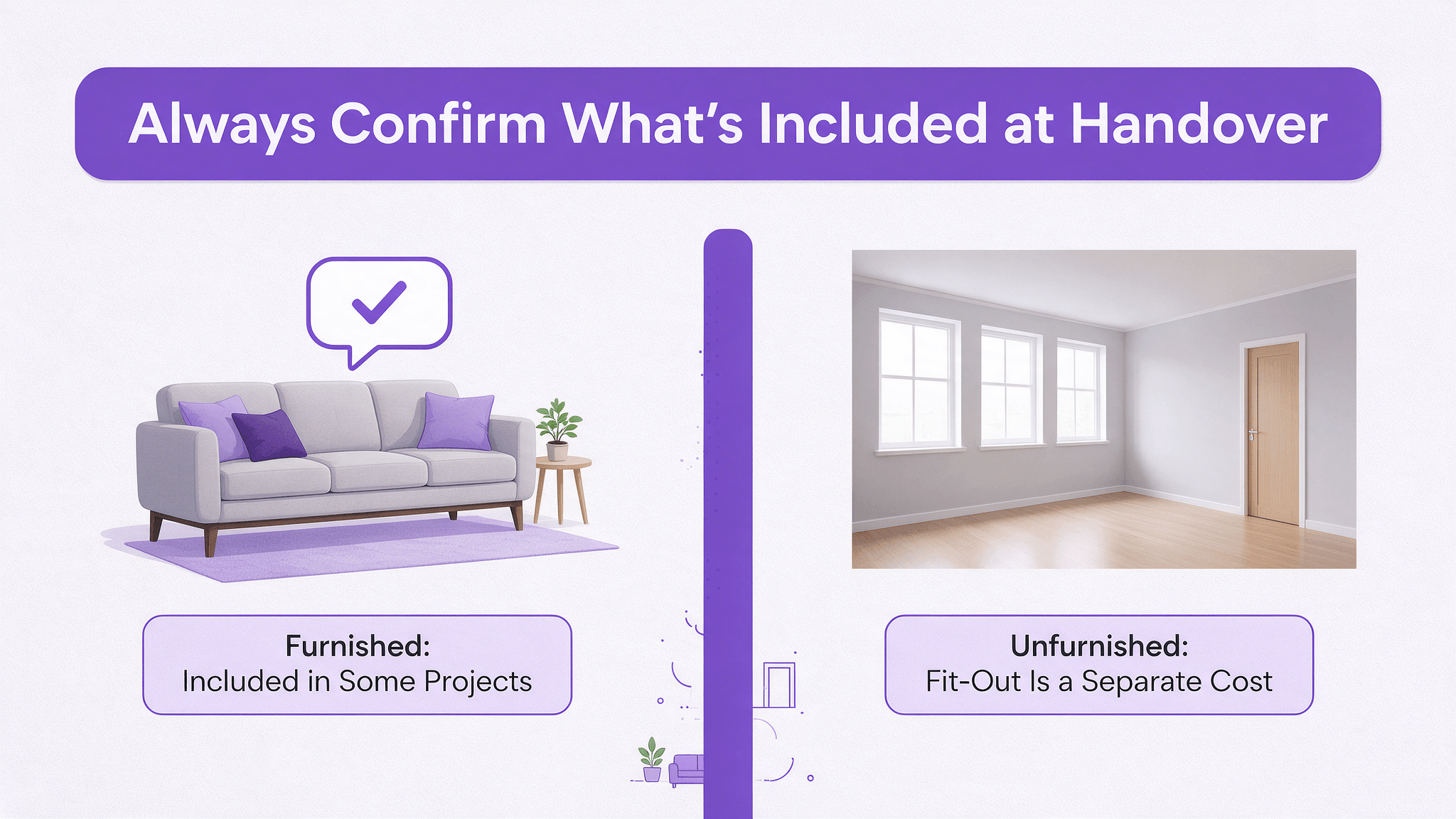
Do You Need to Buy Furniture Separately for an Off-Plan Condo?
This depends entirely on the project and the specific unit package. Some developers include a furniture package as part of the purchase price; others deliver units unfurnished, leaving fit-out as a separate cost the buyer arranges independently. [DATA NEEDED: typical furniture package cost range for current Phuket off-plan projects, or confirmation of which developer projects include furniture as standard]. This is one of the first questions worth asking when comparing units, since two similarly priced units can end up with very different total costs depending on what's actually included at handover — along with move-in costs like utility connection fees that also vary by project and need to be confirmed rather than assumed.
What Costs Come Up in the First Year of Ownership
Beyond the purchase itself, the first year of owning a condo in Thailand tends to surface a specific set of costs that are separate from the recurring annual taxes and fees already built into most buyers' expectations.
What Costs Come Up in the First Year of Owning a Condo?
New owners commonly encounter minor maintenance items not covered under a developer's warranty, the cost of arranging property insurance if it wasn't bundled into the purchase, and — for owners not living in the unit full-time — costs associated with property management or basic upkeep while the unit sits vacant between visits or rental periods. None of these are large individually, but together they add up to a real first-year cost that's easy to underestimate when budgeting was based solely on the purchase price and headline taxes.
Why Did My Total Purchase Cost End Up Higher Than Expected?
In most cases, this comes down to exactly the categories covered in this article: legal fees not confirmed upfront, currency conversion losses on the transfer, an assumption that furniture was included when it wasn't, or first-year costs that weren't part of the original budget at all. None of these individually explain a large gap, but combined, they're the most common reason a buyer's final cost runs noticeably higher than the number they had in mind when they reserved the unit.
What Buyers Forget to Budget For — And How to Avoid Surprises
Pulling every category together, the pattern is consistent: none of these costs are actually hidden in the sense of being concealed — they're simply not itemized unless a buyer specifically asks.
What Should You Ask Your Agent About Before Signing Anything?
Before signing a reservation agreement or SPA, ask directly:
What are the legal fees, and are they a fixed amount or open-ended?
Does the unit come furnished, and if not, what does a furniture package typically cost?
What bank fees or conversion costs should I expect when transferring funds?
Are there any agent or intermediary fees on top of the developer's published price?
What move-in costs — utility connections, insurance — should I budget for in the first year?
Asking these questions upfront turns every cost in this article from a surprise into a known, budgeted figure. This is exactly the kind of full transparency that should be part of the buying process from the start — Papaya Property provides a complete, itemized cost breakdown covering legal fees, currency guidance, and move-in expectations before a client commits to a specific project, precisely so nothing on this list becomes a surprise later.
The Bottom Line
None of the costs covered in this guide are actually hidden — they're simply the costs that don't make it onto a standard closing statement unless someone specifically itemizes them. Legal fees, currency conversion losses, furniture and fit-out costs, and first-year ownership expenses are all entirely predictable once you know to ask about them, which is the real difference between a buyer who budgets accurately and one who's surprised by the final total.
If you're evaluating a purchase in Bang Tao, Kamala, Laguna, or Layan and want a complete, itemized cost breakdown before you commit to anything, the Papaya Property team can walk you through every cost covered here for your specific purchase. Reach out via Telegram, WhatsApp, or email for a free consultation — no forms, just a direct conversation with someone who can answer the questions specific to your situation.