

Rental ROI by Area in Phuket: Comparison Guide

Rental ROI by Area in Phuket: A Comparison Guide
"Best area for rental yield" gets asked constantly by investors evaluating Phuket, but most answers online are either outdated, pulled from unverified listing-site averages, or fail to distinguish gross yield from net yield — three problems that make a real difference to what an investor actually pockets each year. Rental ROI by area in Phuket only means something once you know how the number was calculated and what it excludes.
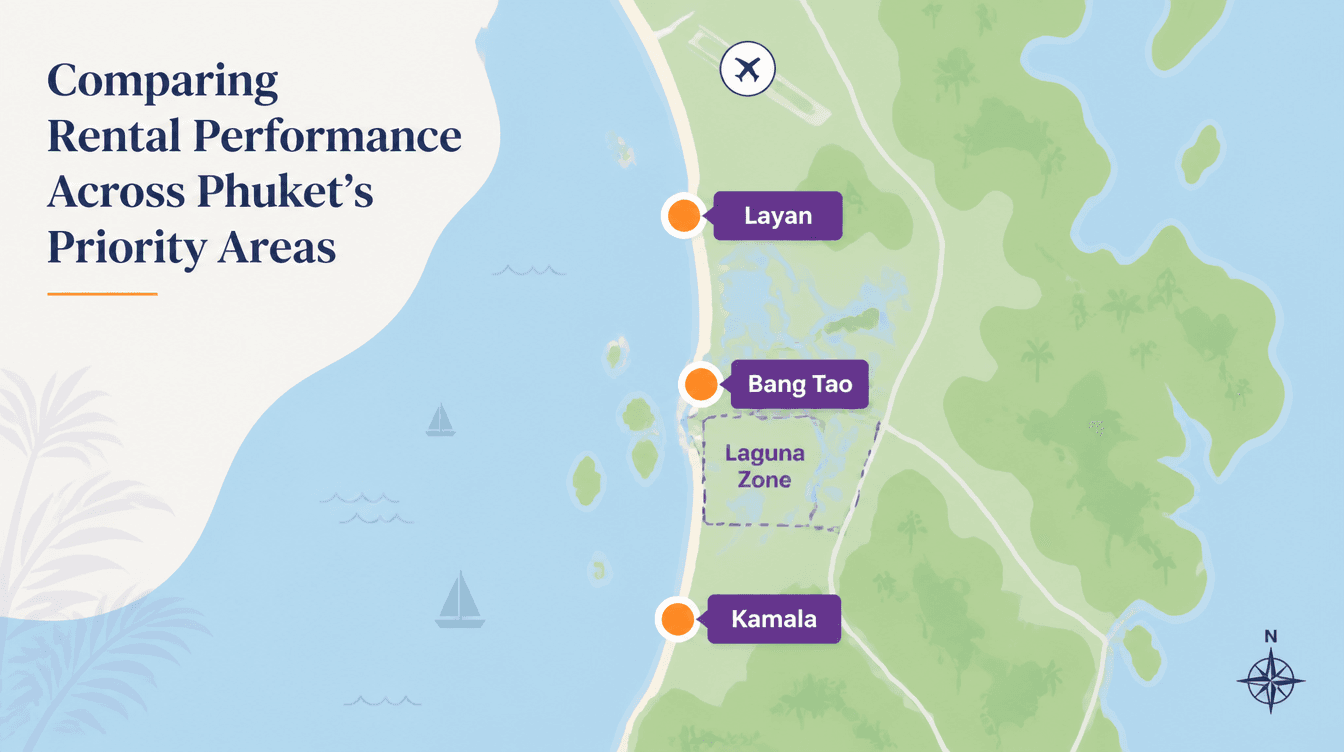
This guide covers how rental yield is actually calculated, a direct area-by-area comparison across Bang Tao, Kamala, Laguna, and Layan, and the strategic factors beyond the headline number — short-term versus long-term rental, off-plan versus resale — that shape real returns.
How Rental Yield Is Actually Calculated
Before comparing any area to another, it's worth being precise about what "rental yield" actually measures, since the same property can carry two very different yield figures depending on which calculation is used.
What's the Difference Between Gross and Net Rental Yield?
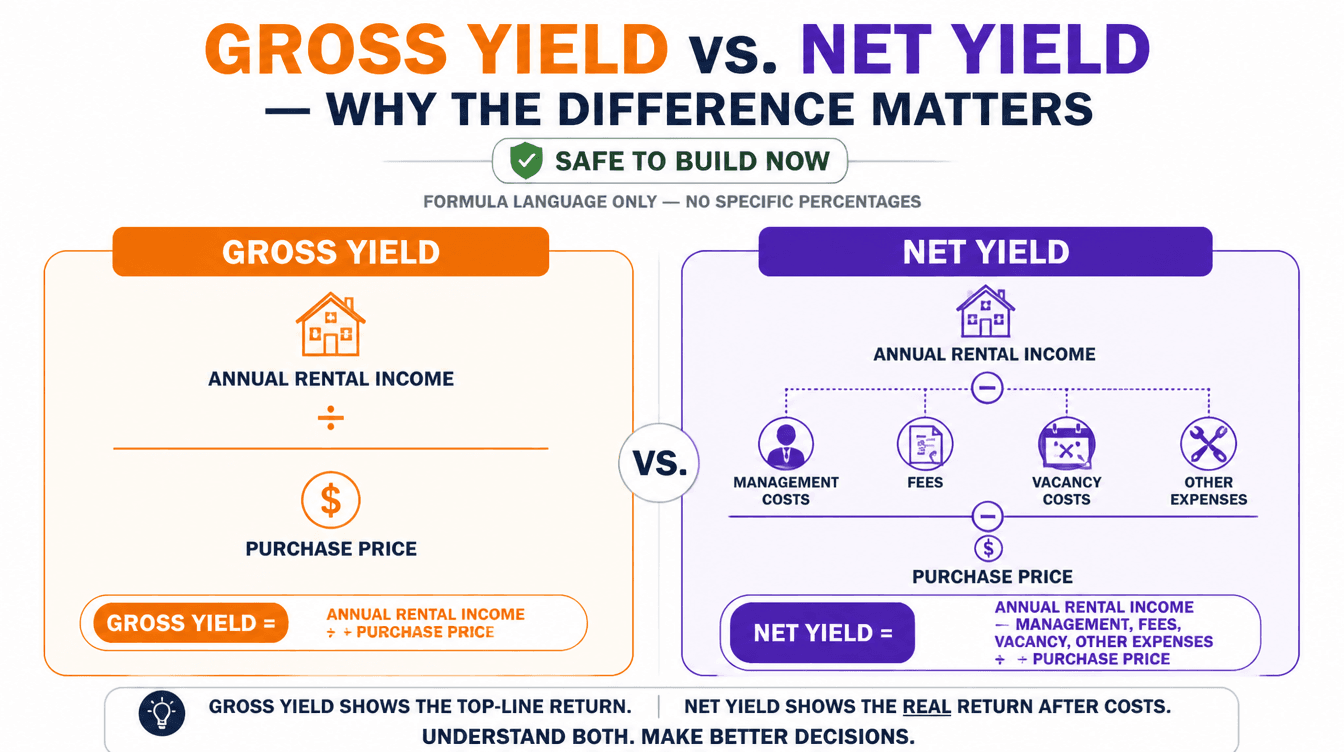
Gross rental yield is annual rental income divided by the purchase price, without subtracting any costs — it's the headline number most marketing materials lead with, and it's also the least useful figure for actually deciding where to invest. Net rental yield subtracts the real costs of generating that income — property management fees, maintenance, common area fees, insurance, and periods of vacancy — before dividing by purchase price. The gap between gross and net yield can be substantial, which is exactly why a quoted "8% yield" without specifying gross or net tells an investor very little on its own.
How Much Does Property Management Cost in Phuket?
Property management fees, whether for short-term or long-term rental, are one of the largest deductions between gross and net yield. [DATA NEEDED: typical property management fee percentage or range for Phuket condos and villas, broken out by short-term vs. long-term rental management]. These fees vary depending on the level of service — full-service short-term rental management with guest turnover, cleaning, and marketing typically costs more than long-term tenant management, which is a meaningful factor in comparing net returns across different rental strategies, not just across areas.
Rental ROI by Area in Phuket — The Comparison
This is the section investors are actually here for, and it deserves current, area-specific figures rather than a single blended "Phuket average" that obscures real differences between locations.
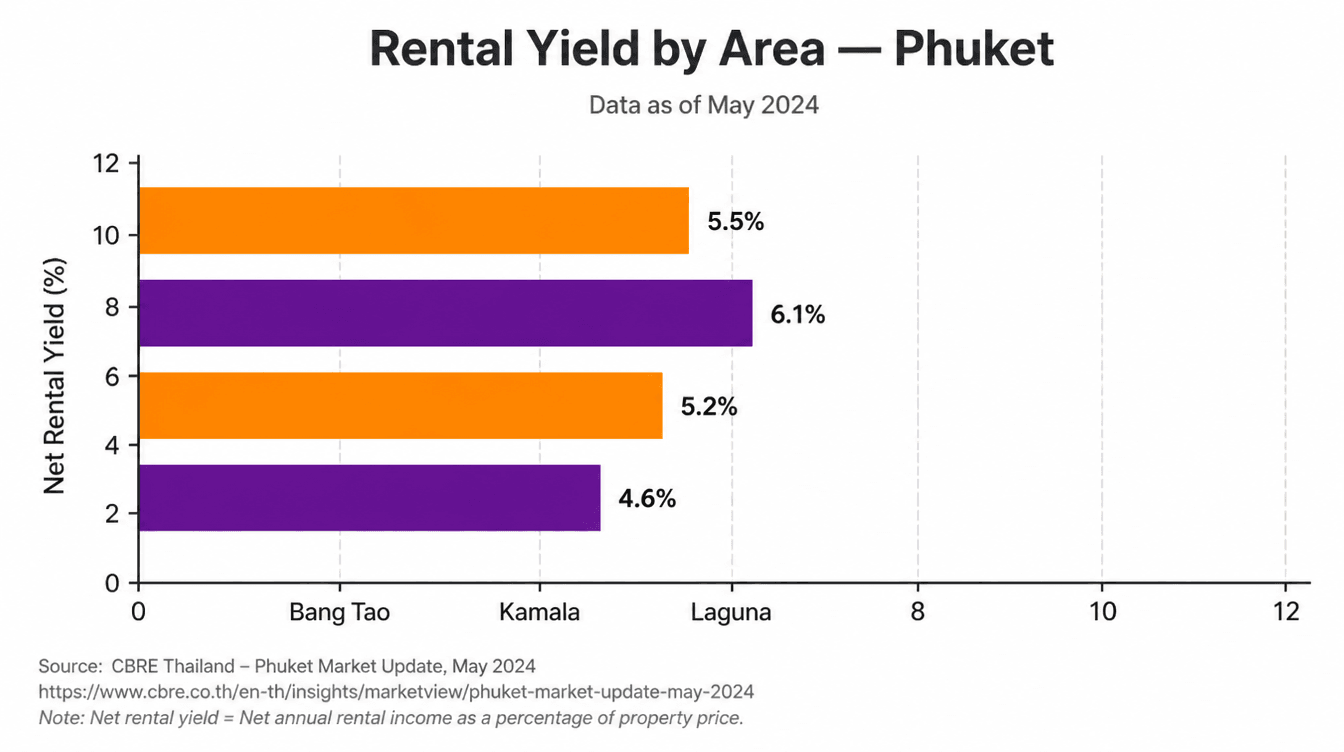
Which Area in Phuket Has the Best Rental ROI?
Rental performance varies by area based on proximity to the beach, the concentration of tourist infrastructure, accessibility from the airport, and the specific mix of short-term versus long-term rental demand each location attracts — all of which need to be reflected in area-specific figures rather than a single average applied across all four.
What Is the Average Rental Yield in Phuket?
[DATA NEEDED: current average gross and net rental yield across Phuket as a whole, with a note on how much variation exists between top-performing and lower-performing areas/projects]. A single average figure is a reasonable starting point for context, but it tends to understate the real spread between well-positioned properties in strong-demand areas and less competitively located units, which is precisely why the area-by-area breakdown below matters more than the headline average.
Bang Tao Rental Returns
Bang Tao's rental market is shaped by its position as one of Phuket's most developed west-coast areas, with the infrastructure and tourist draw to match.
 Is Bang Tao a Good Area for Rental Income?
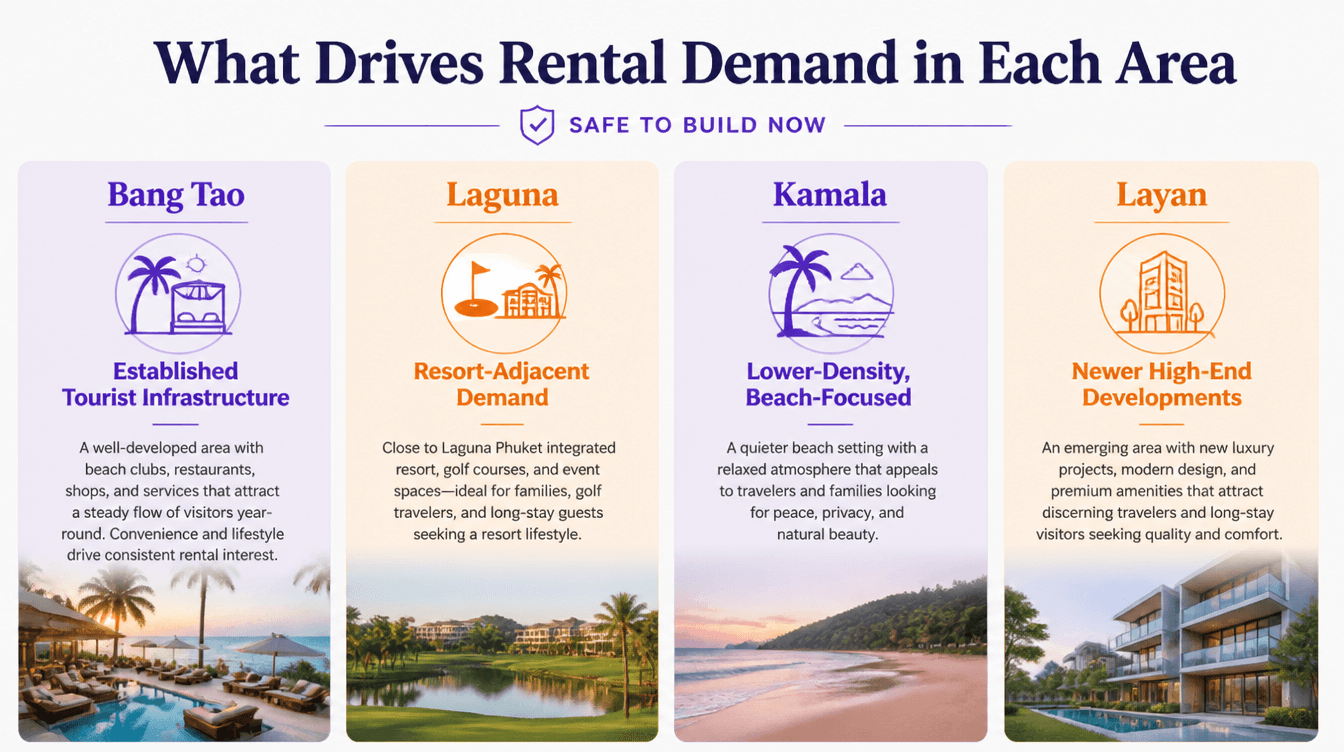
Bang Tao's concentration of beach clubs, restaurants, and established tourist infrastructure supports consistent rental demand across both short-term and long-term rental strategies, and its proximity to the Laguna integrated resort area adds further pull for renters seeking access to golf, dining, and resort amenities without staying inside the resort itself.
Buyers entering Bang Tao off-plan through developers like Sansiri, Laguna Property, and The Title benefit from direct developer pricing with no agency markup, which improves the entry-point cost basis that every subsequent yield calculation is built on — a lower purchase price, all else equal, produces a higher yield on the same rental income.
Kamala, Laguna, and Layan Rental Performance
Each of the remaining three priority areas has a distinct rental demand profile, and lumping them together with Bang Tao would obscure meaningful differences investors should understand individually.
What Drives Rental Demand in Laguna?
Laguna's rental demand is closely tied to the integrated resort ecosystem itself — golf, the Laguna Phuket resort complex, and an established track record of foreign ownership that has historically supported consistent rental interest, particularly from renters seeking resort-adjacent access without resort pricing.
How Does Kamala Compare for Rental Income?
Kamala is smaller and quieter than Bang Tao, which shapes a different rental profile — attracting renters who prioritize beach proximity and a lower-density setting over the nightlife and amenity concentration found in busier west-coast areas.
What Makes Layan Different for Rental Investors?
Layan, adjacent to Bang Tao, has seen more recent higher-end development activity, which tends to attract a different renter profile — often longer-stay or higher-budget guests drawn to newer builds and a quieter setting still within easy reach of Bang Tao's amenities.
Short-Term vs. Long-Term Rental — Which Is More Profitable?
This strategic choice affects returns as much as location does, and it's a decision every investor makes regardless of which area they choose.
Is Short-Term or Long-Term Rental More Profitable in Phuket?
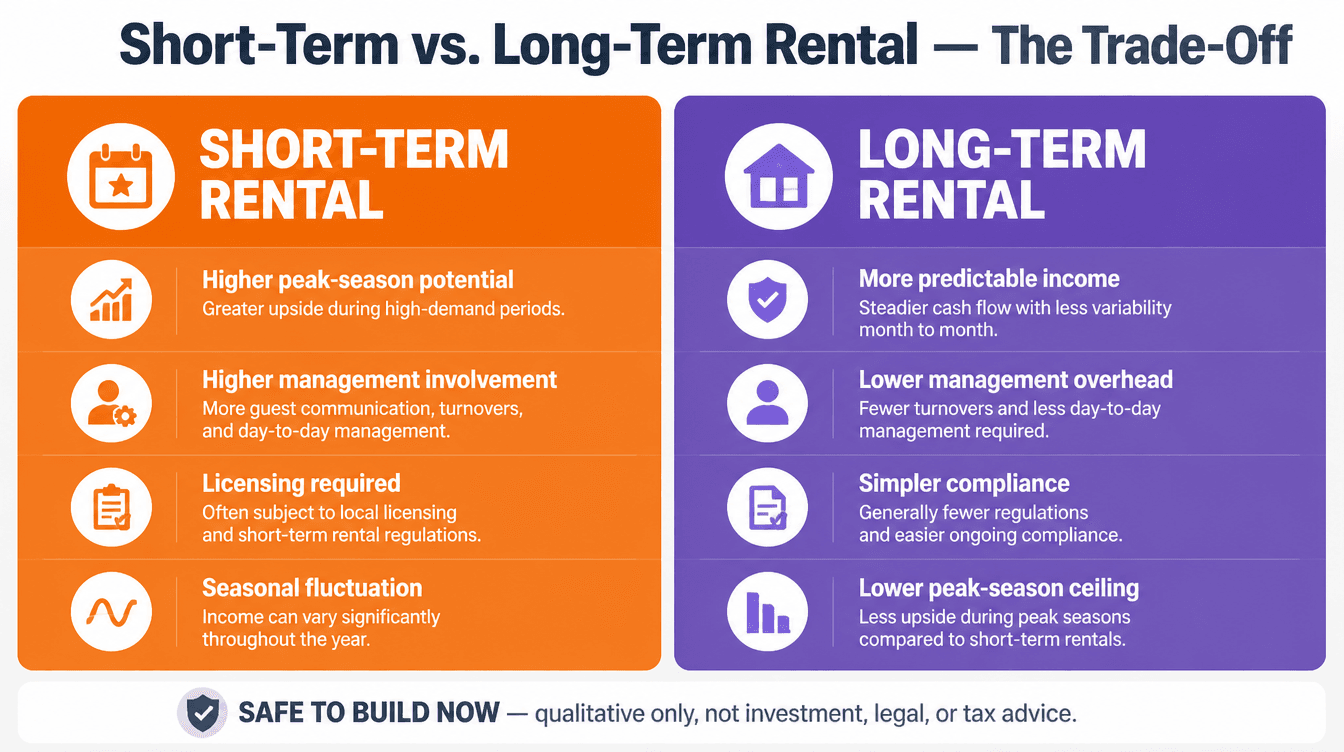
Short-term rental typically carries higher gross income potential during peak season but comes with higher management costs, seasonal fluctuation, and more involved licensing considerations. Long-term rental offers more predictable, stable income with lower management overhead, but generally at a lower peak-season ceiling than well-managed short-term rental in a high-demand area.
Do Foreigners Need a License to Rent Out Property in Thailand?
Short-term rental in Thailand is subject to licensing requirements under Thai hotel and accommodation law, and operating without the correct license carries real legal risk regardless of how common informal short-term renting might appear locally. [DATA NEEDED: current licensing requirements and thresholds for short-term rental in Phuket, and how they apply differently to condos in licensed rental-managed buildings versus private villas]. This is exactly the kind of compliance question worth confirming before committing to a short-term rental strategy, since the assumed yield advantage of short-term rental evaporates quickly if the operation isn't properly licensed.
Does Off-Plan Property Offer Better Rental ROI Than Resale?
The buy decision itself — off-plan versus resale — has a direct effect on the yield calculation, independent of which area is chosen.
Does Off-Plan Property Offer Better Rental ROI Than Resale?
Off-plan purchases typically enter at a lower price point than the same unit would command after completion, which improves the yield denominator from the outset. [DATA NEEDED: typical price appreciation from off-plan reservation to project completion for current Phuket projects, to quantify this effect]. Several developers also offer 0% installment plans structured over the construction period, which reduces the capital tied up during the pre-completion phase when the unit isn't yet generating rental income at all — improving effective ROI by lowering the investor's total capital outlay relative to the eventual rental-generating asset, even before accounting for any price appreciation between reservation and handover.
Turning Rental ROI Into an Investment Decision
Pulling everything together, a defensible investment decision weighs the yield figure against several factors the headline number doesn't capture on its own.
Occupancy risk, realistic management costs, and area-specific demand drivers all need to sit alongside the yield percentage itself — a high headline yield built on optimistic occupancy assumptions is a materially different investment than a slightly lower yield backed by consistent, verifiable demand. Before ROI becomes a relevant question at all, the underlying investment needs to be sound: clean title, confirmed foreign quota availability, and a developer with a genuine track record of delivering projects on time. Papaya Property's legal support and due diligence process confirms exactly this foundation — title, quota, and developer verification — before a client is looking at yield projections for a specific unit in Bang Tao, Kamala, Laguna, or Layan.
The Bottom Line
Rental ROI in Phuket varies meaningfully by area and by strategy, and the headline yield number is only useful once you understand what it actually measures — net of real costs, adjusted for realistic occupancy, and grounded in current, area-specific data rather than a stale blended average. Bang Tao, Kamala, Laguna, and Layan each attract a different rental demand profile, and the choice between short-term and long-term rental, or between off-plan and resale, shapes returns as much as location does.
If you're comparing rental ROI across Bang Tao, Kamala, Laguna, or Layan for a specific investment, the Papaya Property team can walk you through current performance data and help you evaluate a specific project against your return expectations. Reach out via Telegram, WhatsApp, or email for a free consultation — no forms, just a direct conversation with someone who can answer the questions specific to your investment.