

Phuket Property Supply and Demand: A Buyer's Guide
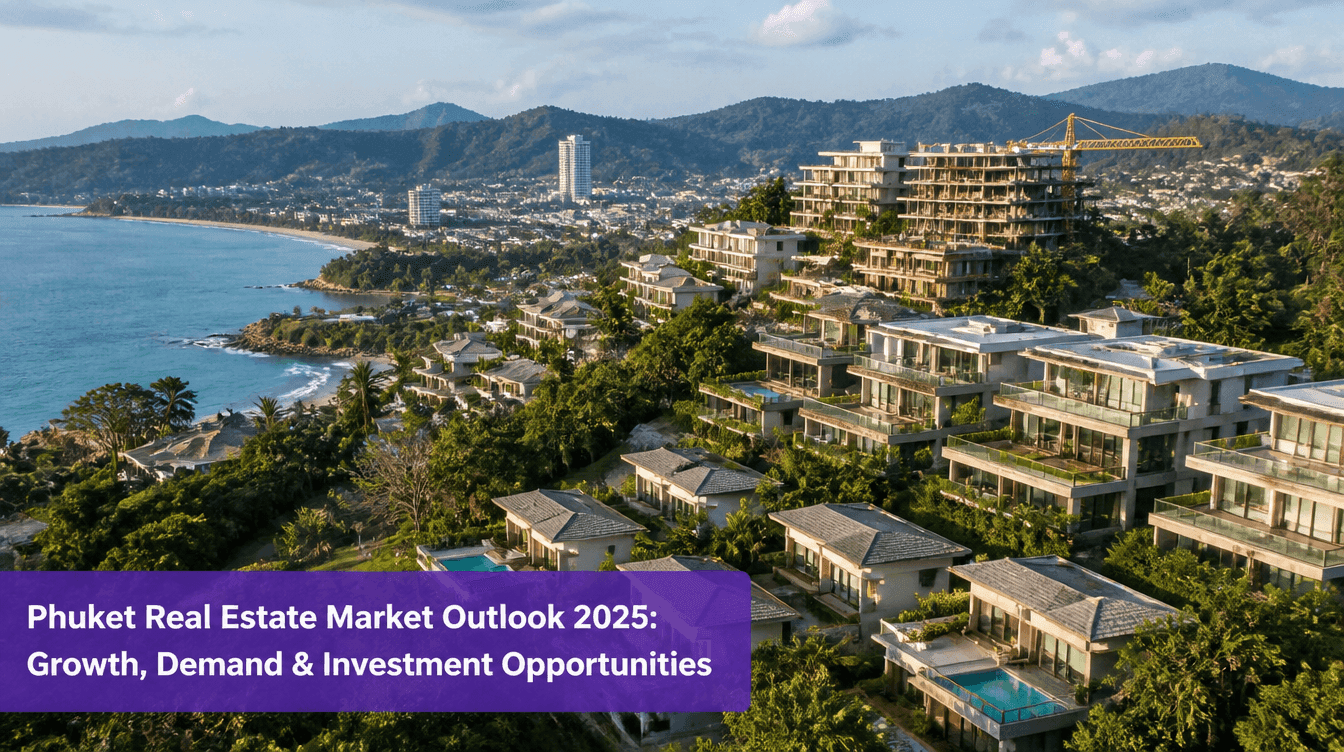
Phuket Property Market Supply and Demand: A Buyer's Guide to the Numbers Behind the Headlines
Intro
"Is Phuket oversupplied?" is a question serious buyers should ask before committing to a purchase — and answering it honestly requires looking at both sides of the equation, not just construction headlines. Understanding Phuket property market supply and demand means separating genuine demand fundamentals from short-term construction noise, and knowing which factors actually affect a foreign buyer specifically.
This guide covers what's driving demand, how supply has grown, whether oversupply is a real risk, and what it all means for a buying decision.
Phuket Real Estate Market Trends — The Bigger Picture
Before breaking supply and demand apart, it helps to understand how they interact as a single market picture.
Phuket property market analysis over the past several years shows a market shaped by two forces moving somewhat independently: strong, sustained international buyer interest on the demand side, and an active, expanding development pipeline on the supply side. Neither force alone tells the full story — a market can have strong demand and still face localized oversupply in specific price points or areas, just as it can have active construction and still face genuine scarcity in prime locations.
Property price growth drivers Phuket has seen include continued tourism recovery, growing interest from international buyers diversifying outside their home markets, and limited buildable land in the most established areas. Phuket property market forecast discussions tend to focus too narrowly on unit counts without accounting for where those units are being built and who's actually buying them — a distinction this guide addresses directly.
What Is Driving Demand for Property in Phuket?
Demand for Phuket property comes from several distinct buyer groups rather than a single source: international investors seeking rental income, end-buyers relocating full-time or part-time, and a growing population of remote workers and retirees choosing Phuket as a long-term base. Each group has different priorities, which is part of why demand has stayed diversified rather than concentrated in a single narrow segment.
What's Driving Foreign Buyer Demand in Phuket?
Foreign buyer demand Phuket sees is shaped by a specific set of drivers worth understanding individually rather than as a single vague "popularity" trend.
Tourism growth property demand connects directly to rental income potential — as visitor numbers to Phuket recover and grow, rental demand for short and medium-term stays supports buyer confidence in the investment case. International buyer trends Thailand property attracts also reflect currency and portfolio diversification: buyers from the UK, Australia, Singapore, Germany, the UAE, and Russia are increasingly treating Thai property as one part of a broader international asset allocation, not a single speculative bet. Rental demand Phuket has benefited specifically from the island's established tourism infrastructure, which gives buyers a functioning short-term rental market that many competing destinations don't have.
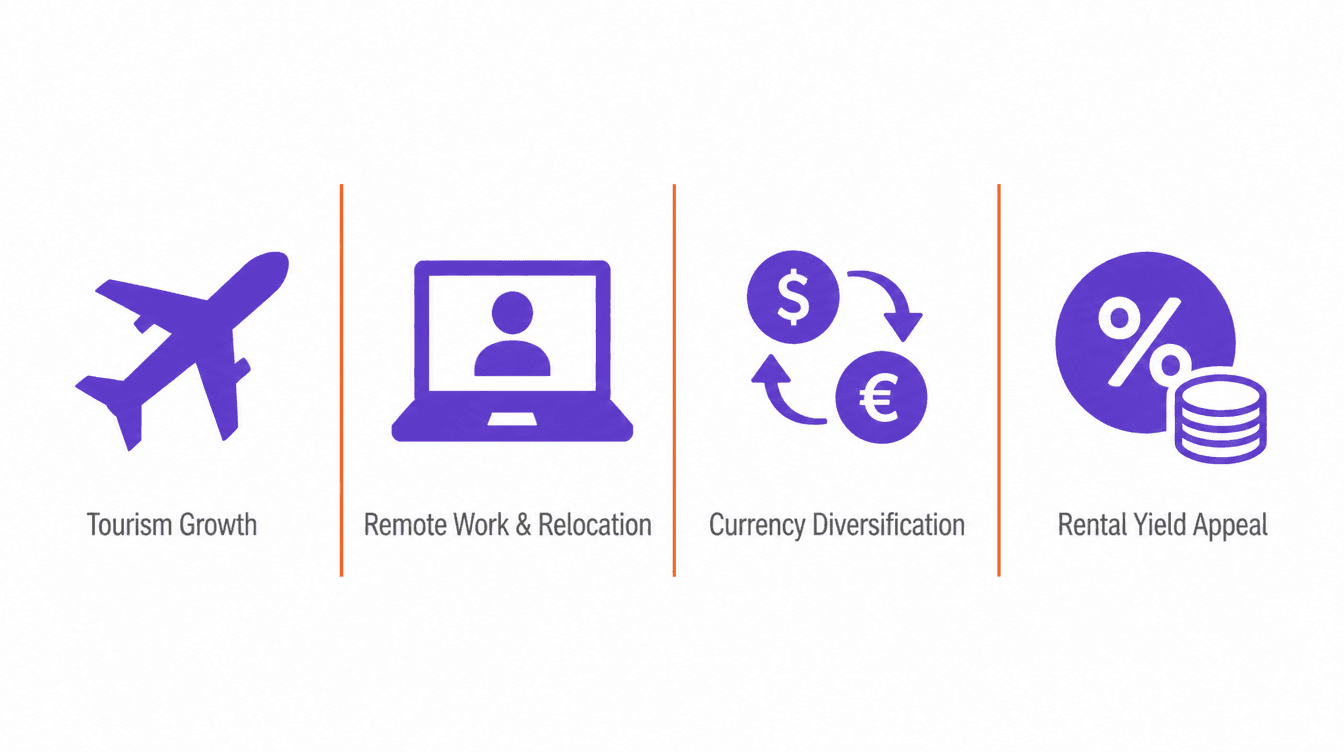
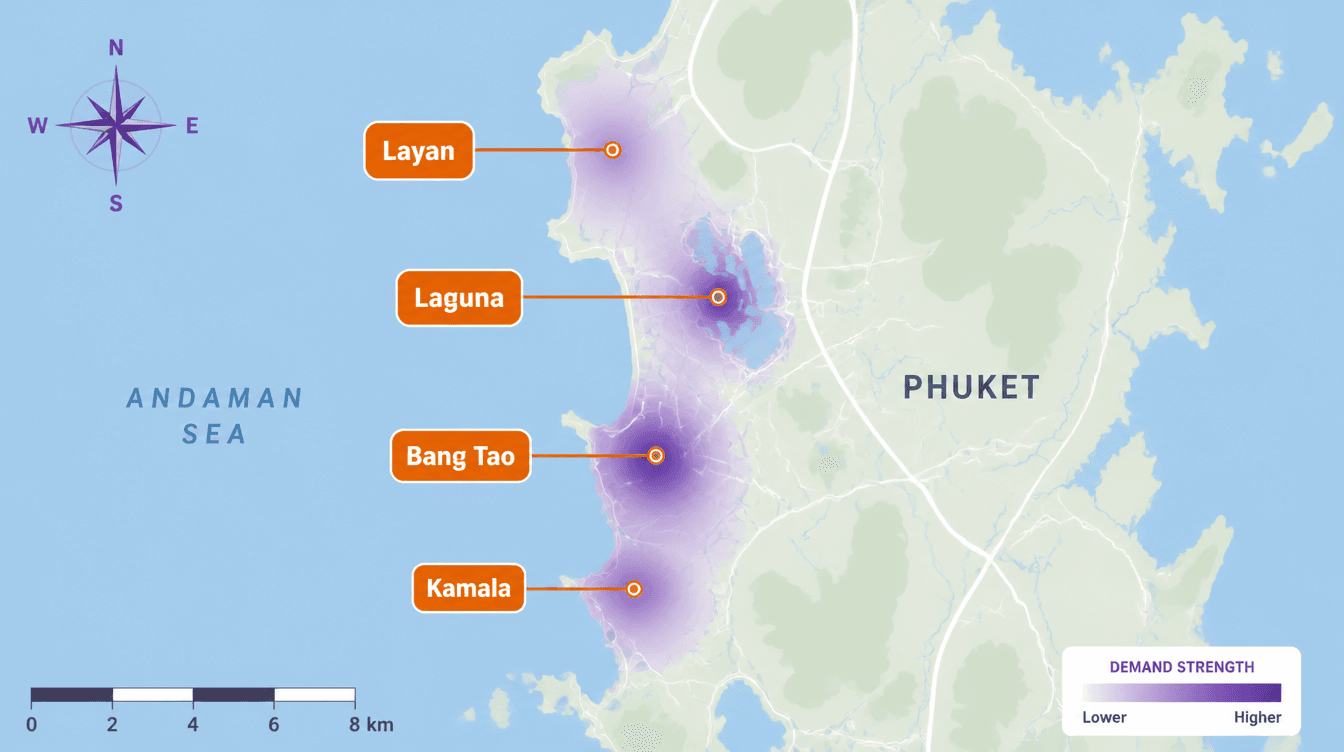
Prime area demand Bang Tao Laguna sees consistently outpaces demand for the island more broadly, reflecting concentrated buyer preference for a small number of established, amenity-rich areas rather than even demand across the entire island.
Which Areas in Phuket Have the Highest Buyer Demand?
Bang Tao, Laguna, Kamala, and Layan consistently see the strongest foreign buyer interest, driven by established infrastructure, beach access, and a track record of successful developments from credible developers. This concentration of demand matters directly for the supply conversation — new construction in these areas gets absorbed differently than new construction in less established parts of the island.
How Much New Condo Supply Is Being Built in Phuket?
Understanding the supply side requires looking honestly at the construction pipeline rather than either dismissing it or treating every new launch as a red flag.
New condo developments Phuket has seen launch in recent years come from a mix of established developers — including our partners Sansiri, Laguna Property, and The Title — alongside a wider field of smaller and newer development companies. Construction pipeline Phuket data shows ongoing activity concentrated heavily in the same prime areas where demand is strongest, which is a meaningfully different picture than supply spreading evenly across the island.
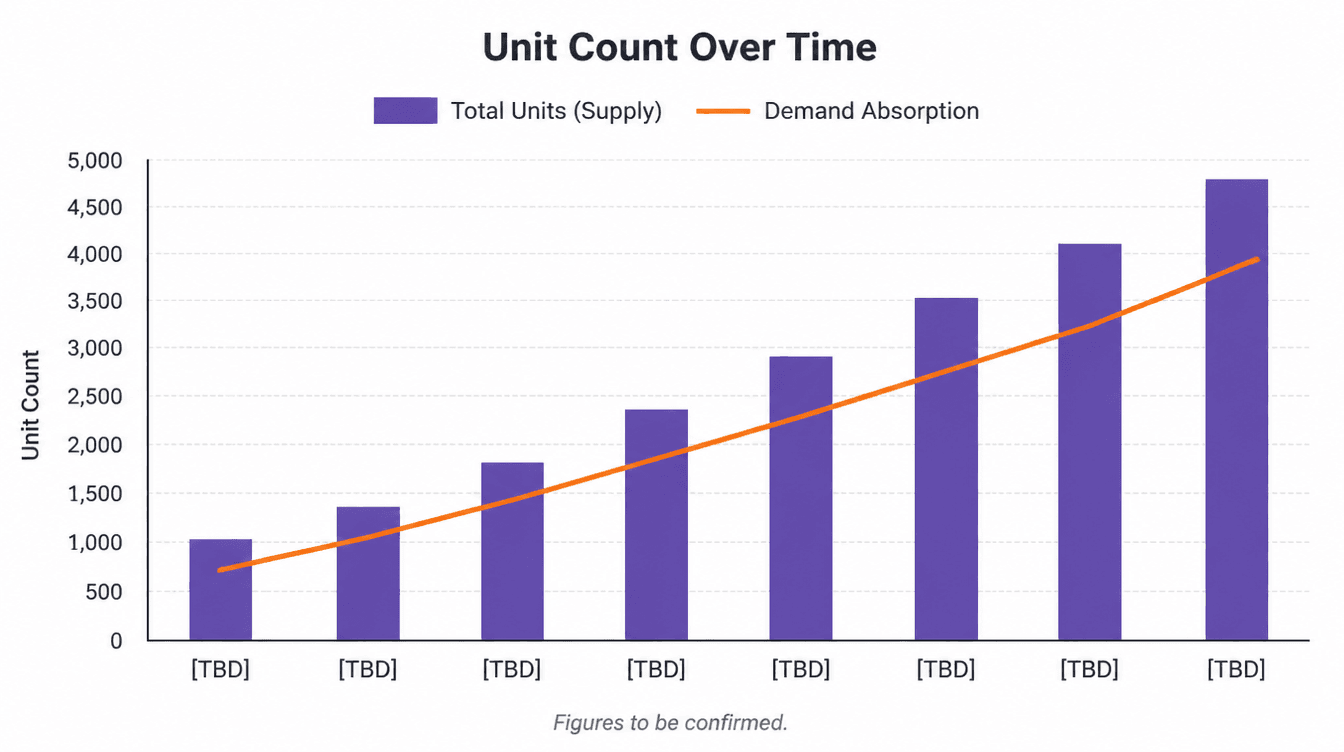
Developer launch pace Phuket has followed demand fairly closely over recent cycles, with established developers generally pacing new phases to match absorption rather than flooding the market all at once — though this varies by developer, and less established companies don't always follow the same discipline. Off-plan supply Phuket includes both units still in early construction phases and fully sold-out projects awaiting handover, which matters when assessing how much unsold inventory is actually sitting on the market right now.
How Many New Condos Are Being Built in Phuket?
Requesting current pipeline data for a specific area of interest, rather than relying on general market commentary, gives a far more useful picture than an island-wide unit count.
Is Phuket Property Oversupplied?
This is the core question underneath most of the demand and supply data above, and it deserves a direct, balanced answer.
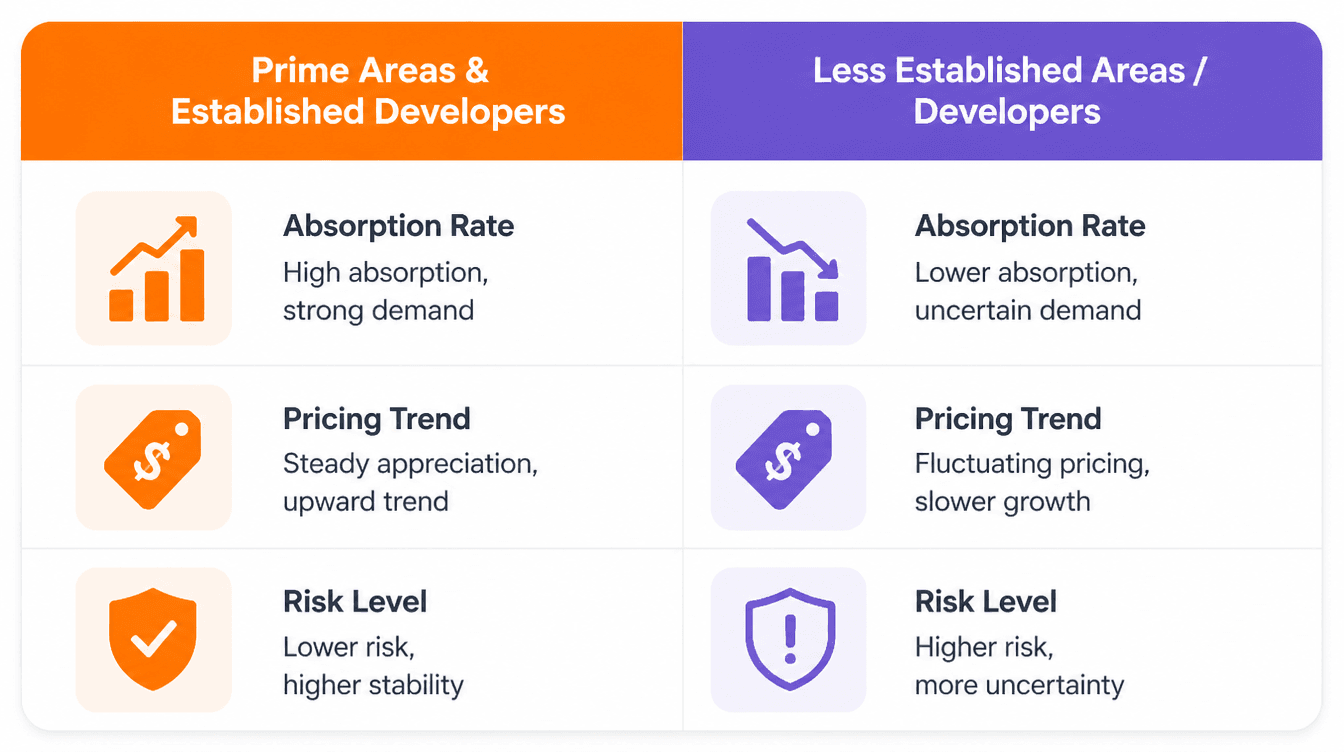
Market absorption rate real estate analysts use — how quickly new supply gets sold or occupied relative to how much comes onto the market — is the real test of oversupply, not the raw number of new units alone. Resale market saturation Phuket experiences varies significantly by area and price point: prime areas with strong demand have generally absorbed new supply well, while some less established areas or lower-quality developments have seen slower absorption. Land scarcity Phuket faces in its most established coastal areas also acts as a natural limit on how much new supply can realistically enter the market in the locations buyers want most.
Is There Too Much New Construction in Phuket?
The honest answer is "it depends heavily on where and what." Some segments of the market — particularly lower-quality developments in less established areas — do show signs of slower absorption and softer pricing. Prime areas with established infrastructure and credible developers have generally continued to see healthy demand absorb new supply at a reasonable pace, which is a meaningfully different risk profile than the market as a whole.
Is Now a Risky Time to Buy Due to Oversupply in Phuket?
Oversupply risk is real but concentrated, not universal — which means the relevant question for any individual buyer isn't "is the market oversupplied" but "is this specific project, in this specific area, likely to face oversupply pressure." A well-located unit from an established developer in Bang Tao or Laguna carries a fundamentally different oversupply risk than a speculative project in a less proven area, regardless of what the broader market statistics show.
How Does the 49% Foreign Quota Affect Supply for Foreigners?
Beyond overall market supply, foreign buyers face a structural factor that doesn't apply to Thai buyers at all.
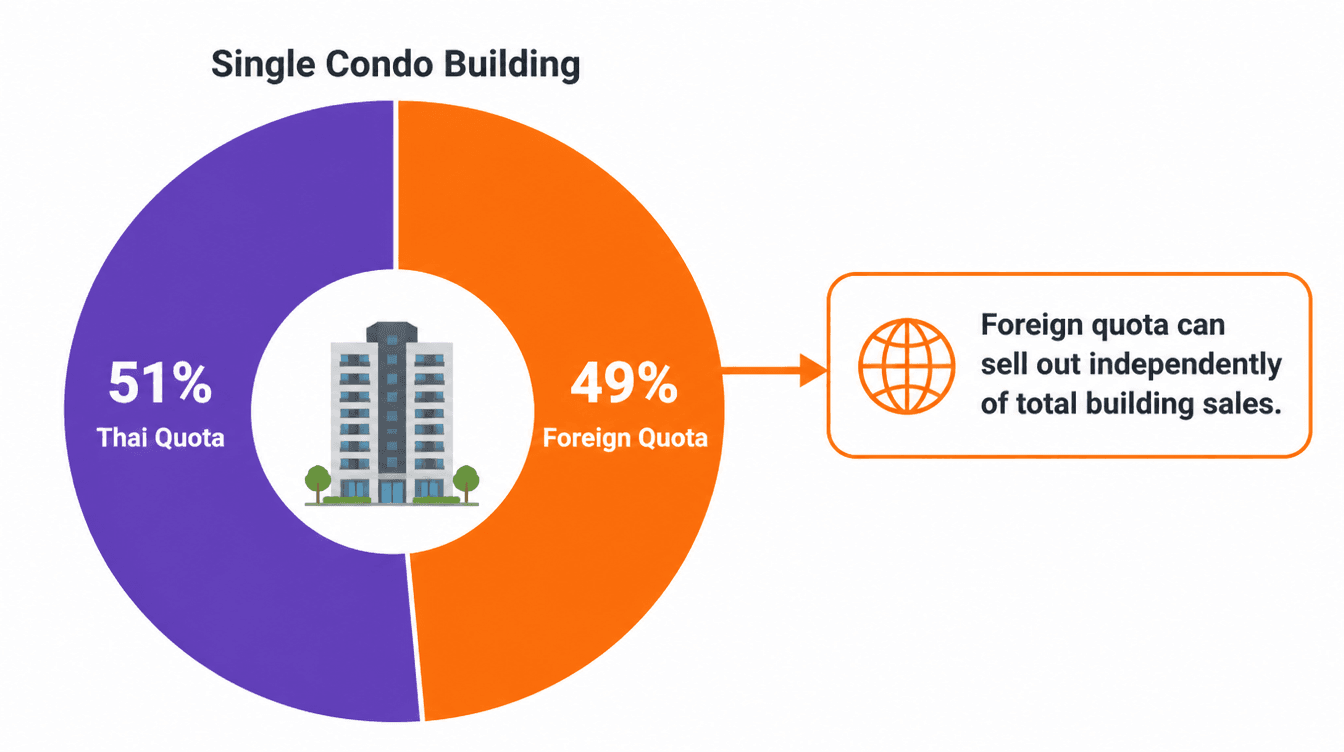
Foreign ownership quota impact demand shows up directly here: under the Condominium Act, only 49% of the total saleable area in any condominium building can be foreign-owned, meaning the effective supply available to foreign buyers in any given project is meaningfully smaller than the building's total unit count. A popular project can sell out its entire foreign quota well before the building itself is fully sold, effectively creating scarcity for foreign buyers even in a project with plenty of remaining Thai-quota units.
How Does the 49% Foreign Quota Affect Supply for Foreigners?
This quota mechanic means foreign buyer demand can outstrip effective foreign supply in popular projects even when the overall building isn't close to sold out, since Thai-quota and foreign-quota units are tracked and sold separately.
[USP: Our legal team tracks foreign-quota availability across our partner developments directly, which lets buyers confirm quota status and secure a unit within the foreign allocation before a popular project's foreign quota fills — a detail that's easy to overlook but genuinely affects timing for foreign buyers specifically]
What Happens If Phuket Has Too Much New Supply?
It's worth addressing the downside scenario honestly rather than assuming unlimited demand will always absorb any amount of new construction.
In segments where new supply genuinely outpaces demand — typically in less established areas or lower-quality developments — the realistic effects are softer pricing on new launches, longer time-to-sell for developers, and reduced rental yields as more units compete for the same tenant pool. This is a real risk in specific segments of the market, which is precisely why area and developer selection matter more than broad market-level "is Phuket a good investment" framing.
What Happens If Phuket Has Too Much New Supply?
The practical consequence of localized oversupply is downward pressure on rental yields and resale values specifically in the affected segment — not a market-wide correction. This is one more reason project and area selection carry more weight than general market timing when it comes to actually managing oversupply risk as an individual buyer.
Will Phuket Property Prices Keep Rising?
This brings the supply and demand analysis back to the question most readers actually came here to answer.
Property price growth drivers Phuket has relied on — sustained international demand, land scarcity in prime areas, and a tourism-backed rental market — remain intact, which supports continued price resilience in well-located, well-developed projects specifically.
Will Phuket Property Prices Keep Rising?
Prices in prime, land-constrained areas with strong demand — Bang Tao and Laguna in particular — are supported by fundamentals that don't depend on continued high construction volume. Developer-direct pricing on select projects still gives buyers access to early-phase pricing regardless of where broader market conditions sit, which is worth checking project by project rather than assuming pricing moves uniformly across the whole island.

Conclusion
Phuket's demand fundamentals remain genuinely strong — tourism, international buyer diversification, and a functioning rental market all continue supporting the investment case. Supply is growing, but concentrated heavily in specific areas and price points, meaning oversupply risk is real in some segments and largely absent in others. The 49% foreign quota adds one more structural factor unique to foreign buyers that's worth checking project by project rather than assuming.
If you're weighing where and when to buy given current market conditions, our guide to the best time to buy property in Phuket covers the timing side in more depth. For a clearer picture of supply, demand, and quota availability on a specific project, reach out to the Papaya team directly via Telegram, WhatsApp, or email — we're happy to walk you through what's actually happening in the areas you're considering.