

Thai Company Ownership Structure for Foreigners

The Thai Company Ownership Structure for Foreigners, Explained
A Thai company can legally hold land and property, but the Thai company ownership structure for foreigners only works when the company is a genuine business — not a shell constructed to disguise personal land ownership, which is illegal under Thai law and actively scrutinized by the Land Department. Understanding where that line sits is essential before considering this structure at all.
This guide covers the legal shareholding rules, what a properly structured company can and can't legitimately hold, how registration actually works, the compliance obligations that come with maintaining one, and what happens when a company structure doesn't meet the genuine-business standard.
When and Why Foreigners Use a Thai Company Structure
A Thai limited company is a legitimate legal entity for foreigners who have an actual business reason to operate in Thailand — running a business that generates revenue, employs staff, and holds assets, including property, as part of normal operations.
This is fundamentally different from using a company purely as a vehicle to hold a single piece of land or property on a foreigner's behalf with no underlying business activity. The distinction between these two uses is the single most important concept in this entire topic: a company that genuinely operates as a business and happens to own property as a business asset is legitimate, while a company that exists solely to enable personal property ownership is not. Everything covered in the rest of this guide assumes the former.
Foreign Shareholding Rules in a Thai Company
The shareholding structure is where the legal framework starts, and it's also where the difference between a compliant company and a nominee arrangement becomes most visible.
What Percentage of a Thai Company Can a Foreigner Own?
A foreigner can hold up to 49% of the shares in a Thai limited company, with the remaining 51% required to be held by Thai nationals. This mirrors the same majority-Thai-ownership principle that governs land ownership generally, and it's a hard legal requirement rather than a guideline that can be adjusted through creative structuring.
Some companies use preference shares to give foreign shareholders enhanced economic rights (such as a greater share of dividends) while keeping voting control with Thai shareholders at the required ratio. This is a legitimate mechanism when structured properly, but it doesn't change the underlying requirement that Thai shareholders hold genuine majority ownership and genuine involvement in the company.
What Is the Difference Between Owning Shares and Controlling a Company?
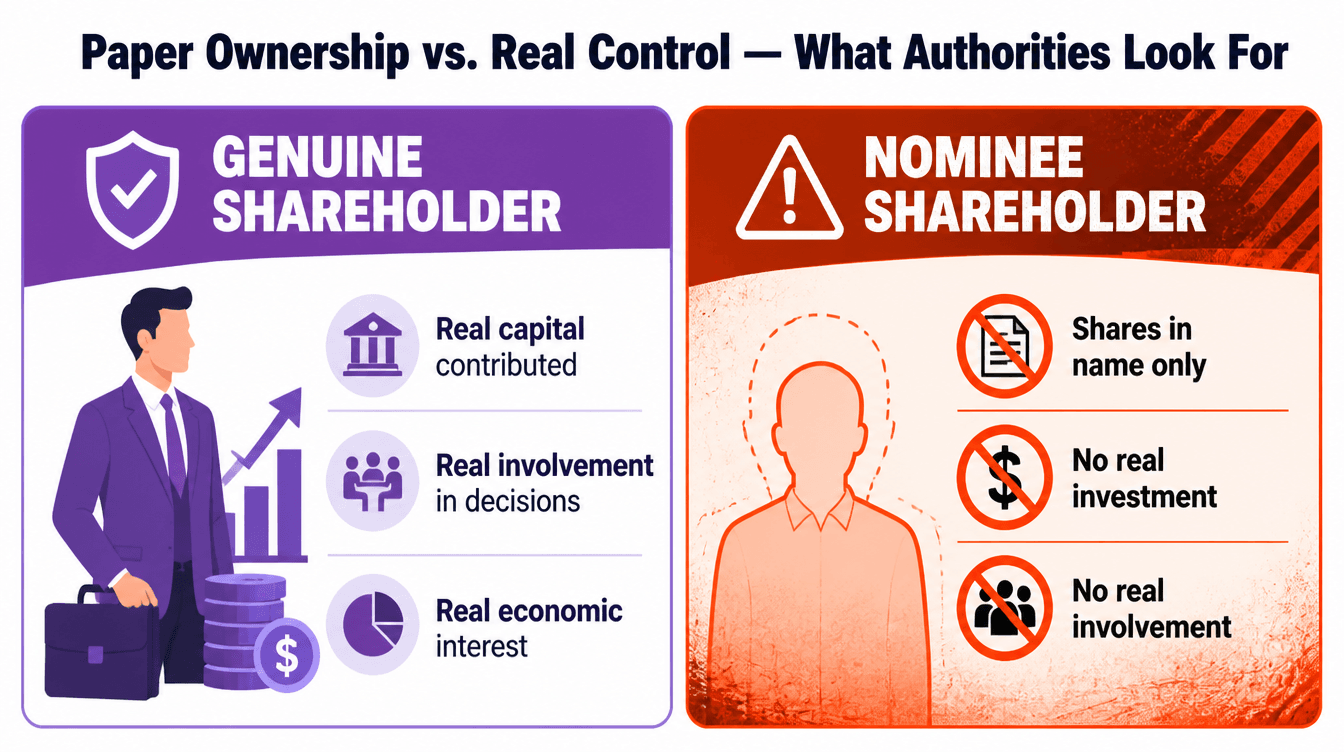
This is exactly the distinction that separates a compliant structure from an illegal one. Thai shareholders in a legitimate company hold their shares because they have a genuine stake in the business — real capital contributed, real involvement in decisions, and real economic interest in the outcome. In a nominee arrangement, Thai individuals hold shares in name only, with no real investment or involvement, purely so a foreigner can exercise effective control despite the paper ownership split. Thai authorities look specifically for this gap between paper ownership and actual control when reviewing company-held land, which is why simply hitting the 49/51 ratio on a share register is not, by itself, sufficient to make a structure legitimate.
What a Thai Limited Company Can Legally Own
A properly structured company has real flexibility in what it can hold as part of its business operations, though this is frequently misunderstood as a blanket workaround for property ownership.
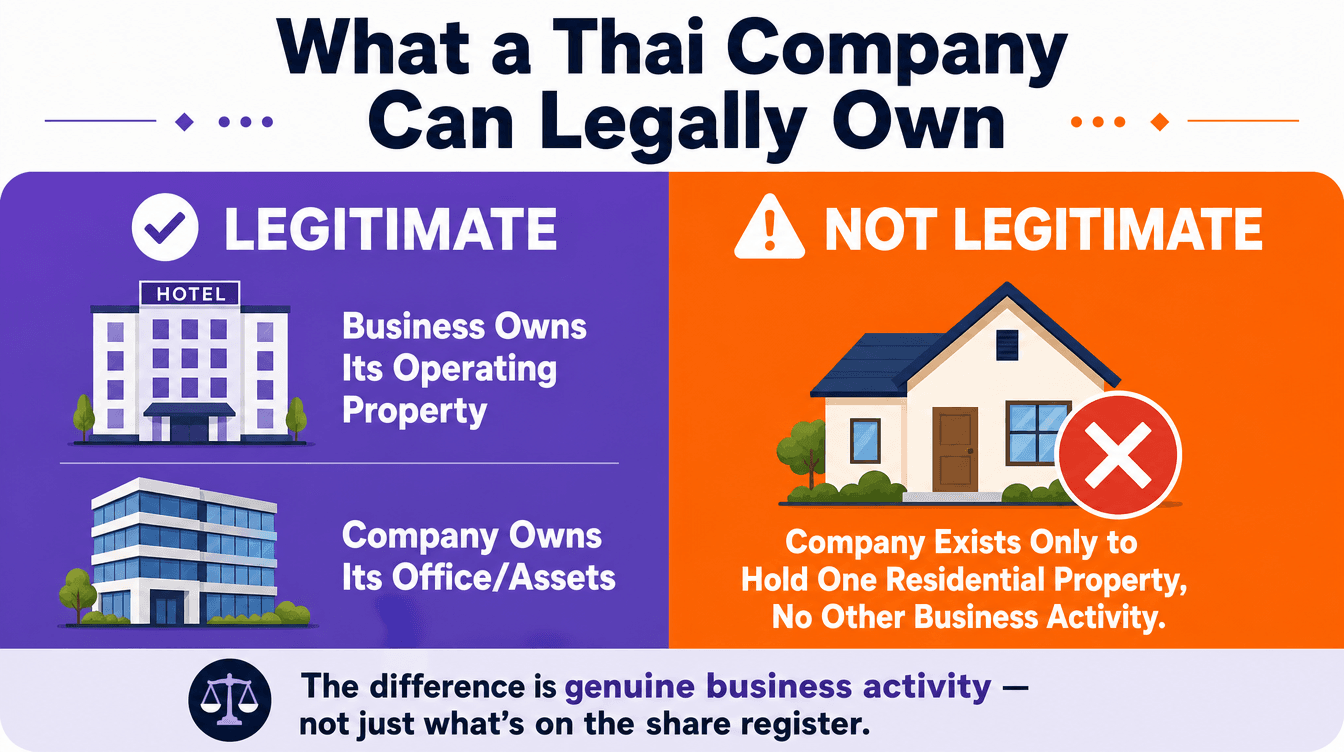
A Thai limited company with genuine business operations can legally own land, buildings, and other property as business assets — a hotel operator owning the land its hotel sits on, or a business owning its own office building, are straightforward legitimate examples. What the company cannot legitimately do is exist purely to hold a single residential property with no other business activity, structured specifically to give a foreign individual the practical benefits of land ownership without the company ever functioning as an actual business.
Can a Thai Company Owned by a Foreigner Buy a Condo Instead of Land?
Yes, but this is rarely necessary or advantageous, since condos are the one property type foreigners can already own directly in freehold, without a company structure at all — provided the building's foreign ownership quota has room and the purchase funds are transferred correctly with a FET form. A company structure adds complexity and ongoing compliance costs that simply aren't needed for a condo purchase, which is exactly why freehold condo ownership remains the more straightforward route for the vast majority of foreign buyers in Phuket.
How a Thai Company Owns Land — The Mechanics
For companies with a genuine business purpose, owning land works through the same registration process any Thai company would use.
How Does a Thai Company Own Land?
The company, as a registered legal entity, holds title to the land in its own name — the Chanote reflects the company as owner, not any individual shareholder. Purchase, registration, and transfer of company-held land go through the Land Department in largely the same procedural way as any other property transaction, with the company acting as the legal buyer throughout.
How Does the Land Department Investigate Company-Held Land?
The Land Department, along with other Thai authorities, has the ability to review company ownership structures where land is involved, examining whether Thai shareholders demonstrate genuine investment and involvement or whether the structure shows signs of a nominee arrangement. This scrutiny exists specifically because nominee structures have historically been used to circumvent foreign land ownership restrictions, which is exactly why a company intended to hold land needs to be able to demonstrate real business substance, not just a compliant-looking share register.
Registering a Thai Company as a Foreign Investor
For businesses with a genuine operational purpose, registering a Thai company is a well-established process with clear steps and known costs.
How Do You Set Up a Thai Company to Buy Property?
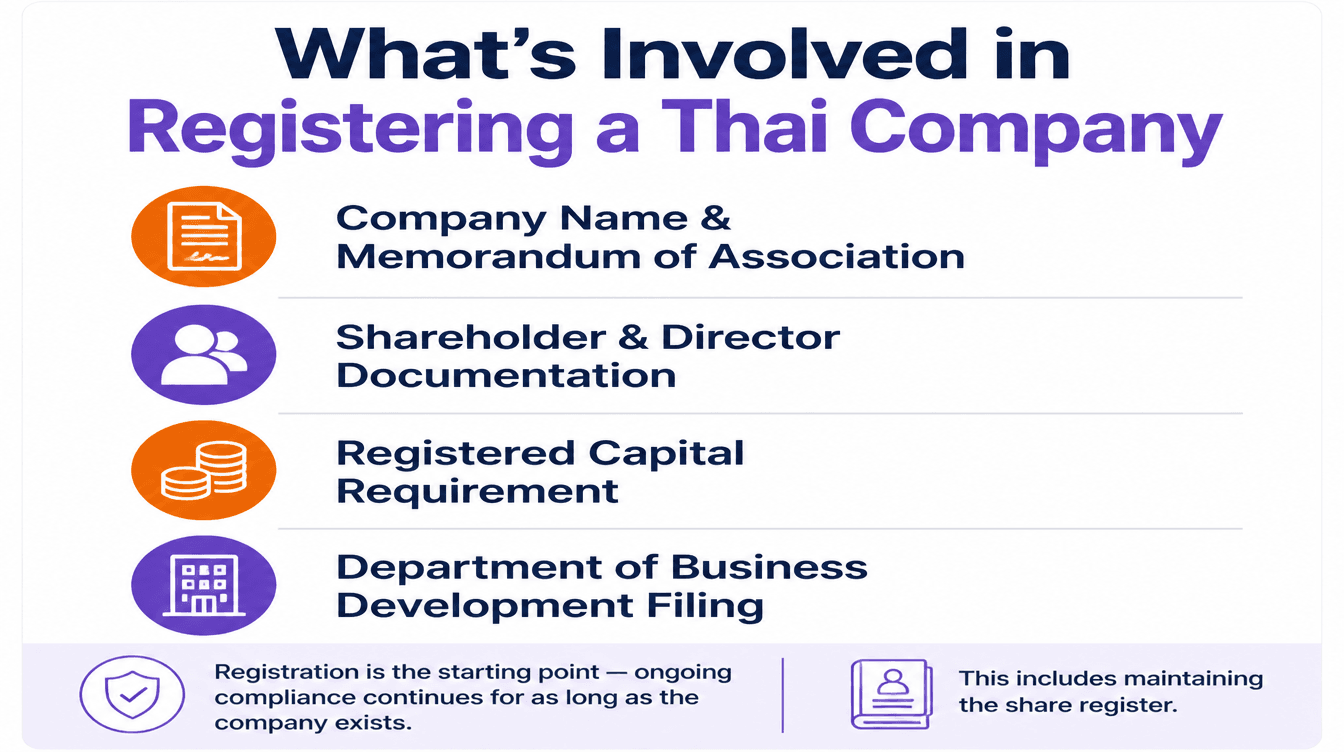
Registration goes through the Department of Business Development, involving company name registration, memorandum of association, shareholder and director documentation, and registered capital requirements. [DATA NEEDED: current minimum registered capital requirements and typical timeline for company registration in Thailand]. Depending on the nature of the business, certain activities may also fall under restrictions in the Foreign Business Act, which governs which business sectors require additional permissions for foreign involvement.
Can a Foreigner Be a Director of a Thai Company That Owns Land?
Yes. A foreigner can serve as a company director and take an active role in managing the business, even while holding a minority shareholding position. Directorship and shareholding are separate legal roles — a foreign director can have significant operational control over how the business runs day to day, while the majority shareholding requirement remains with Thai nationals as required by law.
How Much Does It Cost to Register a Thai Company?
Registration costs include government filing fees, legal and accounting fees for proper setup, and the registered capital requirement itself. [DATA NEEDED: typical total cost range for registering a Thai limited company with foreign shareholders, including legal and accounting setup fees]. These figures vary depending on the complexity of the business and the professional support used to structure it correctly from the outset.
Ongoing Compliance and Costs
Registering the company is the beginning, not the end — a Thai company carries ongoing legal obligations for as long as it exists.
What Are the Ongoing Compliance Requirements for a Thai Company?
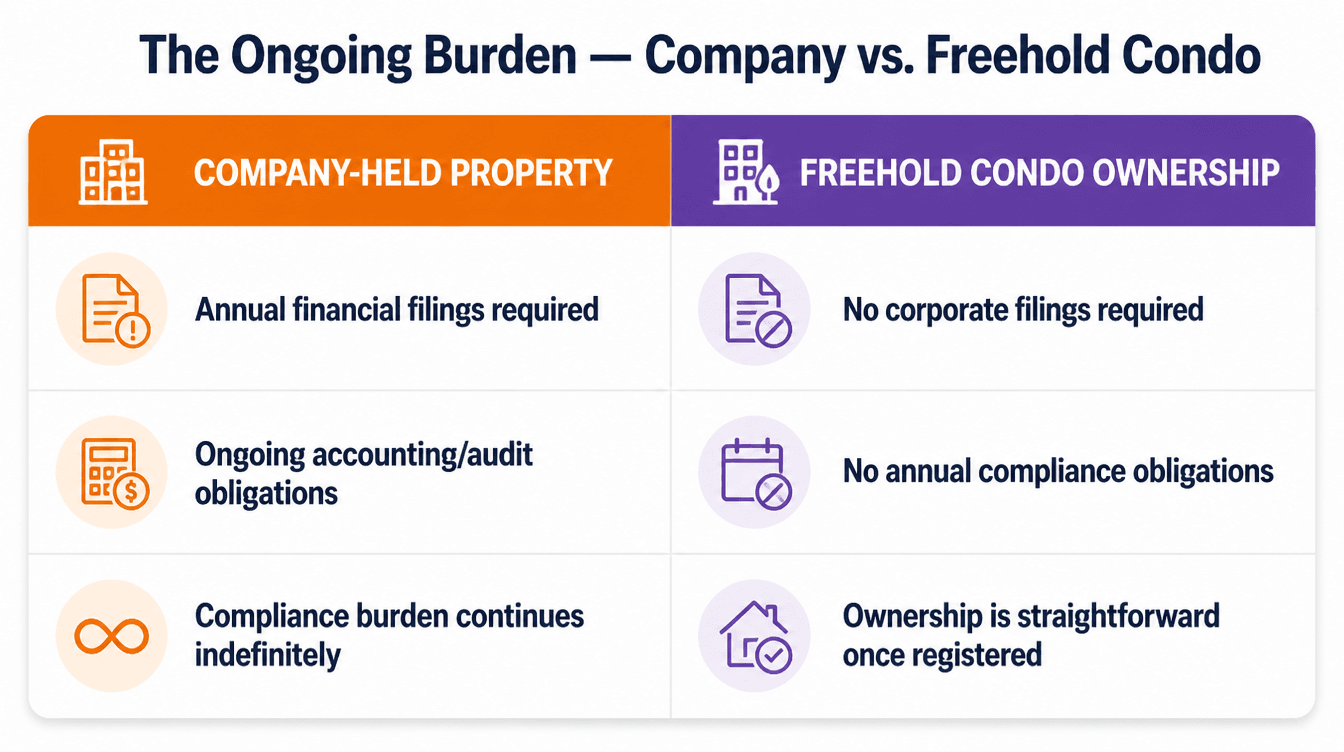
Thai companies are required to maintain proper accounting records, file annual financial statements, and meet tax filing obligations regardless of whether the company is actively trading. [DATA NEEDED: typical annual compliance cost range for accounting, auditing, and filing requirements for a small Thai company]. These aren't optional formalities — a company that fails to maintain proper compliance faces its own legal risks, separate from any scrutiny around the legitimacy of its ownership structure.
This ongoing compliance burden is one of the most significant practical differences between company-based property ownership and freehold condo ownership: a condo, once purchased, doesn't require annual corporate filings to remain legally owned, while a company structure does for as long as it holds the property.
What Happens If a Company Structure Isn't Genuine
This is the section that matters most for anyone weighing whether a company structure makes sense for their situation.
What Happens If a Thai Company Is Found to Be a Nominee Structure?
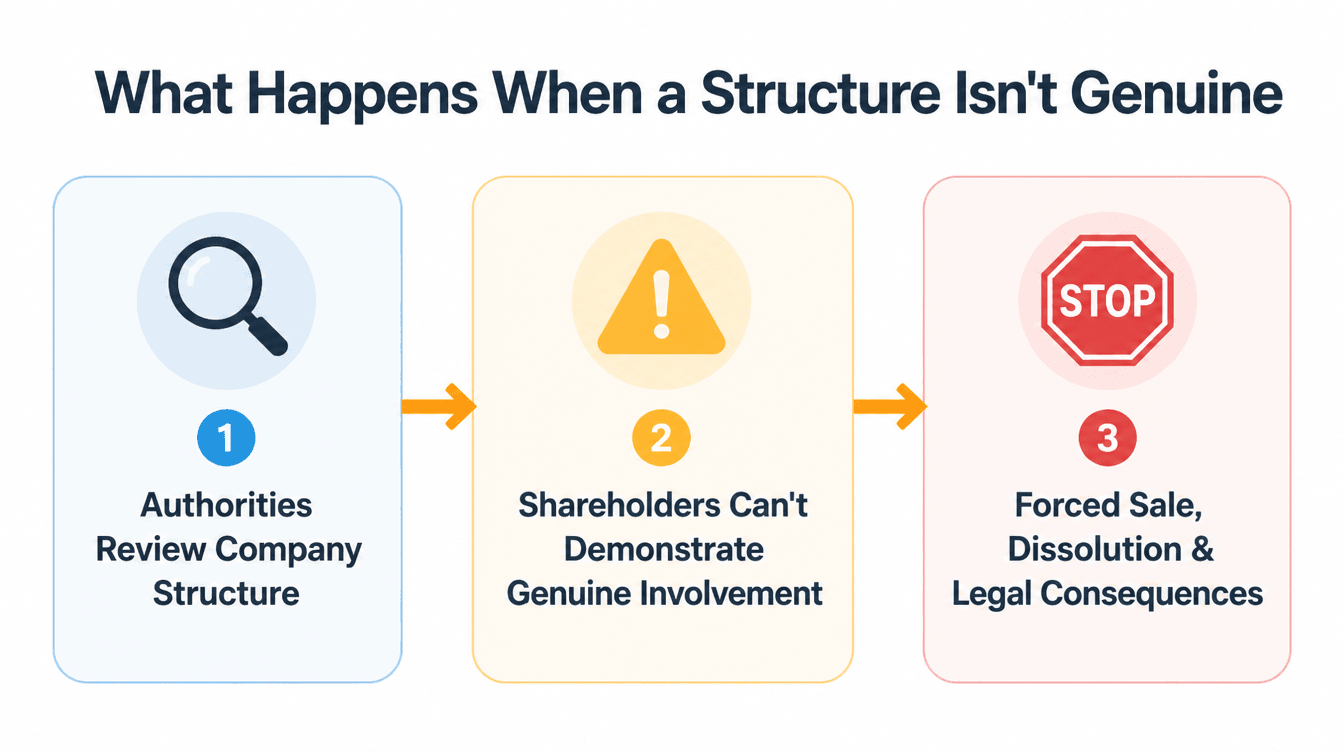
If Thai authorities determine that a company's Thai shareholders are nominees without genuine investment or business involvement, the company's land ownership can be challenged, potentially resulting in forced sale or dissolution of the arrangement, along with other legal consequences for those involved in structuring it. This isn't a theoretical risk stated for caution's sake — it's the specific outcome the scrutiny process described earlier is designed to catch, and it applies regardless of how long a nominee structure has been in place before being reviewed.
Given the stakes involved, anyone considering a Thai company structure for property ownership should have it properly structured and reviewed by legal professionals from the outset, with real attention paid to whether the underlying business substance is genuine — not just whether the paperwork looks correct on the surface. Getting this structure right from the start, with a business purpose that actually holds up to scrutiny, is a fundamentally different exercise from assembling a nominee arrangement and hoping it doesn't get reviewed.
The Bottom Line
A Thai company structure is a legitimate legal tool for foreigners with a genuine business purpose in Thailand — it is not a shortcut for personal land ownership dressed up in corporate paperwork. The distinction between the two determines everything: whether the structure holds up to Land Department scrutiny, whether the company can legally hold the property it's registered to own, and whether the people involved face serious legal consequences down the line. For most foreign buyers whose primary goal is owning a residence in Phuket, freehold condo ownership remains the simpler, more direct path — a company structure only makes sense when there's a real business behind it.
If you're weighing a company structure against freehold condo ownership, or you want your specific situation reviewed by legal professionals before committing to either path, the Papaya Property team can walk you through what actually applies to you. Reach out via Telegram, WhatsApp, or email for a free consultation — no forms, just a direct conversation with someone who can answer the questions specific to your situation.