

Airbnb Laws in Thailand: What's Actually Legal
Airbnb Laws in Thailand: What Condo Owners Need to Know Before Renting Out a Property
Intro
Many buyers assume they can run their Phuket condo like an Airbnb the day after closing — list it, set a nightly rate, and start collecting bookings. Airbnb laws in Thailand don't work that way, and the gap between what buyers expect and what's actually legal catches more owners off guard than almost any other part of the purchase process.
This guide covers the legal status of short-term rentals in Thailand, the licensing framework behind it, how Phuket condo buildings handle the issue in practice, and what a realistic, compliant path to rental income actually looks like.
Is Airbnb Legal in Thailand?
The short answer is that renting out a condo for stays under 30 days generally requires a hotel license under Thai law, and the overwhelming majority of individual condo owners don't hold one — which means most Airbnb-style rentals run by private owners are operating outside the law, whether or not the owner realizes it.
This isn't a grey area that's loosely enforced everywhere; it's a specific legal requirement tied to how a property is used, not to whether the owner is Thai or foreign. A unit purchased entirely legally, with a clean Chanote title and a properly registered SPA, can still put its owner at risk the moment it's rented out short-term without the right licensing in place.
Is Airbnb Legal in Thailand for Foreigners?
The rule applies identically to Thai and foreign owners — nationality has no bearing on whether short-term rental is legal. What matters is the property's usage classification and whether the operation is licensed, not who holds the title.
What Happens If I Rent Out My Property Illegally in Thailand?
In practice, unlicensed short-term rental activity exposes an owner to fines and potential closure of the listing, and it can complicate a foreign owner's broader standing if a dispute or inspection draws official attention to the property.
Short-Term Rental Laws in Thailand — The Legal Framework
Understanding why this restriction exists means understanding the two pieces of legislation that govern it, since the interaction between them is what actually determines what a condo owner can and can't do.
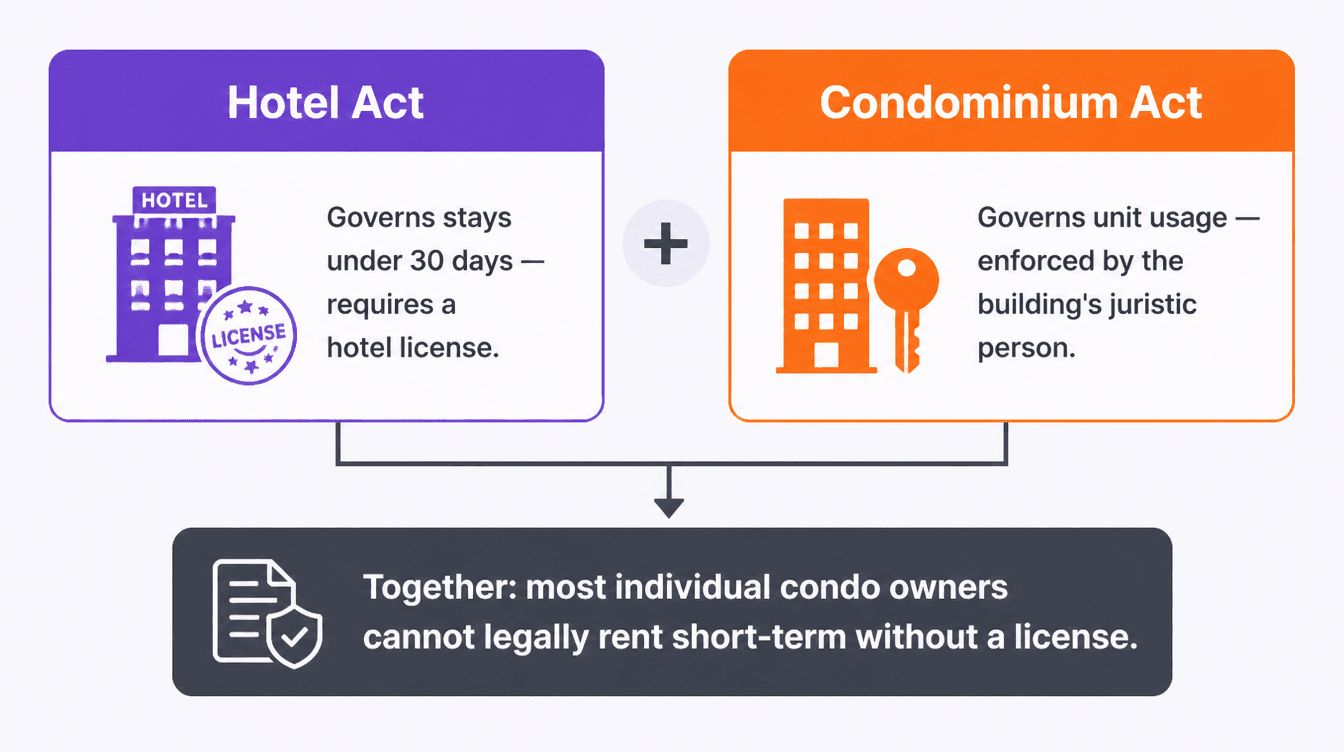
The Hotel Act sets the baseline: any accommodation offered for stays shorter than 30 days is classified as hotel-type usage and requires a hotel license to operate legally, regardless of whether the building itself is a condominium. The Condominium Act governs how individual units within a registered condo project can be used, and it's enforced at the building level by each project's juristic person — the legal entity representing all unit owners collectively.
Do I Need a License to Run an Airbnb in Thailand?
Yes, in nearly all cases — offering a condo unit for short-term stays without a hotel license is the specific activity the law restricts, not short-term rental in the abstract. A licensed hotel operation must meet building and safety standards that an individual condo unit typically isn't built or registered to satisfy, which is precisely why most individual owners can't simply apply for one on their own unit.
Beyond national law, a condo's juristic person can enforce its own rules against short-term rental activity within the building, independent of whether the national licensing requirement is being met. Short-term rental enforcement in Thailand increasingly happens at this building level, since a juristic committee has a direct incentive to police unlicensed rental activity that affects common-area use and building security.
Airbnb Regulations in Phuket — What Condo Owners Need to Know
Phuket's popularity as both a rental market and an investment destination means the gap between what buyers hope to do and what a specific building actually permits shows up here constantly — often only once a buyer tries to list their unit after purchase.
Condo rental restrictions in Thailand are set project by project, and Phuket buildings vary considerably: some prohibit any rental under 30 days outright, some restrict rentals to a licensed on-site management program only, and a smaller number are structured from the ground up around legitimate short-term rental operation. Foreign ownership condo Thailand rules under the 49% quota govern who can hold title to a unit, but they say nothing about what that owner is allowed to do with it once they own it — that's a separate question entirely, governed by the building's own policy.
Which Condo Buildings in Phuket Allow Short-Term Rentals?
A project's marketing material describing "rental potential" is not the same as confirmation that short-term rental is actually permitted and licensed — that distinction is worth verifying directly rather than assuming.
Thailand Short-Term Rental License — Is It Worth Pursuing?
For an individual foreign owner holding a single unit, obtaining a hotel license independently is rarely practical — the building itself typically isn't registered or constructed to meet hotel-standard requirements, and pursuing one unit-by-unit against a juristic person's rules creates more friction than it resolves.
A meaningfully different picture applies to buy-to-let condo developments in Phuket that are structured from the outset around licensed, professionally managed rental operation — where the licensing and compliance work is handled at the project level rather than by individual owners.
Renting Out Your Condo on Airbnb in Thailand — What's Actually Realistic?
Given the restrictions above, it helps to answer the practical question directly: what can a foreign owner actually do to generate rental income from a Phuket condo without running into legal trouble?
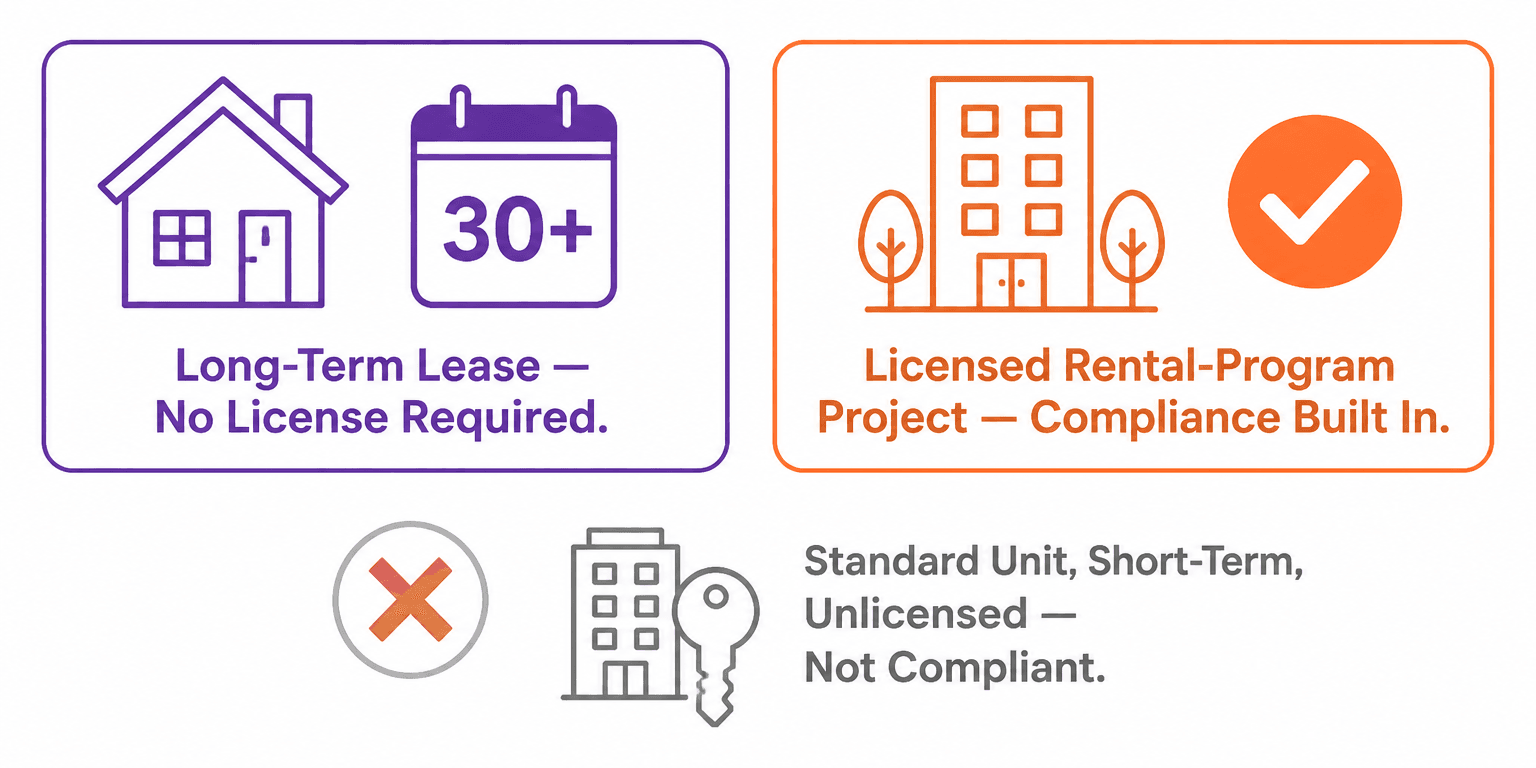
Two paths are realistic. The first is long-term leasing — renting to a single tenant for 30 days or longer, which falls outside the Hotel Act's short-term rental definition entirely and carries none of the same licensing exposure. The second is buying into a project with an established, licensed rental management program already built in, where the developer or an appointed operator handles compliance and the owner participates in a structured rental pool.
Can I Rent Out My Condo on Airbnb in Phuket?
Not on a standard privately-owned unit without a hotel license, in the overwhelming majority of cases — but buying specifically into a project designed for compliant rental operation changes the answer considerably. This is exactly the kind of distinction that should shape which project a rental-focused buyer chooses, rather than assuming any condo purchase in Phuket comes with Airbnb flexibility attached.
How Is Airbnb Income Taxed in Thailand?
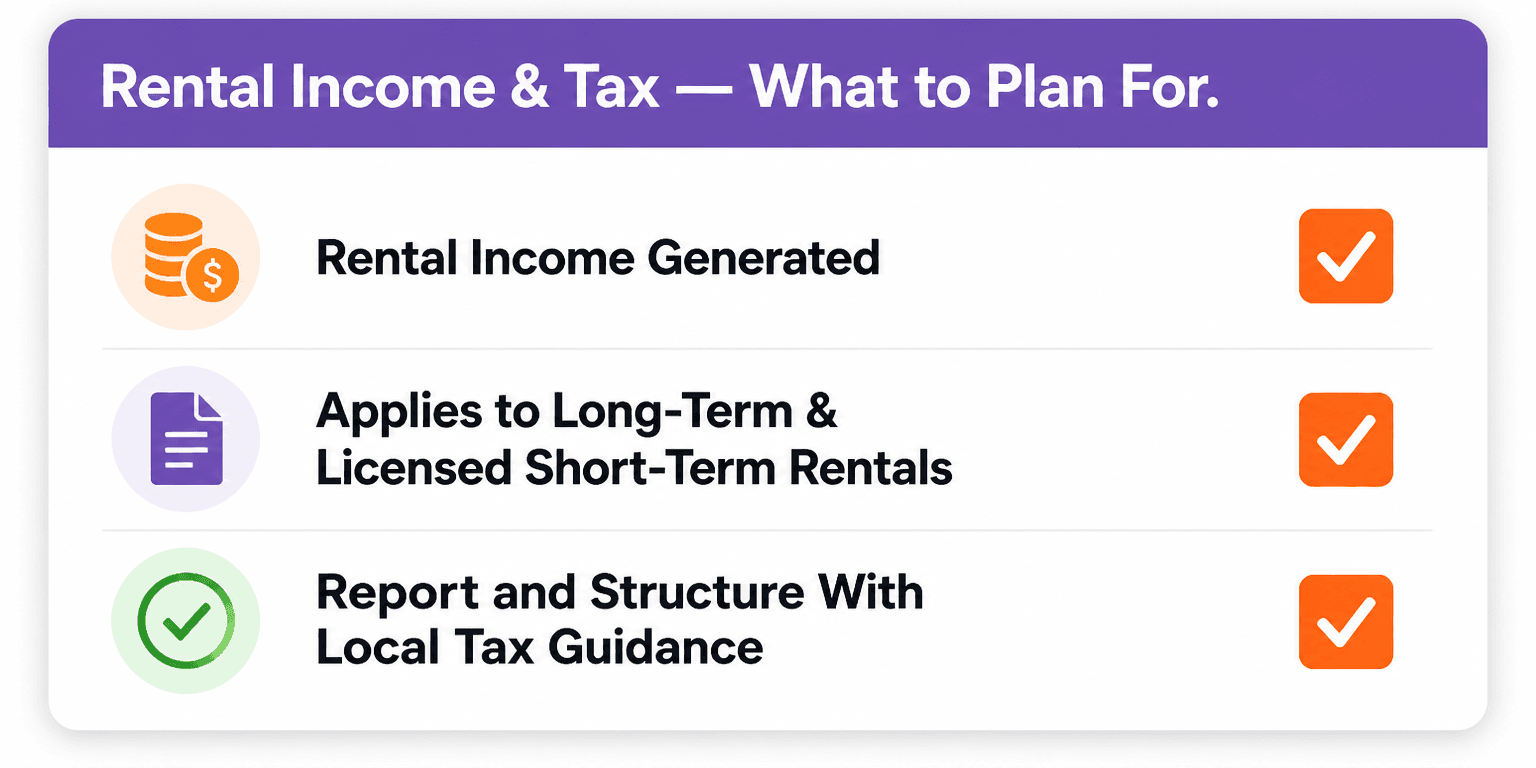
Whatever form rental income takes — long-term lease or a compliant managed rental program — it creates a tax obligation in Thailand that shouldn't be treated as an afterthought.
How Is Airbnb Income Taxed in Thailand?
Rental income earned in Thailand generally falls within the Thai tax system regardless of the owner's residency status, which makes proper structuring and reporting from the outset considerably more straightforward than correcting it later.
Conclusion
Airbnb laws in Thailand are stricter and more specific than most buyers assume, and the individual owner who lists a standard condo unit for short-term stays without a license is almost always operating outside the rules, regardless of intent. The safer, more reliable path to rental income is buying into a project built around a compliant, professionally managed rental structure — or leasing long-term — rather than assuming Airbnb-style flexibility comes standard with any Phuket condo purchase.
If you're evaluating a property specifically for rental income and want to understand what a project actually permits before you buy, reach out to the Papaya team directly via Telegram, WhatsApp, or email — we're happy to walk you through what fits your goals.