

Inheritance Rules for Foreigners in Thailand
Inheritance Rules for Foreigners in Thailand
Buyers plan carefully for how they'll purchase property in Thailand — the reservation, the SPA, the FET form, the quota check — but very few plan for what happens to that property after they're gone. The inheritance rules for foreigners in Thailand aren't the same across every property type: a condo, a leasehold villa, and land are all treated differently, which is exactly where confusion and unnecessary complications arise for heirs who weren't prepared for the distinction.
This guide covers the legal baseline for foreign inheritance in Thailand, how the rules differ by property type, the practical steps that protect heirs, and what actually happens during the inheritance process itself.
Can Foreigners Inherit Property in Thailand?
The direct answer is yes — foreigners can legally inherit property in Thailand. What varies significantly is what an heir can actually keep long-term, depending on whether the inherited property is a condo, land, or a leasehold interest.
Can a Foreigner Inherit Property in Thailand?
Thai succession law recognizes foreign nationals as legal heirs, whether inheriting under a valid will or, in the absence of one, under the statutory heir categories set out in Thai law for individuals who die without a will. Being recognized as a legal heir is the starting point, but it doesn't automatically mean the heir can retain every type of inherited asset in the same form the deceased held it — which is exactly why the property type matters so much in everything that follows.
Inheriting a Condo in Thailand as a Foreigner
Condo inheritance intersects directly with the same foreign ownership quota that governs condo purchases generally, which is the detail most heirs don't anticipate.
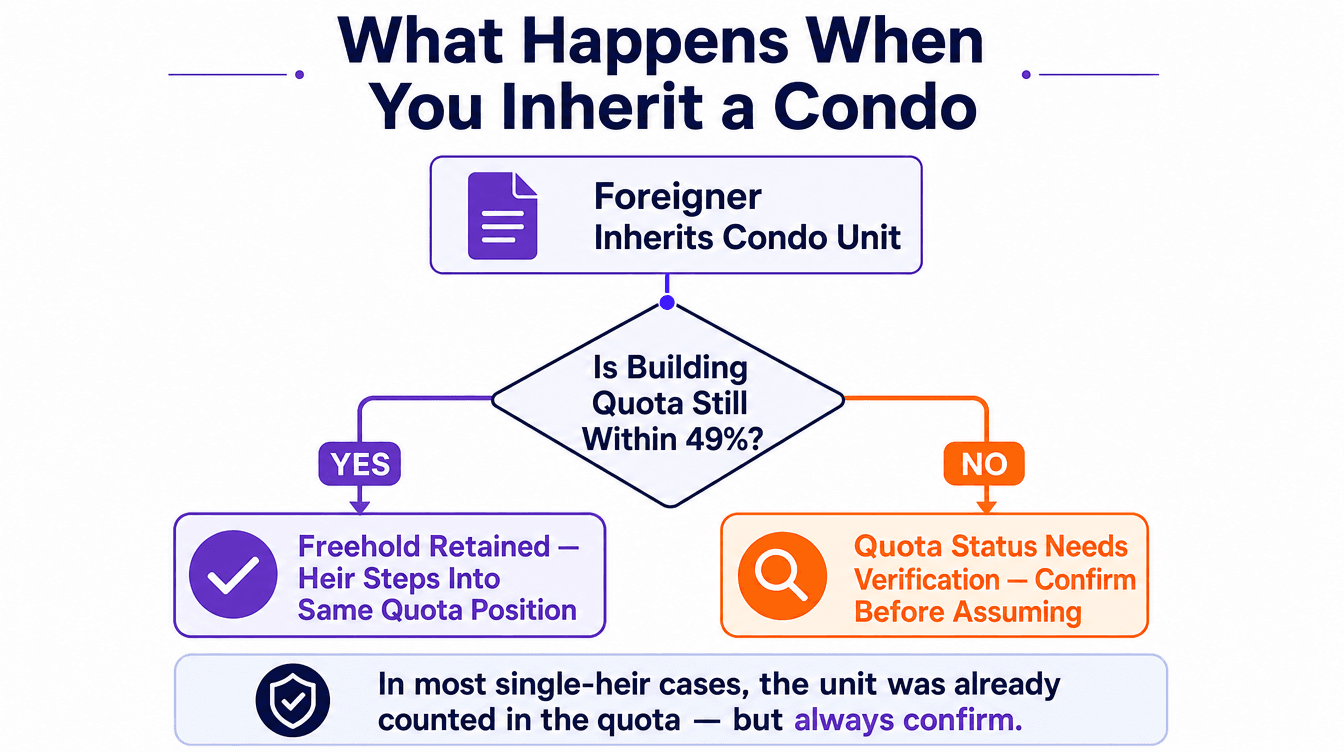
What Happens If You Inherit a Condo in Thailand as a Foreigner?
A foreign heir inheriting a condo unit can generally retain freehold ownership, provided the building's foreign ownership quota still has room to accommodate the inherited unit under the same 49% rule that applies to any foreign buyer. In most cases, since the unit was already counted within the foreign quota under the deceased's ownership, the inheritance itself doesn't typically create a new quota problem — the heir effectively steps into the same quota position the deceased already held. Where this can get complicated is with multiple heirs or more complex ownership structures, which is why confirming the unit's quota status as part of the inheritance process is worth doing rather than assuming it carries over automatically without any verification.
Inheriting Land in Thailand as a Foreigner
Land inheritance follows fundamentally different rules, consistent with the broader restriction on foreign land ownership covered throughout Thai property law.
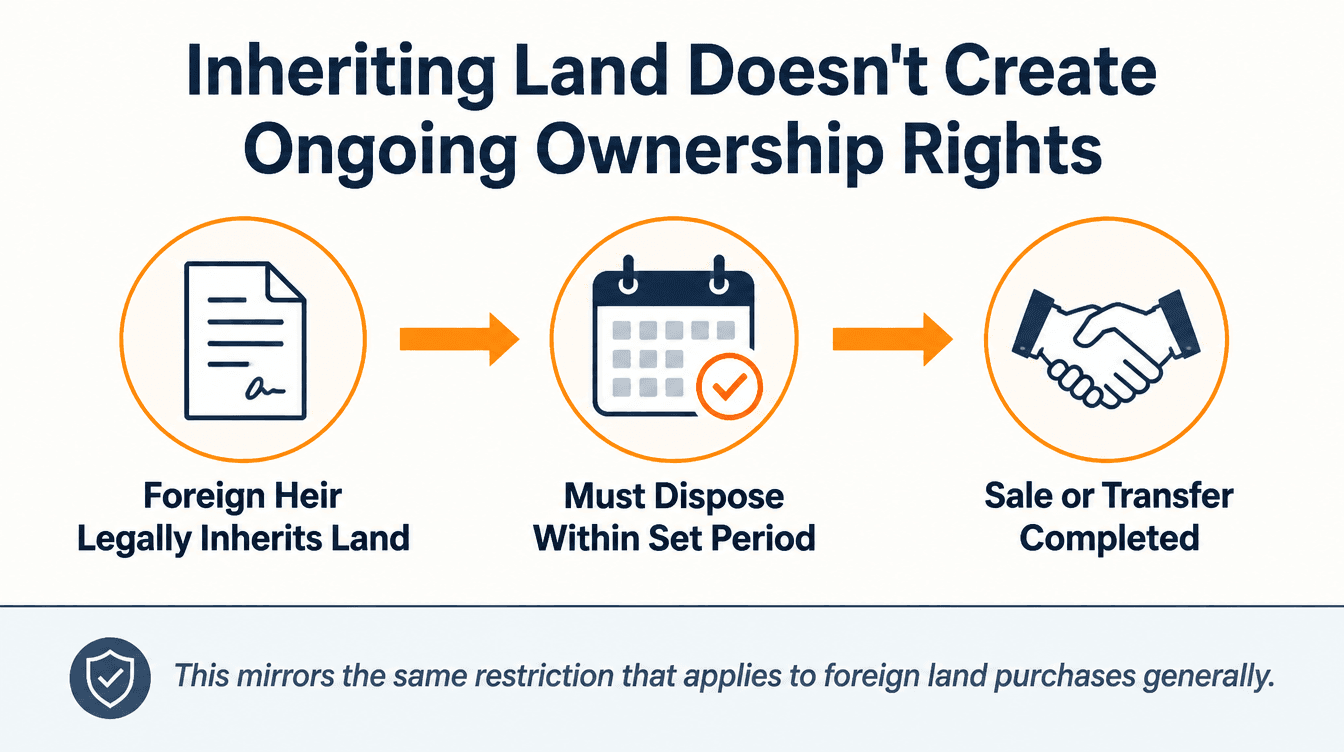
What Happens If You Inherit Land in Thailand as a Foreigner?
A foreign heir can inherit land as a legal matter, but inheriting land doesn't create an exception to the general restriction on foreign land ownership. The foreign heir is generally required to dispose of the inherited land within a specified period set by law, similar in spirit to how a foreign buyer cannot simply purchase land outright. This is a narrow, situation-specific outcome rather than a path to ongoing foreign land ownership, and heirs who don't act on this requirement within the applicable timeframe can face complications with the Land Department down the line.
What Happens to a Leasehold Villa When the Owner Dies?
Villas present their own inheritance logic, since a villa purchase typically involves a lease on the land plus, where properly structured, a separate superficies right over the structure itself.
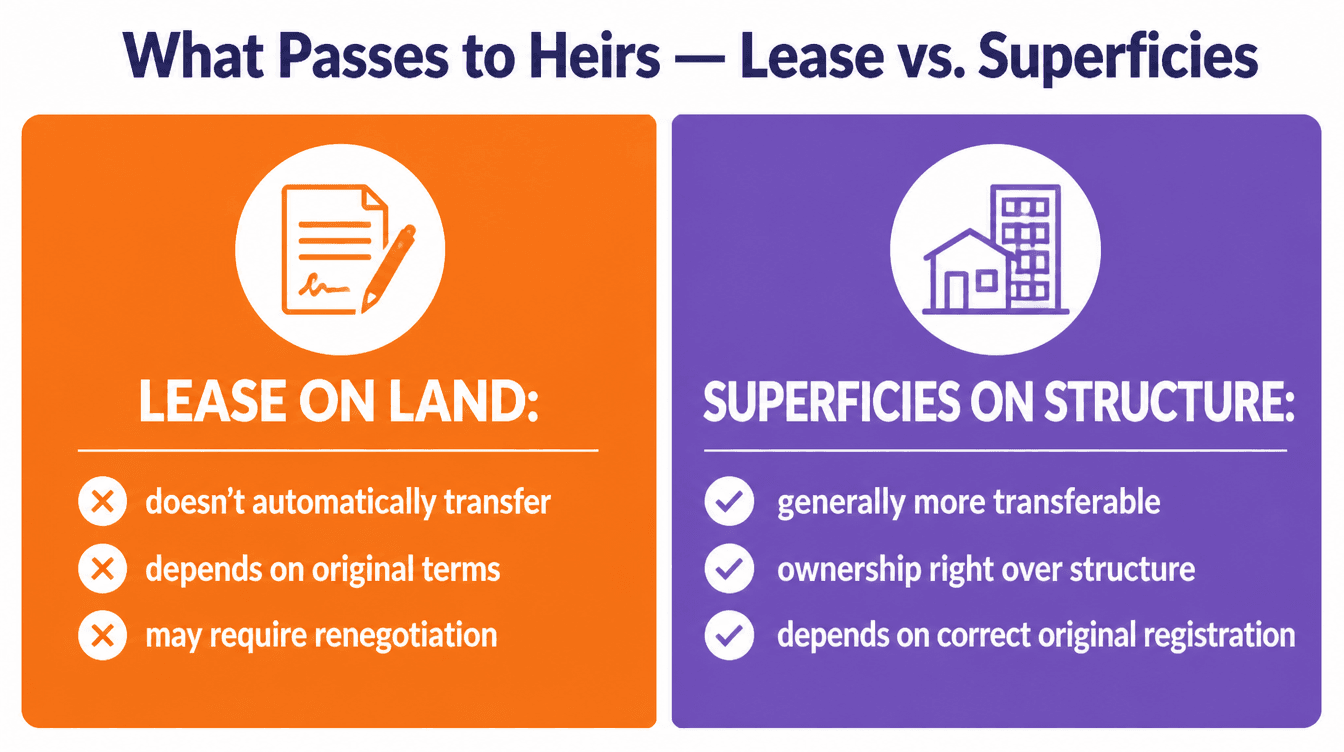
What Happens to a Leasehold Villa When the Owner Dies?
What happens depends heavily on how the original lease and any superficies right were drafted. A lease registered in the deceased's name doesn't automatically transfer to an heir unless the lease agreement itself includes provisions addressing this, or unless the heir separately negotiates continuation with the landowner. Superficies, as an ownership right over the structure, is generally more transferable to heirs than the underlying lease is — which is exactly why the quality of the original lease and superficies drafting, discussed at length in Papaya Property's broader guide to these rights, matters not just during the buyer's lifetime but for what happens to their heirs afterward. A villa purchase structured without clear provisions for this scenario can leave heirs in a considerably weaker position than the original owner ever realized.
Do You Need a Thai Will If You Own Property in Thailand?
This is the single most practical question in this entire guide, and the answer has real consequences for how smoothly an estate transfers to heirs.
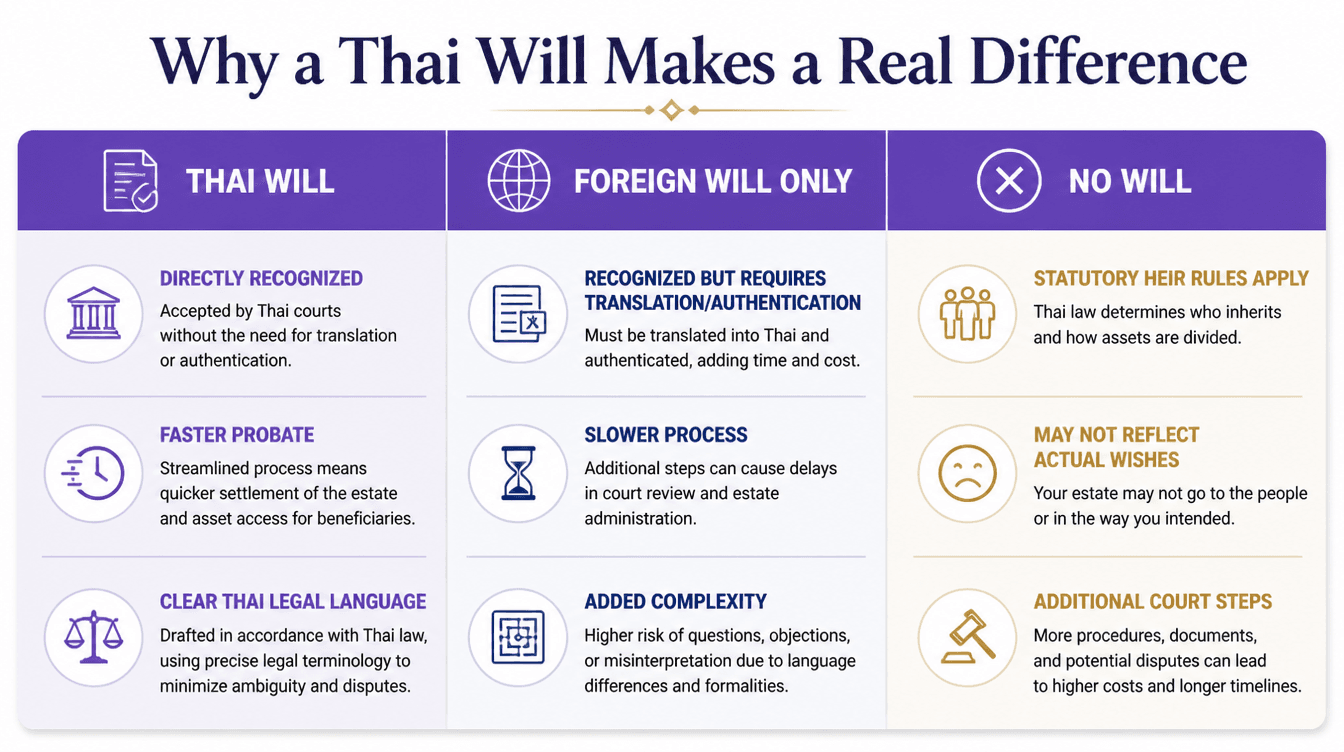
Do You Need a Thai Will If You Own Property in Thailand?
Yes. Even if a property owner already has a will in their home country, a separate Thai will covering Thai-based assets specifically is strongly advisable. A foreign will can be recognized in Thai probate proceedings, but the process of having a foreign document translated, authenticated, and accepted by a Thai court adds real time and complexity compared to a properly drafted Thai will that addresses Thai assets directly and unambiguously under Thai legal language and process.
What Happens If a Foreigner Dies in Thailand Without a Will?
Without a will, the estate is distributed according to Thailand's statutory heir categories, which follow a defined legal order of priority among surviving relatives. This default distribution may not reflect what the deceased would have actually wanted, and it adds the additional step of the Thai court and any involved family members working through intestate succession rules rather than following clear, pre-established instructions. This is precisely the scenario a properly drafted Thai will is designed to avoid.
How Does Probate Work in Thailand for Foreigners?
Once the legal right to inherit is established, there's still a formal process an heir has to go through before property is actually transferred into their name.
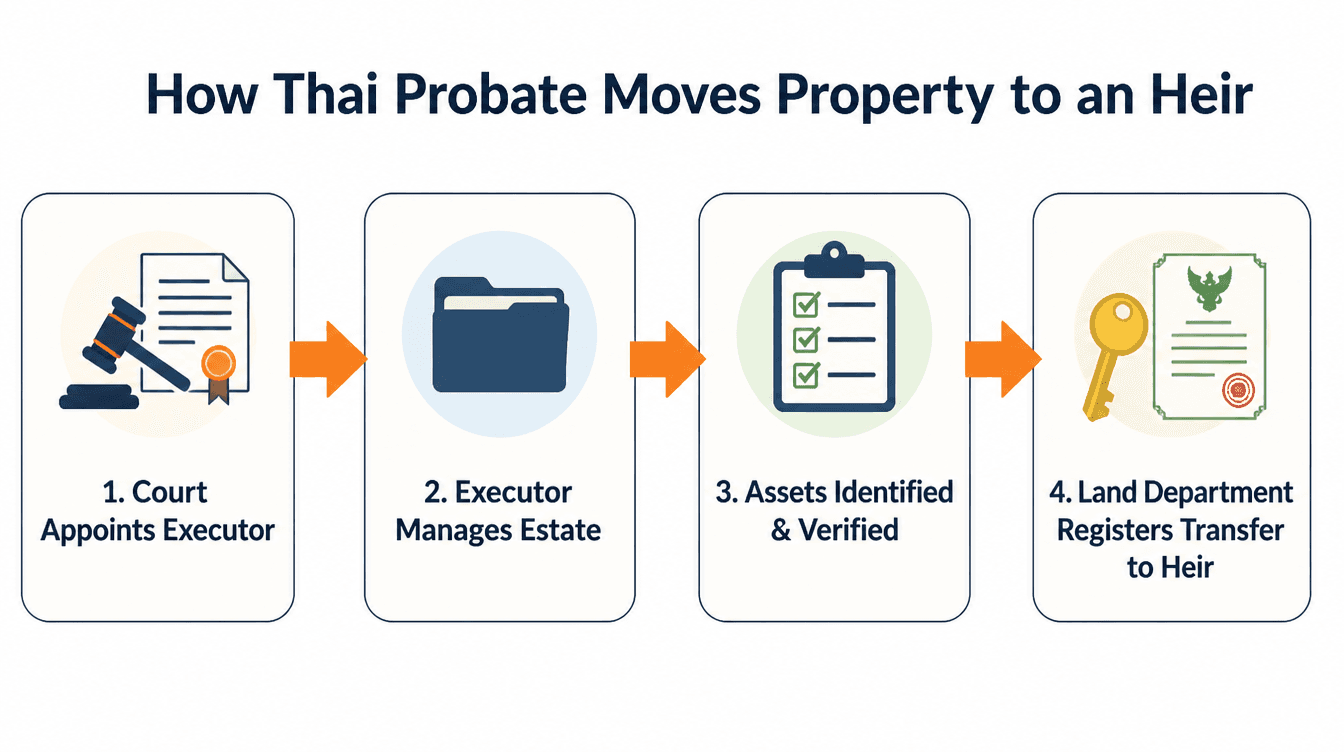
How Does Probate Work in Thailand for Foreigners?
A Thai court needs to formally appoint an executor (or administrator, where no will names one) before property can be legally transferred to heirs. Once appointed, the executor manages the process of settling the estate and transferring registered assets — including real estate — through the Land Department, using the same fundamental registration process any property transfer would go through, but initiated by the court-appointed executor rather than the original owner.
Can a Foreign Spouse Inherit Property Automatically in Thailand?
Not entirely automatically — a surviving spouse is recognized as a statutory heir under Thai law and holds inheritance rights, but the property still needs to go through the same probate process as any other inheritance to formally transfer into the spouse's name. Marriage to the deceased establishes the legal right to inherit as a spouse; it doesn't bypass the court process required to actually complete the transfer.
Inheritance Tax and Timeline
Two practical questions come up in nearly every conversation about inheritance planning: what it costs, and how long it takes.
Is There Inheritance Tax on Property in Thailand?
Thailand does apply inheritance tax in certain circumstances, generally tied to the value of the inherited estate exceeding a specified threshold. [DATA NEEDED: current inheritance tax threshold and applicable rate for property inherited by foreign heirs]. Whether tax applies, and how much, depends on the specific value involved and the relationship between the deceased and the heir, which is exactly the kind of calculation worth confirming with legal support as part of estate planning rather than assuming afterward.
How Long Does Inheriting Property in Thailand Take?
Timing depends heavily on whether a valid Thai will exists and how straightforward the estate is. A clear Thai will with a named executor and unambiguous asset descriptions moves through probate considerably faster than an estate without a will, or one involving disputed heirs, foreign documentation requiring authentication, or complex multi-property holdings. [DATA NEEDED: typical probate timeline range for straightforward vs. contested estates in Thailand].
Planning Ahead for Phuket Property Owners
Everything covered in this guide points toward the same practical conclusion: inheritance complications are almost entirely preventable with the right planning at the time of purchase, not something to address after the fact.
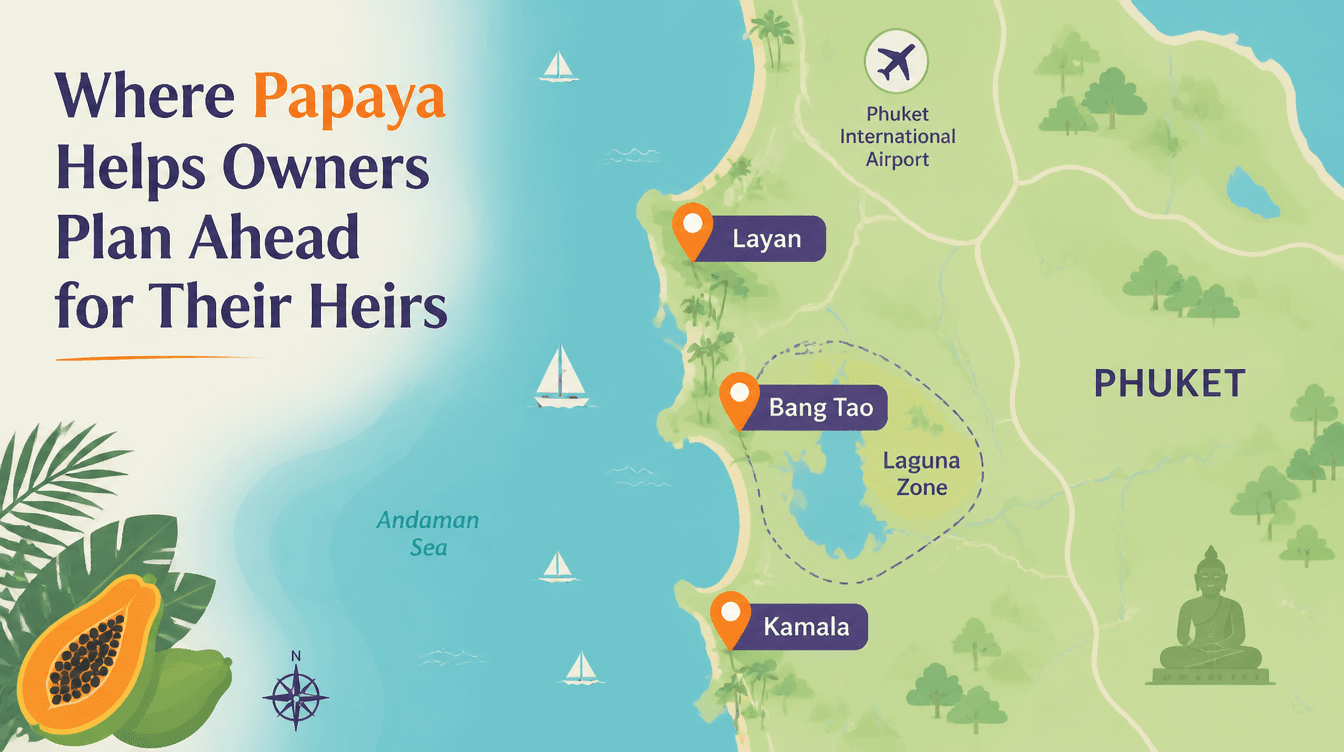
Buyers purchasing condos or villas in Bang Tao, Kamala, Laguna, or Layan through developers like Sansiri, Laguna Property, and The Title are already working with clean, well-documented titles from the point of purchase — which is a meaningfully better starting position for eventual inheritance than an older resale property with a less clear ownership history. Beyond the property itself, having a Thai will drafted alongside the purchase, rather than treated as a separate task to handle later, is the single most effective thing a foreign owner can do to protect their heirs.
Papaya Property's legal support extends beyond the purchase itself to help clients think through exactly this kind of long-term planning — correct title and lease structuring, and a clear recommendation to establish a Thai will — so that inheritance, if and when it becomes relevant, is a straightforward legal process rather than a complicated one for the people left to handle it.
The Bottom Line
Inheritance rules for foreigners in Thailand differ significantly by property type: condos generally transfer smoothly within existing quota limits, land inherited by a foreign heir generally must be disposed of within a set period, and leasehold villas depend heavily on how the original lease and superficies rights were drafted. Across all of these, a properly drafted Thai will and clear title documentation are what actually determine whether an heir faces a straightforward process or a genuinely difficult one.
If you own property in Bang Tao, Kamala, Laguna, or Layan and want to make sure your ownership structure and estate planning actually protect your heirs, the Papaya Property team can walk you through exactly what applies to your situation. Reach out via Telegram, WhatsApp, or email for a free consultation — no forms, just a direct conversation with someone who can answer the questions specific to your circumstances.