

Phuket Old Town: Culture, Food and Local Life Guide
Phuket Old Town: Culture, Heritage and Local Life Beyond the Beach
Most people who buy on Phuket's west coast know the beaches first. Phuket Old Town is where they find the island's history, food and community. It lies inland in Phuket Town, about half an hour's drive from Bang Tao, in a grid of streets that tin traders built more than a century ago.
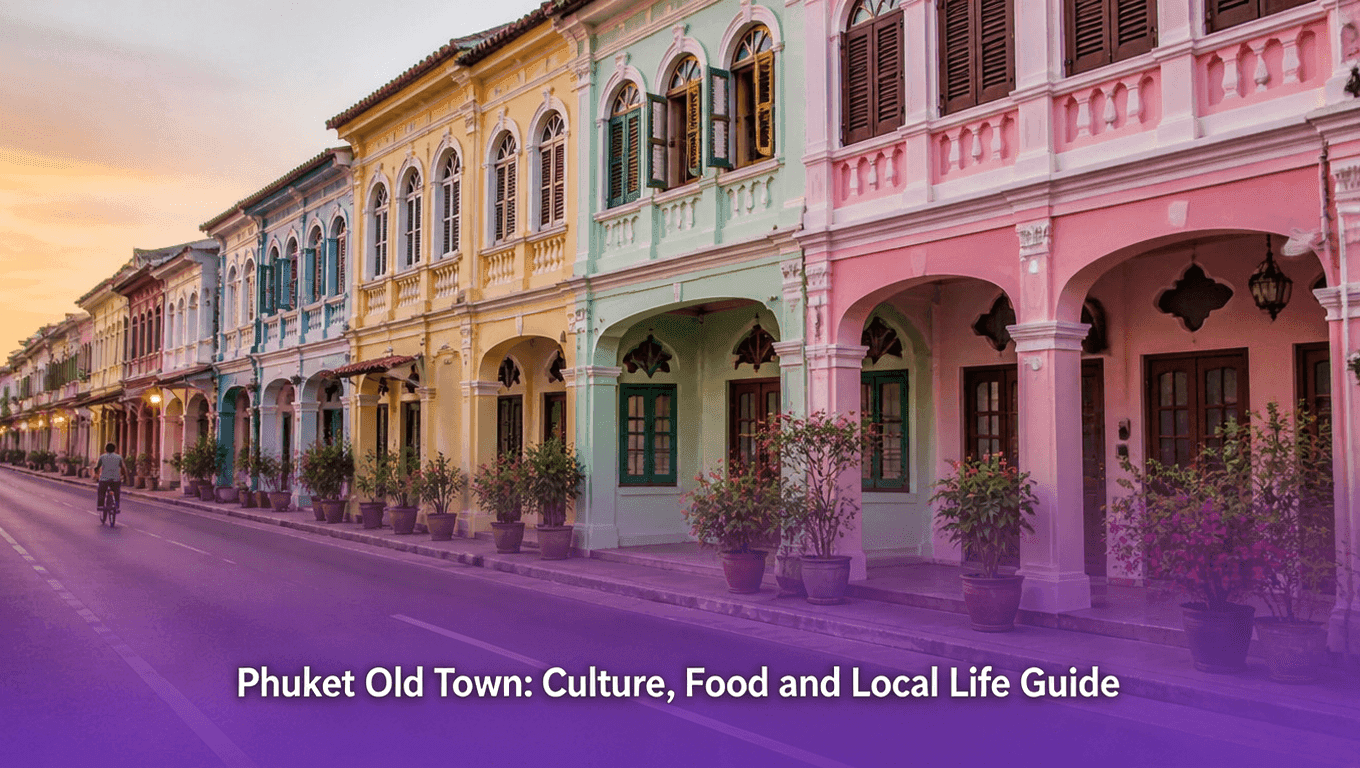
The difference shows within minutes of arriving. Pastel shophouses line Thalang Road, incense drifts out of Chinese shrines, and the dim sum shops are full of people having breakfast before work. This is the side of Phuket that holidaymakers often skip and residents come back to every week.
This guide covers:
what Phuket Old Town is known for, and how it began
the Baba Peranakan heritage that shapes local culture
what to see, eat and do, including the Sunday Walking Street market
what daily life looks like for people who live on the island
how west coast residents combine a beach base with easy access to town
What Phuket Old Town Is Known For
Phuket Old Town is known for three things:
Architecture: Sino-Portuguese shophouses found almost nowhere else in Thailand.
Heritage: a living Hokkien and Peranakan culture.
Food: one of the most distinctive local cuisines in the country.
All three come from the same source: the tin trade.
From Tin Mines to Trading Town: How Phuket Old Town Began
In the 19th century, Phuket's wealth came from tin, not tourism. The island had some of the richest tin deposits in the region, and mining drew thousands of workers and traders from southern China, most of them Hokkien.
Many arrived through Penang, then a British trading port on the Malay Peninsula. They brought Chinese customs, merchant networks and building styles from the Straits Settlements. Successful mining families built homes and businesses close together in what is now Phuket Town, and the old commercial core became today's Old Town.
The Hokkien Chinese community still shapes the town. Family names, clan associations, shrines and recipes trace back to that first generation of traders.
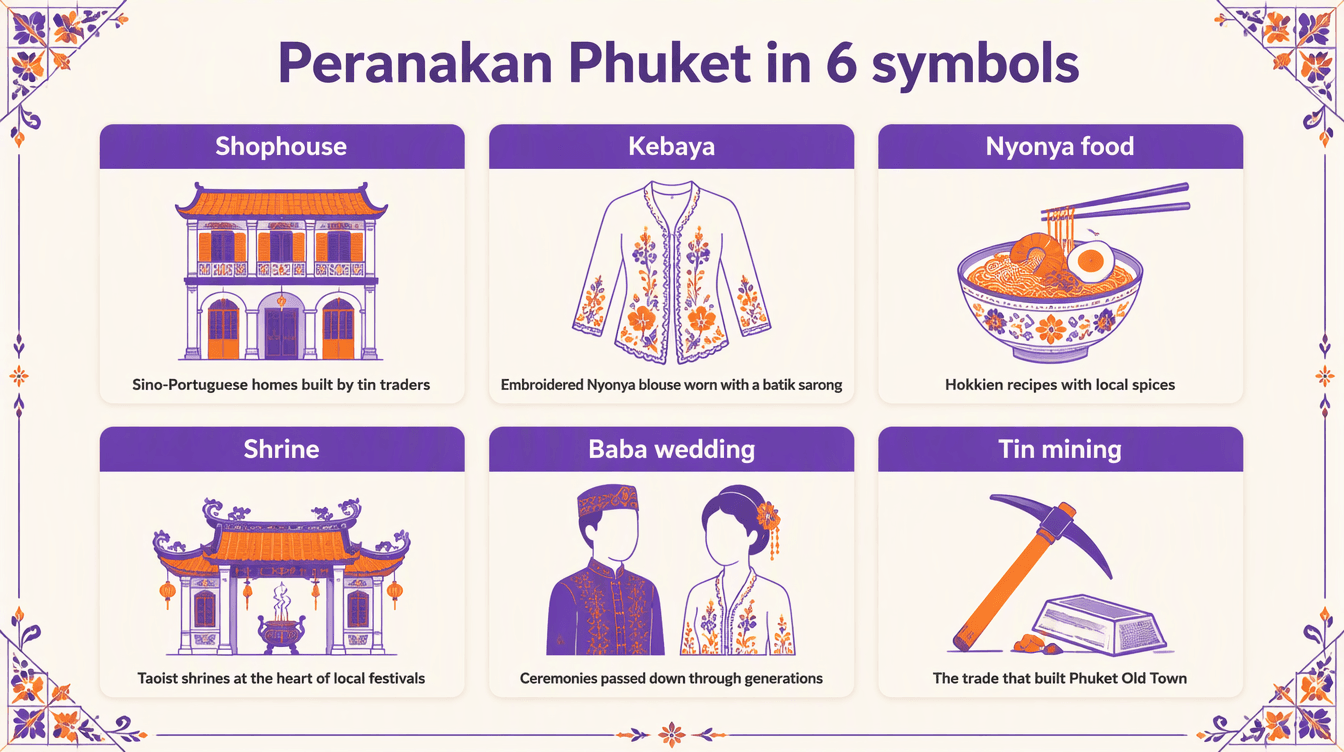
Sino-Portuguese Shophouses on Thalang Road and Soi Romanee
The shophouse is the signature building of Phuket Old Town. Each one is narrow at the front and runs deep into the block. Traditionally, the family ran its business on the ground floor and lived upstairs.
Look for these features as you walk:
Arcaded walkways at street level, called the "five-foot way", which shade pedestrians from sun and rain
European-style details: arched windows, wooden shutters, columns and decorative plasterwork
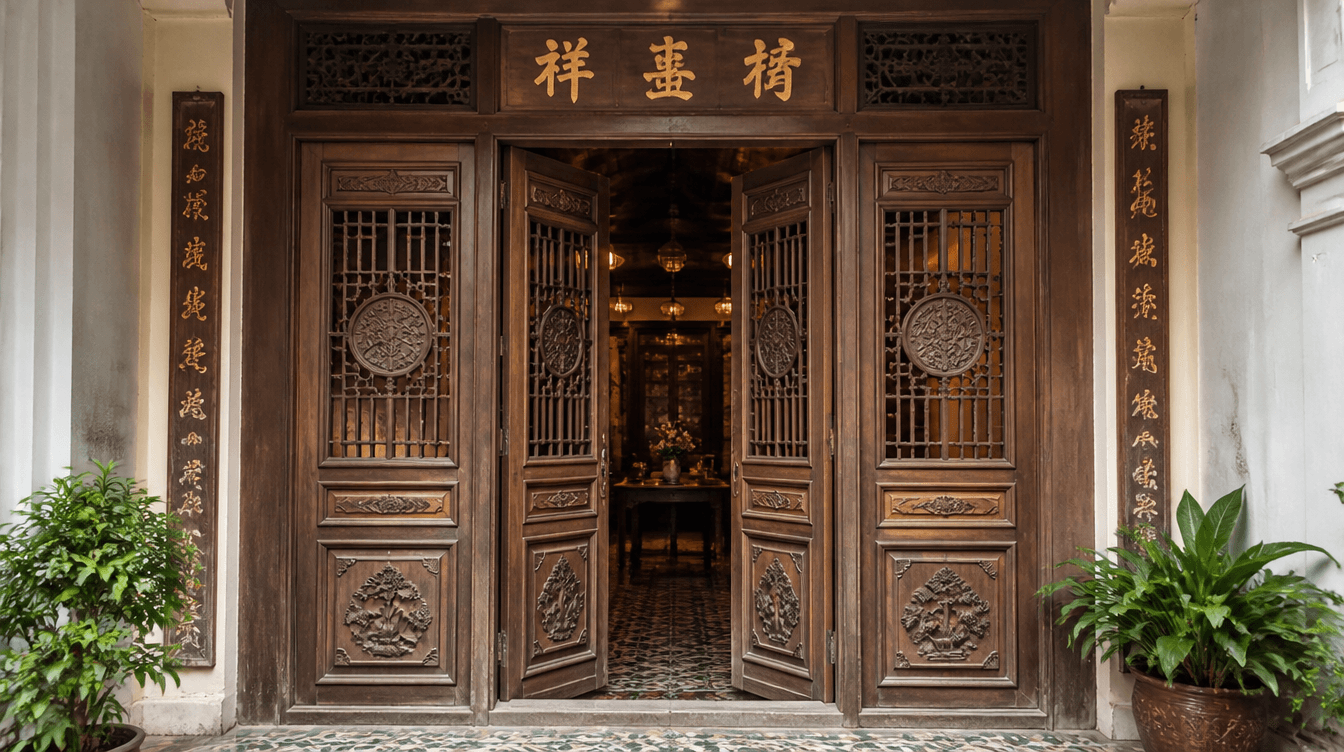
Chinese elements such as carved doors, auspicious characters and inner courtyards
Pastel façades in mint, pink, yellow and blue, many of them restored in recent years
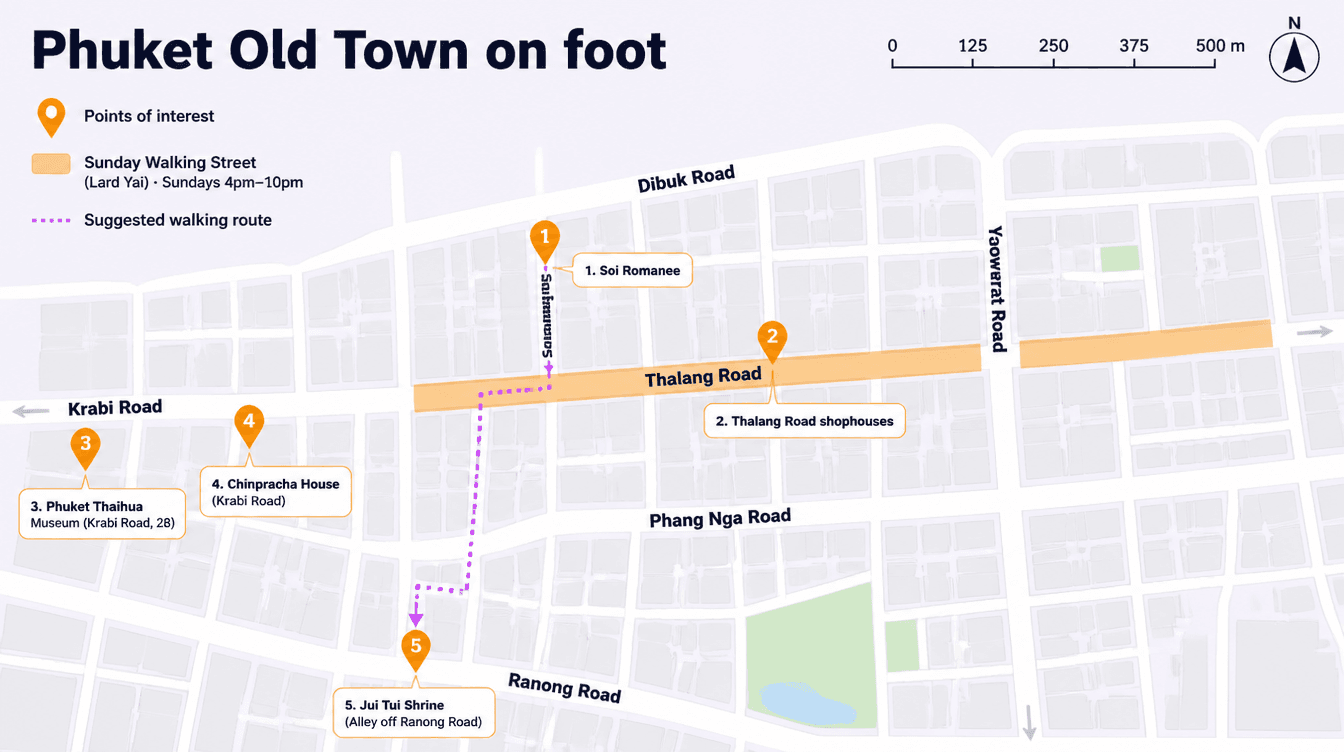
Thalang Road is the main street, with the longest unbroken run of shophouses. Soi Romanee is a short lane off it and the most photographed street in Phuket, its painted façades now home to cafés and guesthouses. Dibuk Road and Krabi Road add grander mansions built by the wealthiest tin families.
Phuket Peranakan Culture: The Baba Heritage
Peranakan culture is what makes Phuket Old Town feel different from Bangkok or Chiang Mai. It shapes the food, the dress, the festivals and the family traditions across the island.
What Is Peranakan Culture in Phuket?
The Peranakan are descendants of Chinese settlers who married into local communities across Southeast Asia. In Phuket, Peranakan men are known as Baba and women as Nyonya. The culture they created blends Hokkien Chinese, Thai and Malay influences.
You see Baba Peranakan heritage in everyday details:
Dress: the Nyonya kebaya, a fitted embroidered blouse worn with a batik sarong, is still worn at weddings and festivals.
Weddings: traditional Baba weddings follow ceremonies and dress codes passed down through generations.
Food: recipes mix Chinese techniques with local spices.
Homes: family altars, ancestral portraits and heirloom furniture in the old mansions.
Peranakan identity is not a museum display in Phuket. Many local families still describe themselves as Baba and keep the customs alive at home.
When Is the Phuket Vegetarian Festival?
The Phuket Vegetarian Festival takes place during the first nine days of the ninth month of the Chinese lunar calendar. Because it follows the lunar calendar, the dates change every year, but the festival usually falls in late September or October.
During those nine days, participants follow a strict plant-based diet to purify body and mind. Yellow flags appear outside food stalls and restaurants serving jay, the festival's vegan food. People dress in white, and processions leave from the town's Chinese shrines with drums and firecrackers.
The festival is also known for its ritual displays by devotees called ma song, which some visitors find intense. Even if you skip the processions, the food and the atmosphere in town are reason enough to visit during festival week.
Shrines, Museums and Living Traditions
Old Town's shrines are working places of worship, not tourist attractions.
Jui Tui Shrine, off Ranong Road, is a Taoist shrine and one of the centres of the Vegetarian Festival.
Phuket Thaihua Museum, at 28 Krabi Road, occupies a 1934 Sino-Portuguese building that was the island's first Chinese-language school. Its rooms cover the Hokkien settlers, the tin trade, Peranakan dress, food and architecture, and the origins of the Vegetarian Festival. It is open from 9am to 5pm and closed on Mondays.
Chinpracha House on Krabi Road is a restored Peranakan family mansion that shows how wealthy tin families lived.
If you visit one place to understand Old Town, make it the Thaihua Museum. It explains in an hour what the streets show you over a whole day.
Phuket Old Town Things to Do
Old Town is compact enough to walk in a morning, but residents keep coming back for the food, the market and the festivals.
When Is the Phuket Sunday Walking Street Market?
The Phuket Sunday Walking Street market, known locally as Lard Yai, runs every Sunday from about 4pm to 10pm on Thalang Road. "Lard Yai" means "big market" in the local dialect. The street closes to traffic, and stalls run the length of it.
Expect:
local street food, including Peranakan snacks and desserts
handmade crafts, clothing and souvenirs
live music and traditional performances
crowds of local families as well as visitors
Arrive around 5pm, when the heat drops and the light on the shophouses is at its best. By 7pm the street is at its busiest.
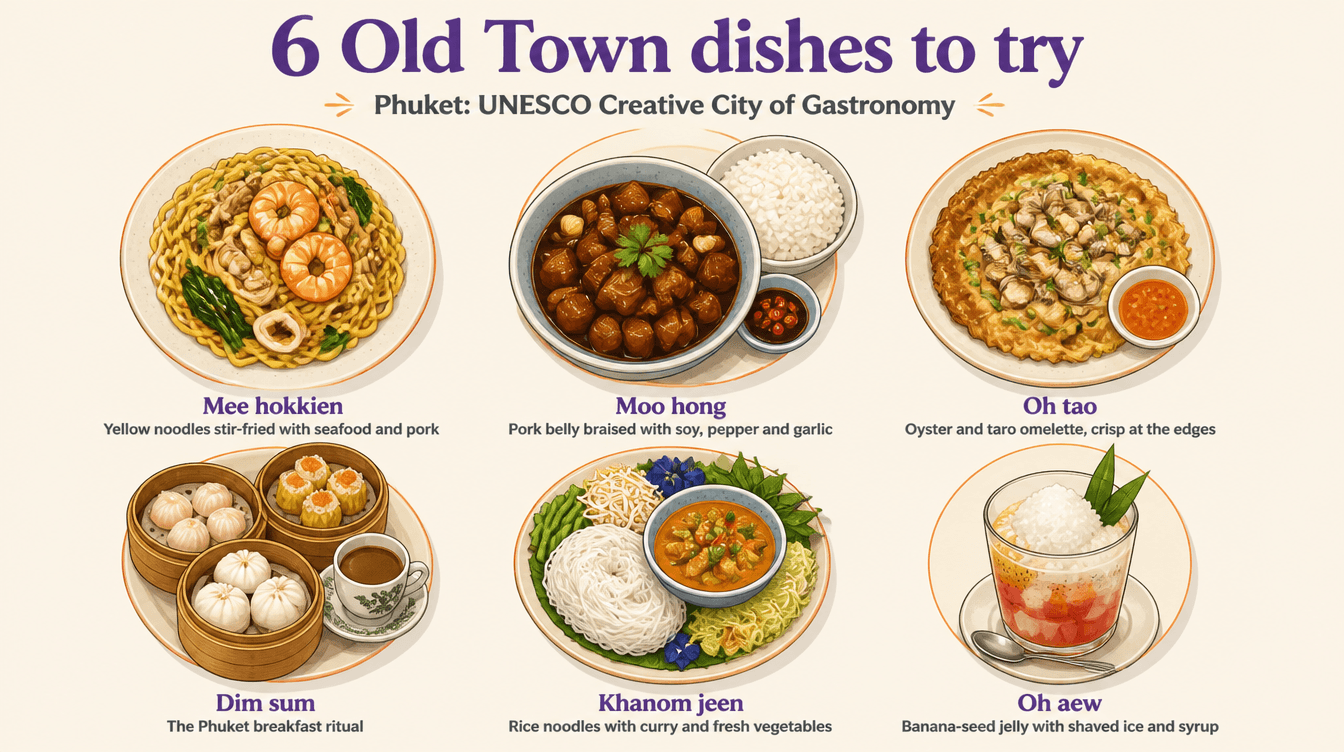
What Local Food Should You Try in Phuket Old Town?
Phuket food is Hokkien at its base, with Thai and Malay flavours layered on top. Start with these dishes:
Mee hokkien: thick yellow noodles stir-fried with seafood, pork and greens
Moo hong: pork belly braised slowly with soy sauce, black pepper and garlic
Oh tao: a savoury omelette of baby oysters and taro, crisp at the edges
Dim sum breakfast: steamed dumplings, buns and rolls with strong local coffee or tea, a morning ritual for Phuket families
Khanom jeen: fresh rice noodles with curry and a spread of fresh vegetables, another breakfast staple
Oh aew: a cooling dessert of jelly made from banana seeds, served with shaved ice and syrup
Breakfast is when Old Town eats best. The dim sum shops fill early, and many sell out before noon.
Why Is Phuket a UNESCO City of Gastronomy?
In 2015, UNESCO named Phuket a Creative City of Gastronomy, the first city in Thailand to receive the title. The designation recognises Phuket's food culture as a living tradition shaped by its history: Hokkien recipes, Peranakan techniques, southern Thai spices and local seafood.
What sets Phuket apart is continuity. Many of the dishes served in Old Town today come from recipes kept within families for generations, and they are eaten at home and in local markets, not only served to tourists.
Is Phuket Old Town Worth Visiting If You Live in Phuket?
Yes, and residents get far more out of it than visitors do. A tourist sees Old Town once, usually at midday in the heat. A resident gets to know it across the year:
Sunday evenings at Lard Yai
dim sum breakfasts before the crowds arrive
the Vegetarian Festival every autumn
Chinese New Year celebrations in the shrines and streets
new cafés, galleries and restaurants opening in restored shophouses
For people who live on the west coast, Old Town becomes a regular weekend routine and a large part of what makes Phuket feel like home rather than a resort.
Living in Phuket: Culture and Local Life for Residents
Living in Phuket is different from holidaying here. The beach is the backdrop, but daily life runs on routines, community and the local side of the island.
What Is Daily Life Like for Expats in Phuket?
Most foreign residents settle on the west coast and split their week between the coast and Phuket Town.
On the west coast, daily life centres on the beach, international schools, gyms, cafés and restaurants. Around Bang Tao and Laguna, residents use Boat Avenue and Porto de Phuket in Cherngtalay for shopping, dining and services.
In Phuket Town, residents handle the practical side of island life:
Healthcare: the island's main hospitals, including Bangkok Hospital Phuket and Vachira Phuket Hospital, are in and around town.
Government offices: visa renewals and other paperwork.
Banking and shopping: larger malls and bank branches.
Weekends: markets, food and culture in Old Town.
A typical week combines both: mornings on the beach and in the gym, a weekday errand in town, and a Sunday evening at the walking street market.
How to Experience Local Thai Culture While Living in Phuket
Living here gives you access to a side of Phuket that short-term visitors rarely see. A few habits make the difference:
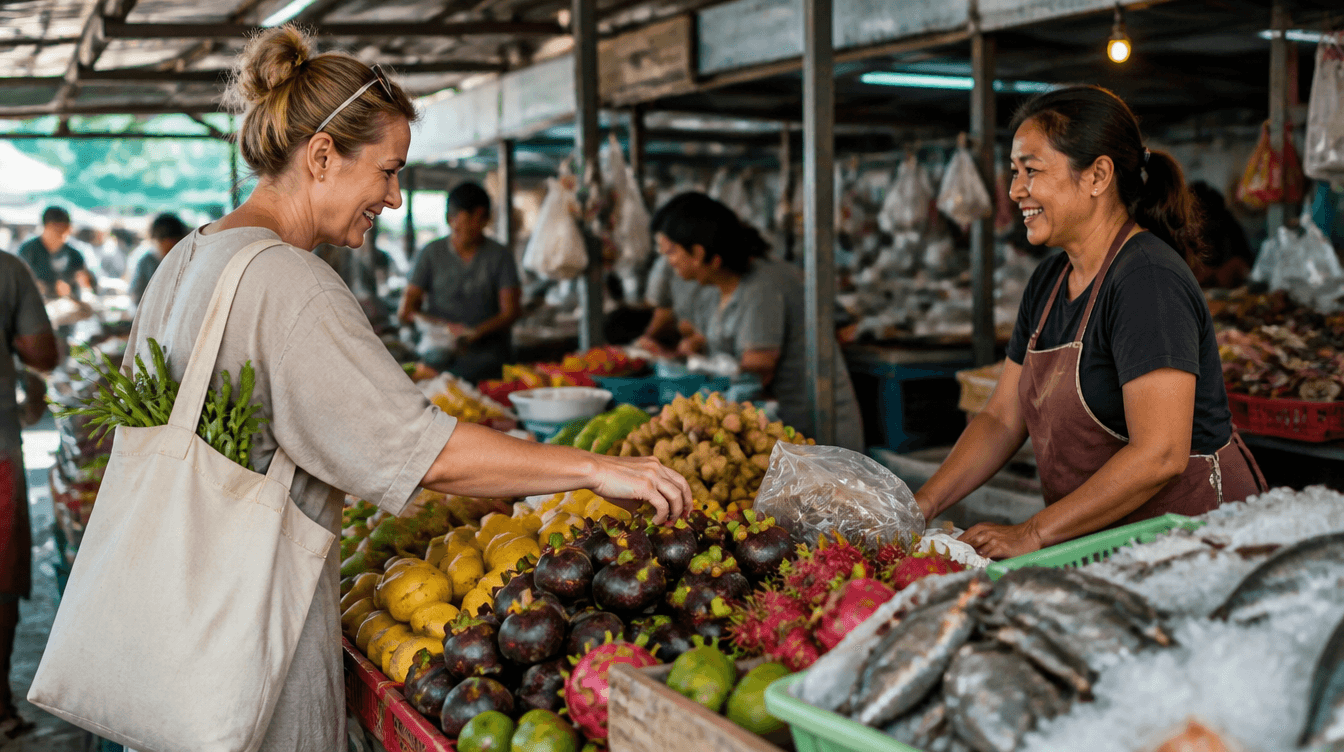
Shop at local markets. Morning fresh markets are where you see the island's daily rhythm and buy the best produce.
Learn basic Thai. Greetings, numbers and food vocabulary change how locals respond to you.
Follow the festival calendar. Songkran in April, Loy Krathong in November, Chinese New Year and the Vegetarian Festival each have their own atmosphere.
Eat where locals eat. Dim sum in Old Town, roadside noodle stalls and family-run restaurants give you more of Phuket than hotel dining.
Respect local customs. Dress modestly at temples and shrines, return a wai greeting, and remove your shoes before entering homes.
The Hokkien and Peranakan community is proud of its heritage and open to newcomers who show genuine interest in it.
Beach Base, Town Access: Where Residents Live
Most foreign buyers do not live in Old Town. They live on the west coast, where the beaches, international amenities and new developments are, and drive into town for culture, food and services.
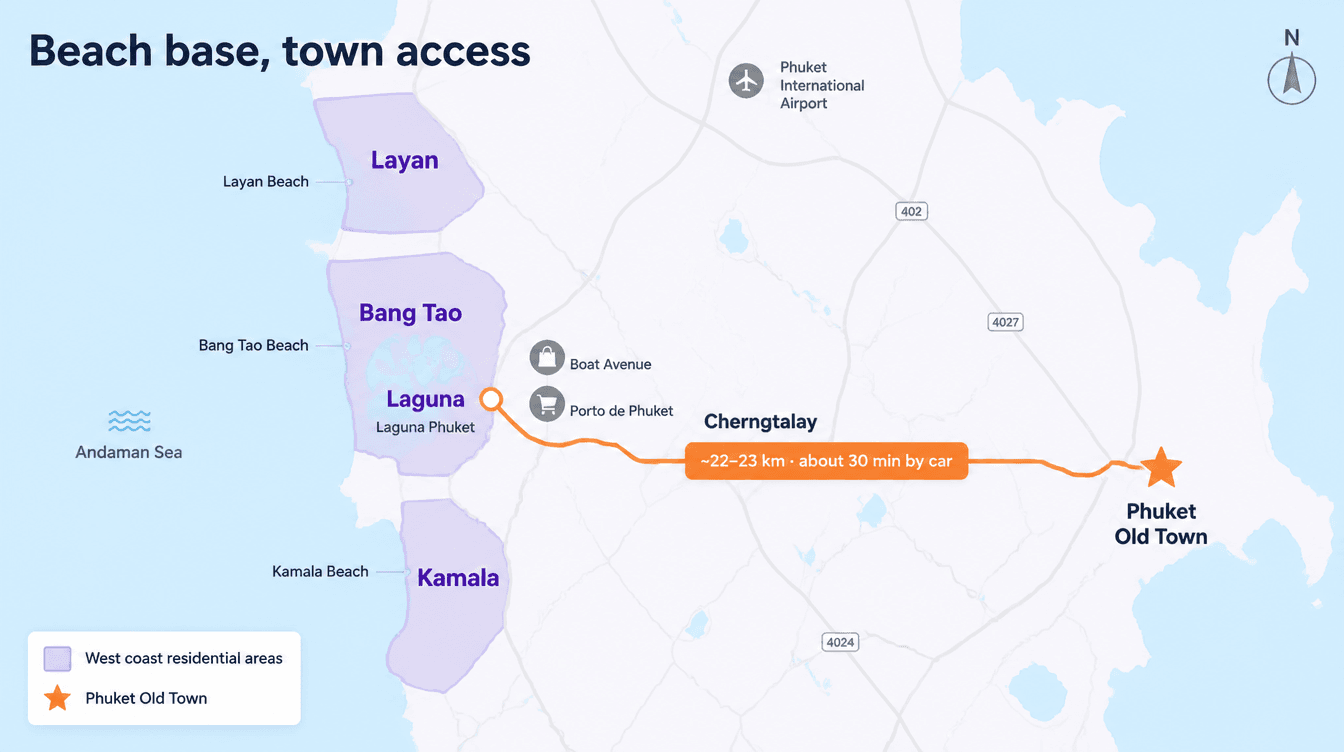
How Far Is Phuket Old Town from Bang Tao?
Phuket Old Town is about 22–23 km from Bang Tao by road, roughly a 30-minute drive outside rush hour. Laguna is next to Bang Tao, so the drive time is similar. Layan, at the northern end of the area, adds a few minutes.
Most residents drive or use a scooter. Ride-hailing apps such as Grab and Bolt cover the route, which makes an evening at the Sunday market easy without a car.
Bang Tao, Laguna, Layan and Kamala: Choosing Your West Coast Base
Each west coast area offers a different balance of beach life and access:
Bang Tao has a long beach, Boat Avenue and Porto de Phuket close by, and the widest choice of new condos and villas.
Laguna sits inside Laguna Phuket, an integrated resort with lagoons, golf, international schools and established infrastructure. Laguna Property develops residences here.
Layan is quieter and greener, with a secluded beach at the northern end of Bang Tao Bay.
Kamala is a smaller beach community south of Bang Tao, with a village feel and hillside views.
All four give residents the west coast lifestyle with Phuket Town within reach.
Buyers often ask how to compare projects across these areas fairly. Papaya works at developer-direct prices on Sansiri, Laguna Property and The Title projects, with no agency markup. That lets you compare a two-bedroom condo in Bang Tao against a villa in Layan on the developers' own figures.
For first-time buyers in Thailand, our legal support and due diligence covers the checks that matter:
the Chanote land title
the construction permit
the terms of the Sale and Purchase Agreement (SPA)
for condos, availability under the 49% foreign ownership quota
FAQ
What is expat life in Phuket like outside the tourist areas?
Expat life in Phuket outside the tourist areas is quieter and more local. Residents on the west coast build routines around international schools, sports, cafés and the beach, and spend weekends in Phuket Town for markets, food and festivals. Many say the local community, not the beach, is what keeps them here long-term.
Do you need a car to get to Phuket Old Town from the west coast?
A car or scooter is the most convenient option, and most residents have one. Grab and Bolt cover the route from Bang Tao, Laguna, Layan and Kamala, and local songthaew buses connect several beach areas with Ranong Road in town.
What is the best time of day to visit Phuket Old Town?
Early morning is best for dim sum and quiet streets. Late afternoon is best for photographs and, on Sundays, the walking street market. Midday is the hottest and least comfortable time to walk.
Conclusion
The beach is why most people come to Phuket. Phuket Old Town is a large part of why many of them stay. Its shophouses, Peranakan heritage, food and festivals give the island a depth that resort areas alone do not have.
For residents, the best of both is within reach. A home in Bang Tao, Laguna, Layan or Kamala puts the west coast lifestyle at your door, with Old Town a short drive away for Sunday markets, dim sum breakfasts and the festival calendar.
If you are considering a home on Phuket's west coast, the Papaya team can show you current projects from Sansiri, Laguna Property and The Title at developer-direct prices. We'll walk you through the area, the buying process and the legal checks. Message us on Telegram or WhatsApp, or send an email, for a free consultation with a Papaya manager.