

Currency Transfers for Property in Thailand: Guide
International Currency Transfers for Property in Thailand: A Complete Guide
Intro
Transferring money to buy property in Thailand isn't as simple as a regular bank transfer — getting it wrong can delay a purchase or, in the worst case, jeopardize it entirely. International currency transfers for property in Thailand follow specific rules, most importantly the FET form requirement, and understanding the process before you initiate a transfer saves real time and stress.
This guide covers how the transfer process actually works, what the FET form is and why it matters, how to compare transfer methods, realistic costs and timing, and how to repatriate funds later when you sell.
How to Transfer Money to Buy Property in Thailand
Before getting into specifics, it helps to understand the basic shape of the process from start to finish.
Every foreign-currency purchase of Thai property needs to arrive in Thailand as an international transfer into a Thai bank account, denominated in foreign currency and then converted to Thai baht by the receiving bank. Wire transfer to Thailand bank account processes generally involve your home bank sending funds via SWIFT to a Thai bank, which converts the currency and credits a Thai bank account — either your own or, in some transaction structures, the seller's or a lawyer's escrow account directly. Transfer timing property purchase Thailand requires coordinating closely with your SPA deadlines, since delays in fund arrival can create real complications at the transfer and registration stage at the Land Department.
How Do I Transfer Money to Thailand to Buy Property?
The typical process runs through several steps: initiate an international wire transfer from your home bank account, specify the receiving Thai bank account details accurately, ensure the transfer purpose is correctly noted as a property purchase, and confirm with the receiving bank that the transfer has been properly recorded once it lands. Getting the transfer purpose noted correctly from the outset matters directly for the FET form process covered below.
Do I Need a Thai Bank Account to Buy Property?
In most cases, yes — funds typically need to land in a Thai bank account, whether your own or one connected to the transaction (a lawyer's client account, for instance), before the FET form can be properly issued and the purchase can proceed to registration. Thai bank account foreigner property purchase requirements vary somewhat by bank and by how the transaction is structured, so confirming this directly with your bank and legal team before initiating a transfer avoids assumptions that turn out to be wrong.
What Is the FET Form and Why Do You Need It?
This is the single most important document in the entire currency transfer process, and it's worth understanding thoroughly rather than treating as paperwork to rush through.
Foreign exchange transaction form Thailand requirements apply to any inbound transfer of USD 50,000 or more intended for property purchase — the receiving Thai bank issues an FET form (also referred to in some contexts as a Tor Tor Sam form Thailand banks use for smaller transfers) confirming the funds entered Thailand legitimately from abroad for this specific purpose. This document is not optional: the Land Department requires proof that funds used to purchase property, particularly a condo under the foreign ownership quota, entered Thailand as foreign currency and were properly converted — the FET form is that proof.
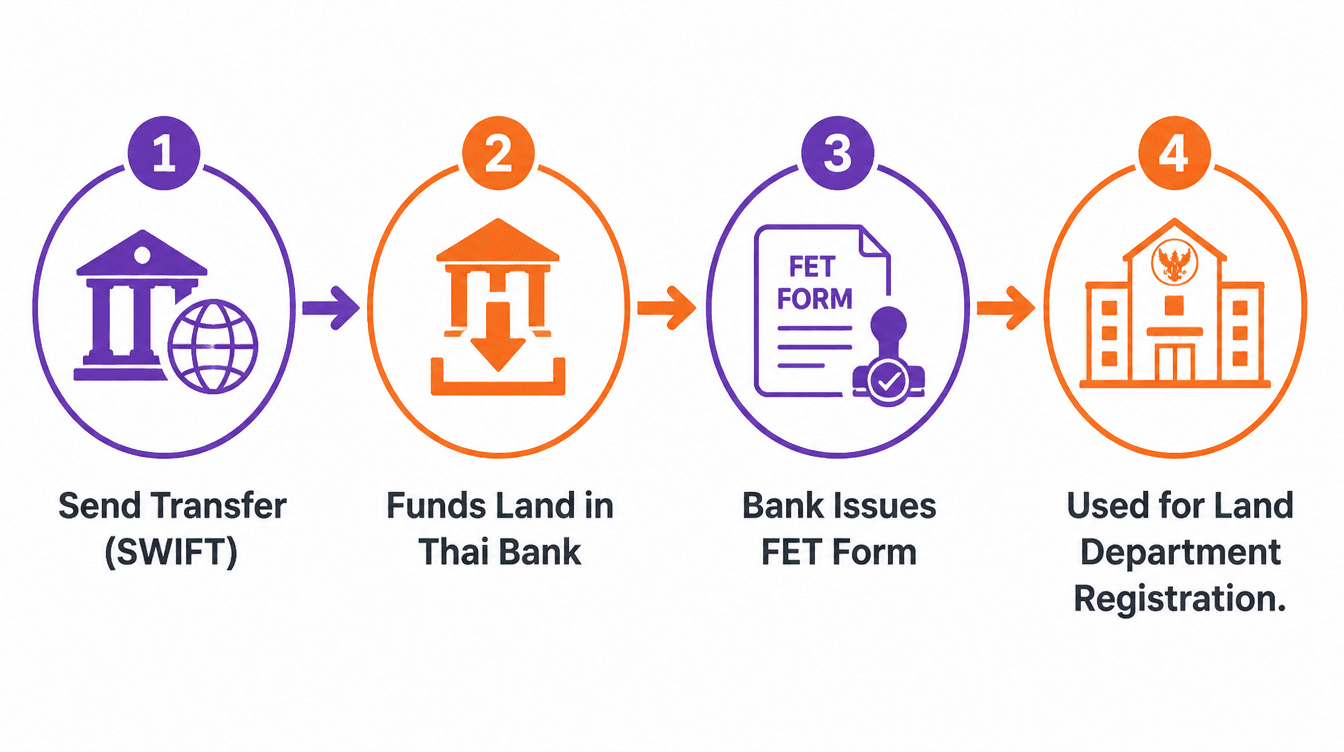
Proof of funds Thailand property purchase requirements connect directly to this document — without a properly issued FET form, registering a condo purchase in a foreigner's name at the Land Department becomes significantly more complicated, and in many cases isn't possible at all.
What Is the FET Form and Why Do I Need It?
The FET form exists to prevent unclear or improperly documented foreign funds from being used to establish property ownership, and it protects the buyer as much as it satisfies regulatory requirements — it's the paper trail that later confirms your funds came from abroad, which matters again when you eventually sell and want to repatriate proceeds. Requesting the FET form directly from your receiving bank as soon as the transfer lands, rather than assuming it happens automatically, keeps the transaction moving on schedule.
What Happens If I Transfer Under USD 50,000 for a Thailand Property Purchase?
For transfers under the USD 50,000 threshold, Thai banks generally issue a simpler confirmation letter or Tor Tor Sam form Thailand banks use for smaller amounts, rather than a full FET form — this still documents the foreign-currency origin of the funds, just through a lighter process. For purchases where the total price is close to this threshold, or where funds will arrive in multiple smaller transfers, confirming with your bank in advance how each transfer will be documented avoids gaps in the paper trail that create problems later.
What's the Best Way to Send Money to Thailand for Property?
With the legal requirement understood, the practical question becomes which transfer method actually gets funds there efficiently and cost-effectively.
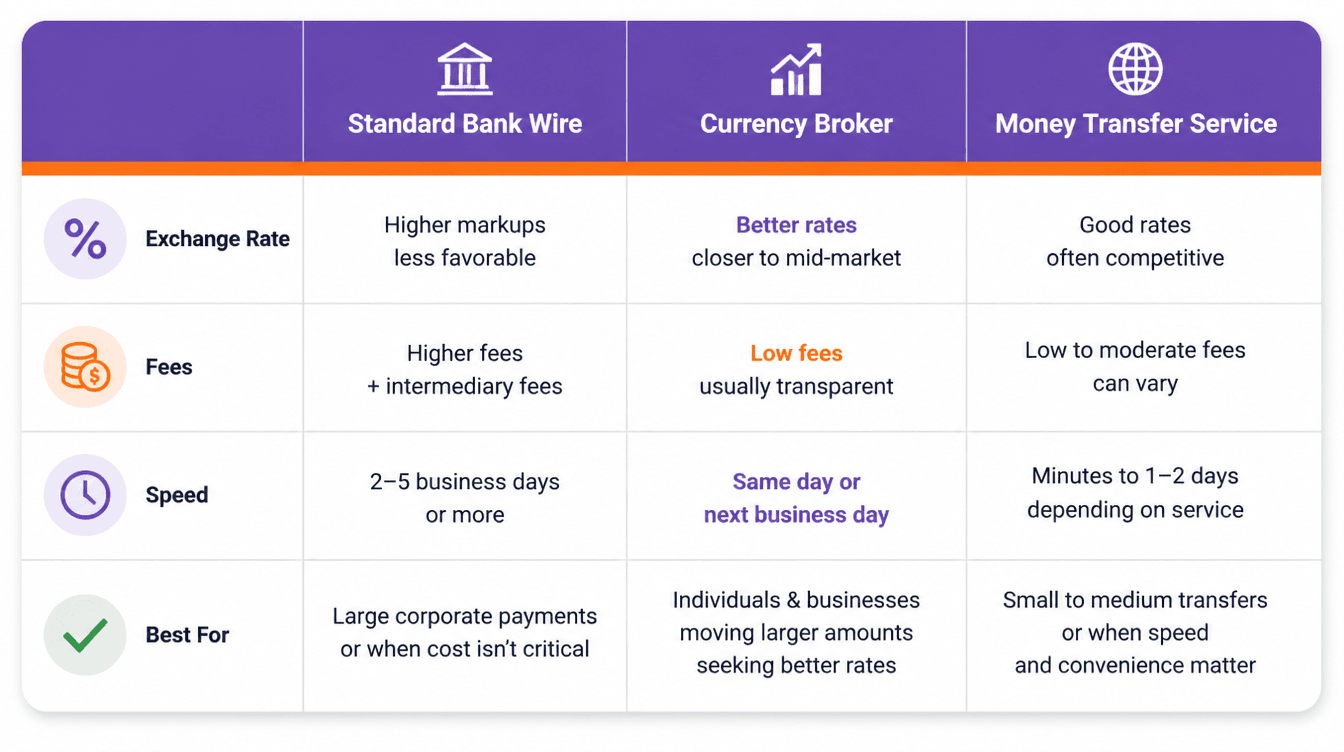
Bank transfer vs currency broker Thailand comparisons come down to a genuine trade-off: a standard bank wire is familiar and straightforward but often carries a less competitive exchange rate and higher fixed fees, while a specialist currency broker typically offers a better exchange rate and lower fees but requires setting up a relationship with a provider you may not have used before. SWIFT transfer Thailand property purchases most commonly use is the standard mechanism regardless of which provider initiates it — the difference between a bank and a broker is really about the rate and fee structure applied before the SWIFT transfer is sent, not the transfer mechanism itself.
Our currency transfer assistance helps clients compare providers and structure the transfer correctly from the outset, regardless of which method they ultimately choose — this isn't about steering clients toward one provider, but making sure the transfer purpose, documentation, and timing are all correct before funds are sent, since fixing a mistake after the fact is far harder than getting it right the first time.
Is It Better to Use a Bank or a Currency Broker for a Thailand Property Transfer?
For a large, one-off property purchase transfer, a specialist currency broker very often works out meaningfully cheaper than a standard bank wire, purely because of the exchange rate margin banks typically apply compared to brokers who specialize in large transfers. International wire transfer fees charged by banks tend to be a smaller factor than the exchange rate spread itself on a transfer of this size, which is why comparing the effective all-in rate — not just the advertised fee — matters more than shopping by fee alone.
How Much Does It Cost to Transfer Money Internationally to Thailand?
Requesting a full cost breakdown — the transfer fee plus the exchange rate spread — from any provider before committing gives a genuinely comparable picture, since providers often advertise a low fee while making their margin on the exchange rate instead.
How Long Does an International Money Transfer to Thailand Take?
Timing matters enormously when a transfer needs to land before a specific SPA deadline.
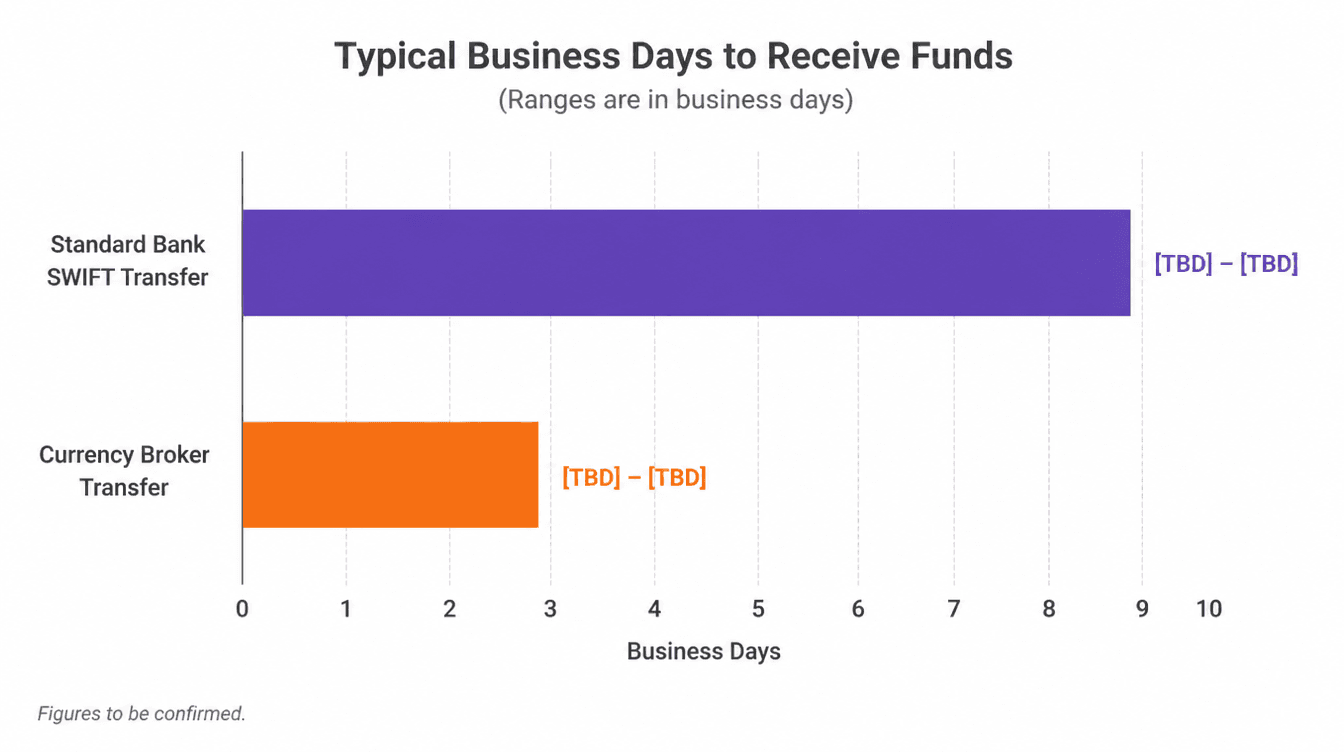
Transfer timing property purchase Thailand buyers should plan around varies by method and by the banks involved on both ends: a standard SWIFT bank transfer typically takes several business days, while a currency broker handling the transfer directly sometimes moves faster once the initial account setup is complete. Building in a buffer of at least a few extra business days beyond the minimum expected transfer time avoids the stress of a transfer landing later than an SPA payment deadline requires.
How Long Does an International Money Transfer to Thailand Take?
[DATA NEEDED: typical transfer timeframes for standard bank SWIFT transfers versus currency broker transfers into Thailand, to give readers realistic timing expectations]. Initiating the transfer as early as reasonably possible relative to a payment deadline, rather than timing it precisely to the due date, is the safest approach given how many variables — intermediary banks, compliance checks, public holidays — can add unexpected delay.
Currency Exchange Risk When Buying Property in Thailand
Beyond process and cost, currency exchange for Thailand property purchase decisions carries a genuine risk factor worth understanding on its own terms.
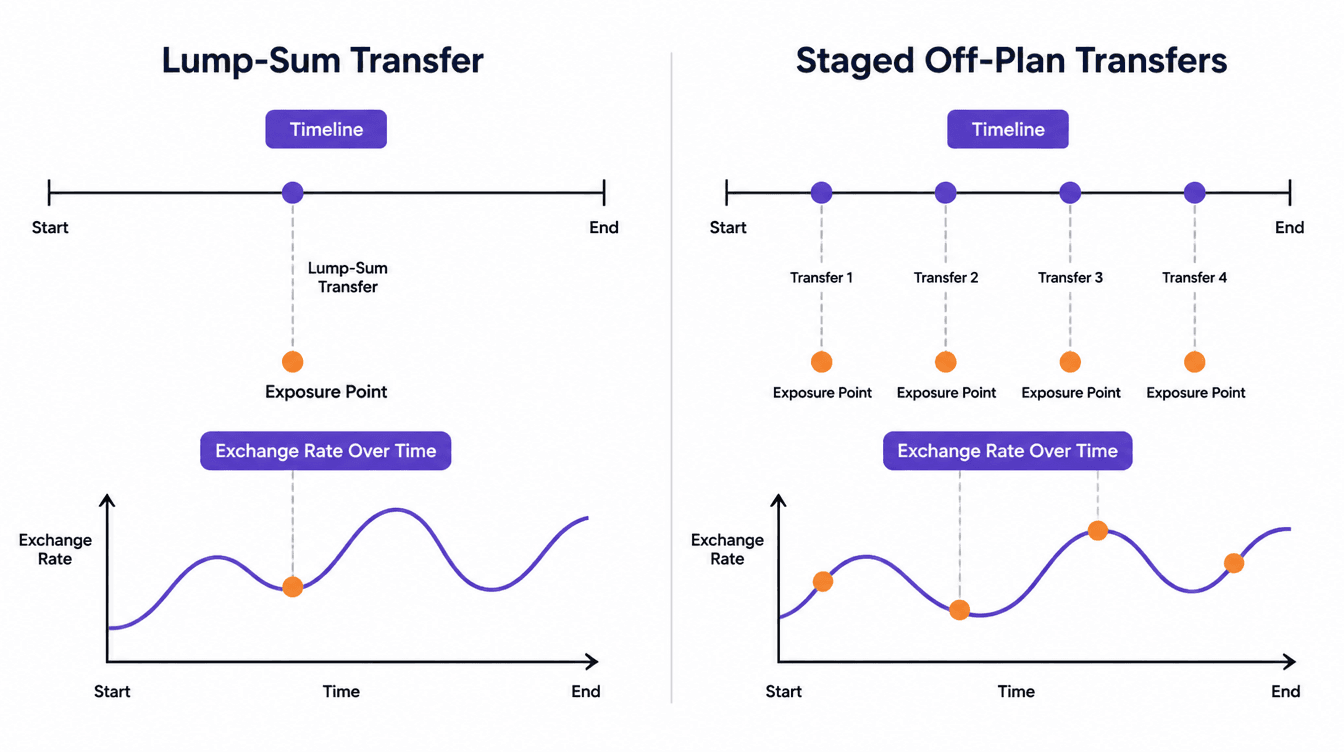
Exchange rate risk property purchase transactions face comes from the gap in time between agreeing a price in Thai baht and actually transferring the funds — if your home currency weakens against the baht in that window, the effective cost in your home currency rises, and the reverse is equally true if it strengthens. Multi-currency transfer property investment strategies, such as transferring funds in stages that align with off-plan payment milestones rather than all at once, can help manage this exposure, though they also mean facing the exchange rate multiple times rather than locking in a single rate.
How Does Currency Exchange Risk Affect a Thailand Property Purchase?
Some currency brokers offer forward contracts that lock in an exchange rate ahead of a planned transfer date, which removes the uncertainty of rate movement between agreeing the price and sending the funds — a tool worth asking about specifically if a purchase involves a transfer scheduled weeks or months in advance. For buyers transferring funds in a single lump sum close to the purchase date, exchange rate risk is a shorter, more contained window than for those paying via staged off-plan installments over a longer construction period.
What Documents Do You Need for a Large Money Transfer to Thailand?
The documentation side of a large transfer is procedural but worth preparing for in advance rather than scrambling once a transfer is already underway.
What Documents Do I Need for a Large Money Transfer to Thailand?
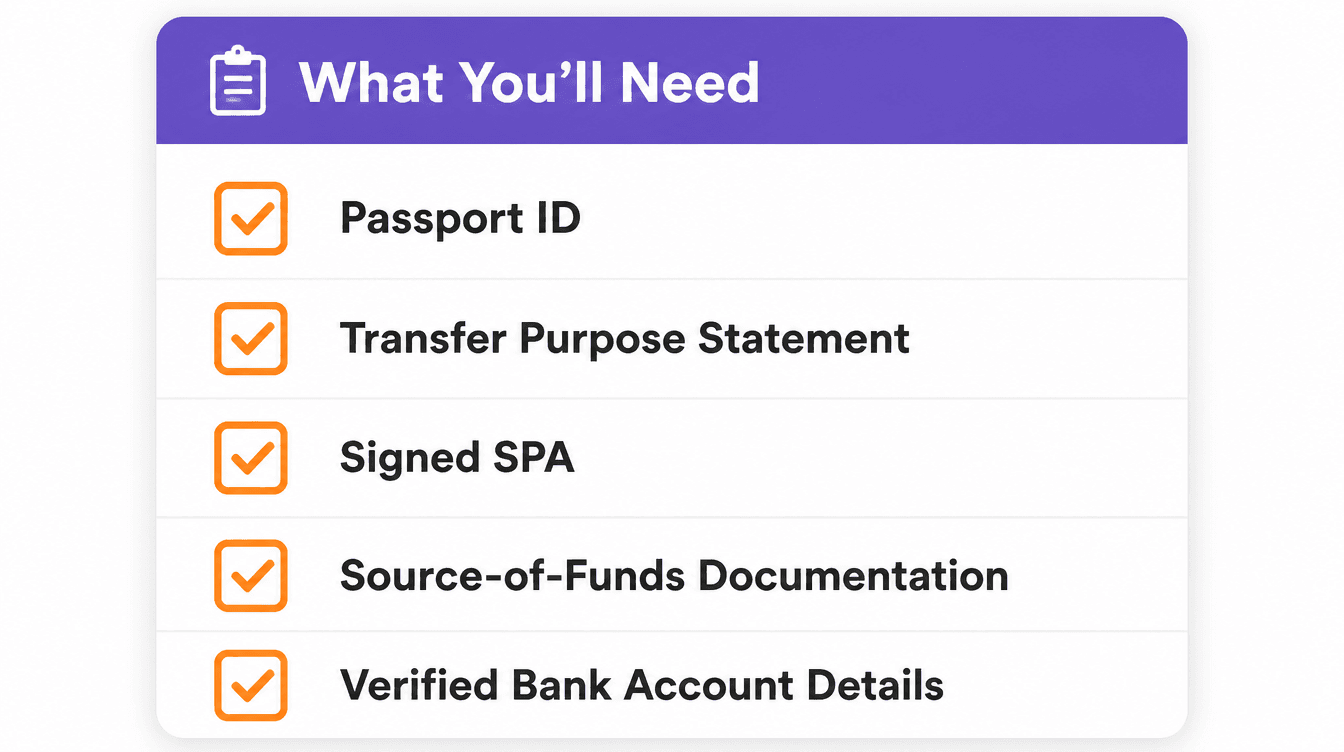
A typical large transfer for property purchase requires:
Passport identification matching the name on the receiving bank account or transaction
A clear statement of the transfer's purpose (property purchase) provided to your sending bank
The signed reservation agreement or SPA referencing the property being purchased
Source-of-funds documentation your home bank may request for a large transfer, particularly for compliance and anti-money-laundering checks
Confirmation of the receiving Thai bank account details, verified directly with the recipient rather than relied upon from an unverified email
Proof of funds Thailand property purchase transactions require connects directly to source-of-funds documentation — banks on both ends increasingly ask for this on large transfers, so having it ready in advance (recent account statements, an explanation of where the funds originated) prevents delays partway through the process.
How Do I Get My Money Back Out of Thailand After Selling Property?
This is the exit side of the currency question, and it's worth understanding before you buy, not just when you eventually sell.
Repatriating funds Thailand property sale proceeds involves converting Thai baht sale proceeds back into foreign currency and transferring them out of Thailand — a process that generally requires demonstrating that the original purchase funds entered the country properly, which is exactly why the FET form and related documentation from the original purchase matter years later, not just at the time of buying.
How Do I Get My Money Back Out of Thailand After Selling Property?
Repatriating sale proceeds requires working with your Thai bank to convert and transfer the funds abroad, generally supported by the original FET form or equivalent documentation showing the purchase was funded with properly imported foreign currency, alongside the sale transaction documents themselves. Keeping the original FET form and all related purchase documentation safely on file for the entire period you own the property — not just during the purchase itself — makes this eventual step considerably smoother.

Conclusion
Getting the FET form and transfer structuring right from day one is what makes a Thailand property purchase — and its eventual sale — go smoothly. The transfer method you choose, the timing you build in, and the documentation you keep all matter well beyond the initial purchase itself.
If you'd like guidance on structuring a currency transfer for a specific property purchase, reach out to the Papaya team directly via Telegram, WhatsApp, or email — we're happy to walk you through what fits your situation.